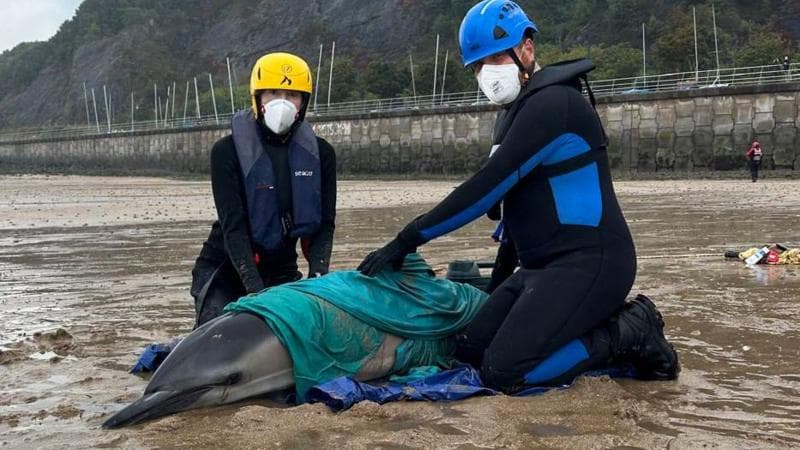
A young female common dolphin was successfully returned to deeper water after becoming stranded in shallow water off Mumbles, Swansea, on 2 September. The rescue followed an emergency call to the British Divers Marine Life Rescue (BDMLR) hotline reporting two dolphins thrashing in the shallows. While one of the pair managed to free itself independently, the second required intervention from trained marine mammal medics.
Strandings occur when marine animals become trapped in shallow water or on a shoreline, often resulting in death or serious injury to the animal. The incident highlights the importance of professional rescue protocols and public awareness about how to respond when dolphins are in distress.
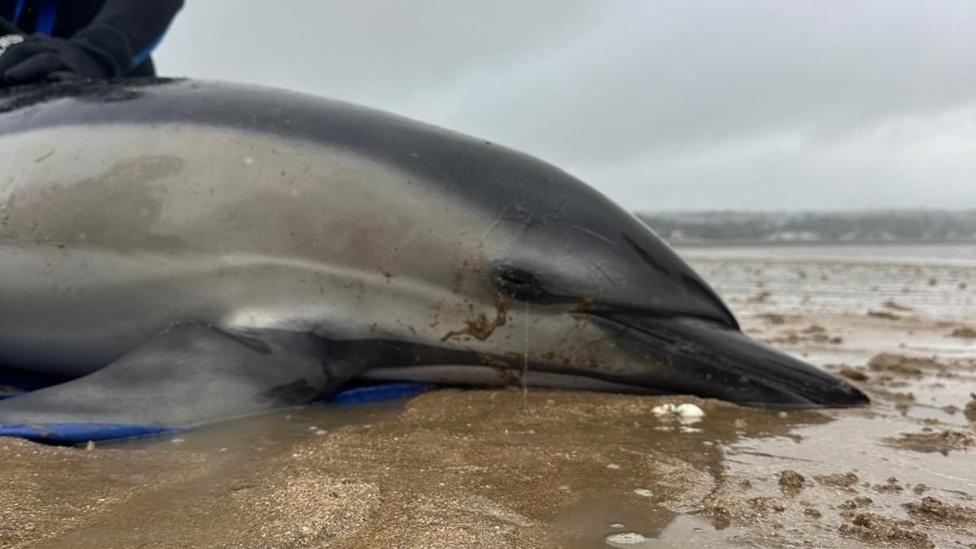
The BDMLR received a call describing the two dolphins stuck and struggling in the shallows. Upon arrival, rescuers found that one had already refloated itself and was heading into deeper water. The second dolphin, a young female, was rolling and struggling to remain upright. Examination revealed she was in good physical condition with no visible injuries and responded positively to the first aid treatment provided by the rescue team.
Why dolphins cannot simply be pushed back to sea
A common misconception is that stranded dolphins should be immediately pushed or dragged back into the water. According to the BDMLR, this approach can be dangerous and counterproductive. Dolphins may be exhausted, injured, or unwell when stranded, and returning them to the water without proper assessment risks drowning or re-stranding. The charity explained that similar to how humans can become disoriented in the sea, dolphins need time and professional support to re-establish their balance once back in the water.

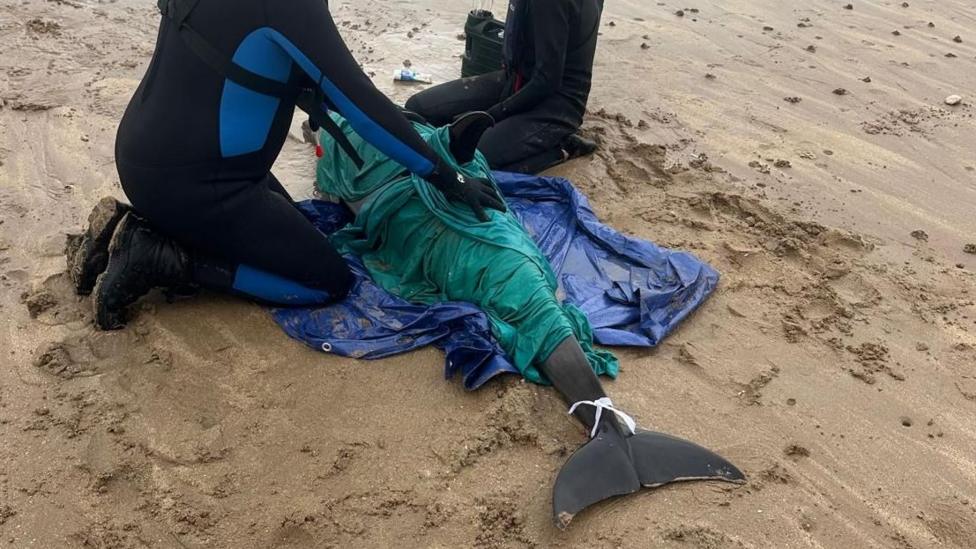
The rescue team's approach involved carefully stabilising the dolphin in the water, supporting her weight while she regained her balance. This is part of the specialist training that BDMLR volunteers receive to safely assist stranded cetaceans. Once the animal had recovered sufficient stability, the medics gradually withdrew their support, allowing the dolphin to float freely. This trial release confirmed she was ready to return to the open sea.
How the rescue unfolded
Following advice from rescue coordinators and a veterinary advisor, a carefully controlled refloat was authorised. The dolphin remained calm throughout the procedure. As the team withdrew, she swam forwards in a wide arc around the rescue team before swimming strongly into deeper water. According to the BDMLR's account of the rescue, temporary identification markers and biodegradable tape were placed on the dolphin in case she restranded, allowing the charity to track her if she returned to shallow water.
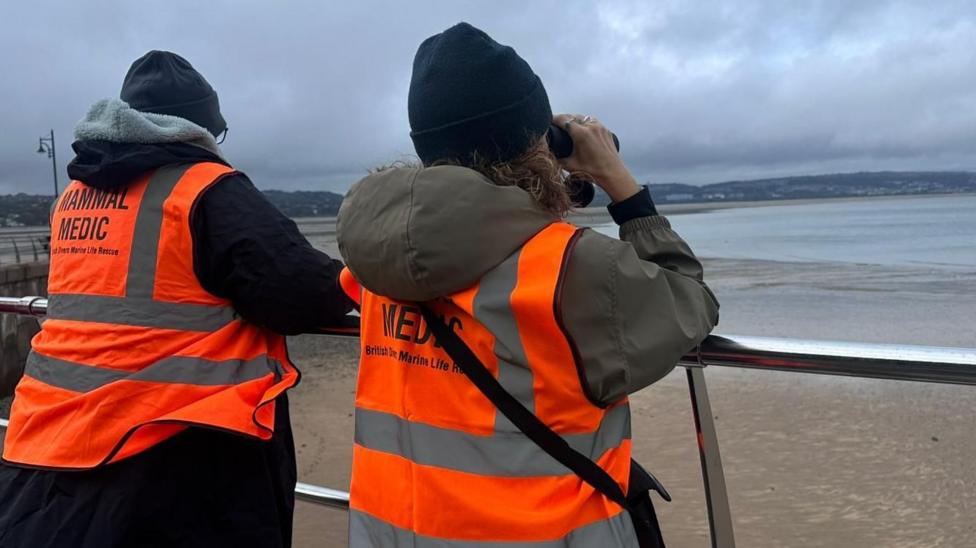
Neither dolphin has been sighted since the rescue, suggesting both animals have moved away from the area and returned to normal behaviour. The successful outcome demonstrates the value of trained intervention in marine mammal strandings.
What the public should do
The BDMLR emphasises that members of the public who encounter stranded whales, dolphins, or porpoises should not attempt a rescue themselves. Instead, they should contact the charity's 24/7 rescue hotline on 01825 765546. According to guidance on marine mammal safety, the public should keep distance from the animal, reduce noise levels, and avoid water entering the animal's blowhole while waiting for professional help to arrive.
The incident reflects a broader trend affecting UK waters. Rising numbers of whale and dolphin strandings have prompted the BDMLR to recruit additional volunteers, with training programmes including realistic simulations to safely refloat whales, dolphins, and seals as incidents continue to increase.
Key facts
- Two common dolphins were spotted stranded in shallow water off Mumbles, Swansea, on 2 September
- One dolphin freed itself; the second required professional rescue and first aid from trained marine mammal medics
- The rescued dolphin was found to be in good condition with no visible injuries
- Stranded dolphins should never be pushed back to sea without professional assessment, as they may be exhausted or disoriented and at risk of drowning
- The public should call the BDMLR hotline on 01825 765546 if they encounter stranded cetaceans