

Dafydd Trystan Davies, the Welsh government's minister for government effectiveness, has acknowledged that lessons need to be learned about how Wales responds to wildfires, warning that climate change is likely to bring more such incidents in the future. His comments came during a visit to Treherbert in Rhondda Cynon Taf, where firefighters and troops have spent weeks battling grass fires across south Wales, and as military assistance to the fire service was formally withdrawn on Wednesday.
Speaking after meeting personnel from South Wales Fire and Rescue Service (SWFRS) and the Army, Davies praised what he called the co-ordinated response to the emergency, while conceding that the scale of this summer's fires had exposed areas for improvement.
"We need to learn from every experience we have to make sure that we respond in the most effective and prompt way possible to the challenges."
"In an era of climate change, we're going to be facing hotter summers, we're likely to see more wildfires."
He confirmed that a fire summit would take place later this year to review the response and identify improvements ahead of future wildfire seasons.
How severe have the wildfires in Wales been?
The wildfires have affected multiple parts of south Wales over several weeks, straining fire and rescue resources across the region. On Wednesday, crews remained at the scene of blazes at Blaenavon, Dowlais and Llwyn-on Reservoir, while smaller fires at Wattsville and at Cwm in Ebbw Vale were being monitored rather than actively fought. According to South Wales Fire and Rescue Service, the major incident declared over the Llanwonno Mountain fire near Ferndale had been stood down by 16 August 2026, marking a turning point after weeks of firefighting on that mountainside.
The Blaenavon fire alone had burned more than 4,000 hectares and had affected the area for over three weeks before 16 August, according to a national newspaper's coverage, which also reported that around 36 wildfires, including 11 major incidents, were burning across the UK as of 17 August 2026. A separate report from an ITV Wales report on 16 August said crews were tackling 20 wildfires across Wales, with around 110 troops still deployed on the ground at that point.
SWFRS has described the pressure on its resources as intense, saying it had responded to 14 simultaneous wildfire incidents within a single day, according to a WalesOnline report. Around 200 Army personnel began digging firebreaks over the preceding weekend and helped with logistics, including distributing water to crews on the ground.
How did the Llanwonno Mountain fire develop?
The blaze above Ferndale was among the most persistent of the summer's fires. By 3 August 2026, it had already spread to cover roughly 150 hectares, an area equivalent to about 210 football pitches, according to an earlier ITV Wales report. Aerial support was also deployed elsewhere in the region, with a specialist firefighting helicopter used at the Llangynidr Reservoir wildfire near Ebbw Vale on 8 August, according to a further ITV Wales report.
Davies said the firebreaks dug with military support had directly protected homes in Treherbert from the advancing flames.

"The request was made, the request was fulfilled promptly, and because of that we've had firebreaks here on the mountain that have stopped the fire spreading to people's homes."
"That's what we were really facing here in Treherbert... a genuine danger of people's homes being at risk."
"And because of the prompt action of the fire service and support from elsewhere, and from the Army we've managed to stop that risk."
Why has the government's response been criticised?
Not everyone has praised the handling of the crisis. Dan Thomas, leader of Reform Wales, argued that ministers were slow to grasp the severity of the situation and called for greater investment in firefighting resources.
"The brave men and women of our fire and rescue services deserve our thanks but they also deserve the resources and support they need."
"So why has it taken this long for Plaid to recognise the scale of this crisis and seek the additional support our fire service so desperately needs?"
South Wales and Mid and West Wales fire services both declared major incidents in response to the pressure created by fires burning simultaneously in several locations, according to a Welsh government written statement. The deployment of troops to assist was reported to be the first military support of its kind for wildfires since 2018, according to the same national newspaper report cited above.
Asked whether further support might be considered for the fire service going forward, Davies said conversations about funding were likely to continue, and highlighted the growing use of drones to pinpoint wildfire hotspots as an example of technology that could improve future responses.
"We need to make sure we're absolutely doing everything we can."
How has the community responded?
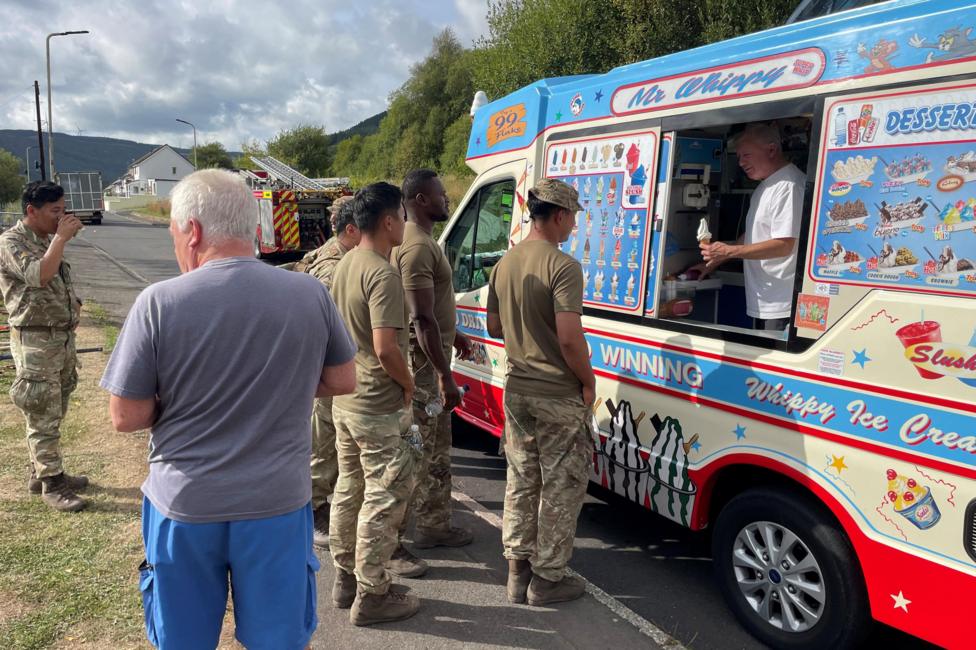
Amid the firefighting effort, local residents and businesses have stepped in to support crews and troops on the ground. An ice cream van pulled up in Treherbert on Tuesday to hand out ice creams to soldiers and firefighters taking a break from the frontline.
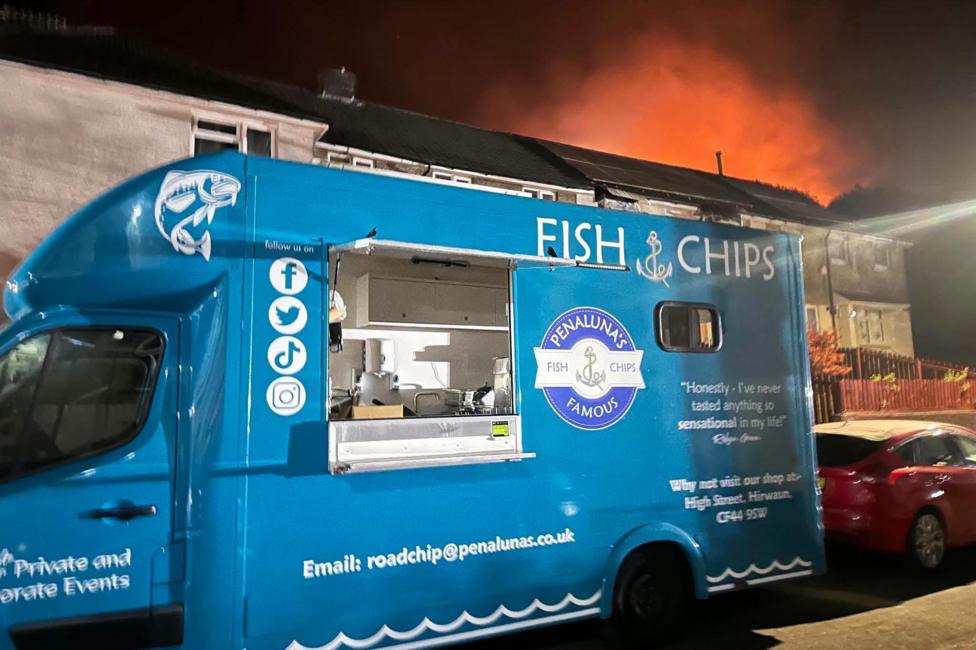
The gesture followed an earlier act of generosity from staff at Penalunas, a fish and chip shop in Hirwaun, who handed out free food to exhausted fire crews into the early hours of Saturday, working until 03:00 BST. The shop's owner described the decision to feed the crews overnight as a spontaneous one rather than a planned campaign.
SWFRS said it was touched by the support shown by the public but stressed that it was not actively seeking donations or organised fundraising on its behalf.
What happens next?
Military assistance to the fire service formally ended on Wednesday, though two helicopters will continue essential firefighting and reconnaissance flights, according to the SWFRS statement. Fire crews are expected to keep reviewing their response on a daily basis as conditions change, including at the Llangynidr Reservoir fire, according to a Nation.Cymru report.
Later this year, the Welsh government plans to hold a wildfire summit aimed at strengthening prevention and resilience measures, a step first flagged when the First Minister called for such a gathering as extreme heat gripped the country, according to a separate Nation.Cymru report. Davies said the summit would be an opportunity to draw lessons from the summer's events and prepare for the possibility of more frequent wildfires as the climate warms.
Key Facts
- Major incident at Llanwonno Mountain, Ferndale, stood down by 16 August 2026, according to South Wales Fire and Rescue Service.
- The Blaenavon wildfire burned more than 4,000 hectares and lasted over three weeks before 16 August 2026.
- Around 36 wildfires were burning across the UK as of 17 August, including 11 major incidents; a separate report put the Wales figure at 20 fires with 110 troops deployed.
- SWFRS said it handled 14 simultaneous wildfire incidents in a single day at the height of the crisis.
- A Wales-wide wildfire summit is planned for later in 2026 to review lessons learned and strengthen future resilience.


