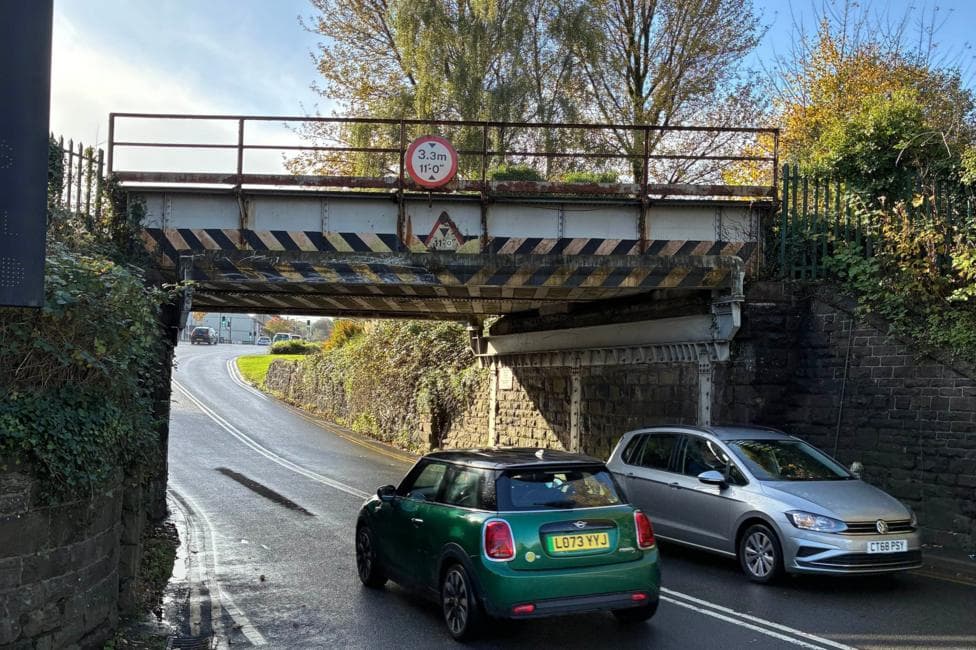
A railway bridge in Swansea that has become notorious for repeated vehicle collisions was struck once more on 25 October by a utilities lorry carrying wooden poles and a crane arm. According to BBC News, the Trafle Mill bridge in Gowerton has been hit at least 45 times in recent years, making it one of Britain's most frequently damaged railway structures despite multiple safety measures installed to prevent such incidents.
Network Rail confirmed in 2020 that the bridge had sustained 33 strikes over the preceding decade, the highest number recorded for any bridge in Wales and the border areas at that time. Since 2023, a further 12 reported collisions have occurred. Swansea Bay News reported that the October incident marked the third strike at the bridge it had documented in 2026 alone, with the lorry carrying a registration plate issued only since September.
The bridge stands at just 11 feet (3.3 metres) in height, and despite sensor systems being installed to alert drivers of the height restriction, CCTV footage captured the moment the lorry's crane arm collided with the underside of the structure. In the video, the vehicle appears to slow as it approaches, but the crane arm strikes the bridge with considerable force, producing a loud impact.
Following the collision, the lorry reversed onto nearby Fairwood Terrace before heading back along Victoria Road in the opposite direction. Swansea Council expressed disappointment at the incident and stated that the warning system was functioning normally, urging delivery companies to ensure their drivers are reminded of the height restrictions in the area.
How do the warning systems work?
Sensors positioned on poles set back on either side of the bridge are designed to activate flashing signs when vehicles of a certain height approach the structure. However, the flashing sign on the Fairwood Terrace side did not appear to activate when the lorry approached on 25 October, raising questions about the system's effectiveness. Swansea Council maintained that the sensor system was functioning correctly at the time of the incident.
Mark Needs, a resident of Victoria Road, has documented numerous collisions over the years through video footage. He described a particularly severe incident involving a van equipped with a cherry picker that became trapped beneath the bridge, requiring four to five hours to extract. He also recalled a lorry striking the bridge while descending the hill, followed by a car and a telegraph pole colliding with the same structure. In one memorable incident, a lorry transporting potatoes became stuck, and Needs joked that "everybody had free potatoes that day."
What damage has been caused?
Network Rail staff carried out precautionary safety inspections following the latest collision but identified no structural damage to the bridge itself. The structure has been protected by collision protection beams since 2014, which are designed to shield the main railway structure from vehicle impacts and reduce the risk of serious damage.
In August 2026, a separate strike at the bridge tore open a lorry's roof and disrupted trains between Swansea and Carmarthen, though services resumed after engineers inspected the bridge and confirmed it was safe.
What is the broader context of bridge strikes across Britain?
The Trafle Mill bridge is part of a wider problem affecting the rail network. Network Rail figures show that across Britain, 1,532 bridge strikes caused approximately £20 million in rail disruption, cancellations and repair costs during the period between April 2023 and March 2024. During that same period, the Trafle Mill bridge was struck seven times, ranking it 18th nationally for collision frequency.
Network Rail stated:
Alongside collision protection beams, which have been in place since 2014 to protect the main railway structure from vehicle impacts and reduce the risk of damage, the bridge is also clearly marked with low-headroom warning signs, with additional advance and illuminated LED signage on the approaches to alert drivers before they reach the structure. We continue to work closely with Swansea Council to improve highway signage, and make sure these warning systems remain operational and effective.
Gowerton councillor Susan Jones acknowledged the persistent problem, stating:
Obviously that bridge is a problem. When they extended the railway station it was strengthened - if they hadn't, I dread to think.
How does this affect the proposed housing development?
The October collision has taken on additional significance in a local planning dispute. Campaigners submitted the October 25 strike to the planning inspector as urgent late evidence in an appeal over a proposed housing development at Fairwood Terrace. The development would comprise up to 216 homes and includes a signal-controlled junction near the bridge and a park-and-ride hub. Swansea Council's planning committee had rejected the outline application, which is now under appeal to the planning inspector, who is considering whether the repeated bridge strikes should influence the decision on the housing scheme.
What happens next?
The planning inspector will continue to review the appeal for the proposed Fairwood Terrace development, with the October bridge strike now part of the evidence being considered. The outcome of this appeal may influence future decisions about traffic management and development in the area surrounding the notorious bridge.