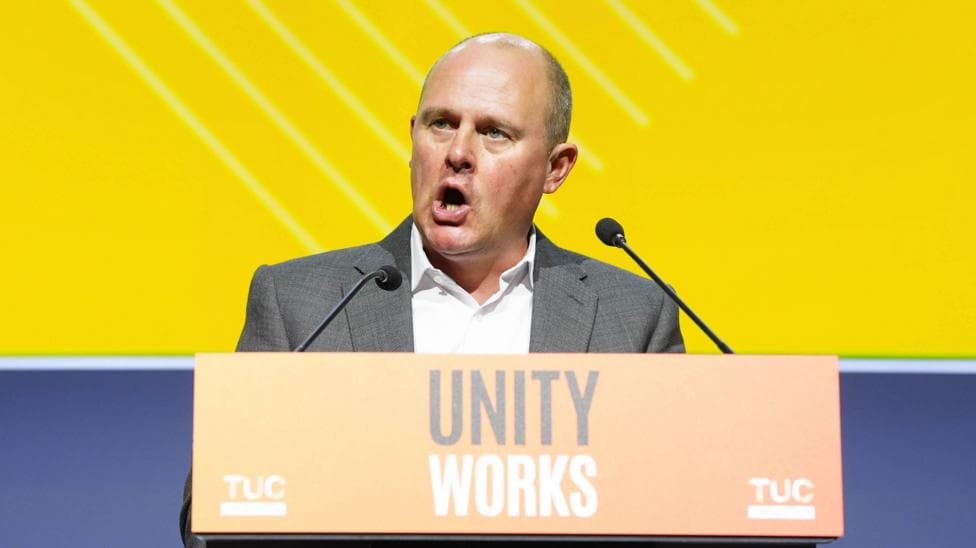
Trade unions have called for strict controls on political spending, warning that the "health and integrity of democracy" face serious threats from the massive donations received by Reform UK. The TUC, which represents millions of workers across the UK, issued a joint statement at its annual congress in Brighton demanding that the government "protect our democracy from being captured by the super rich".
The intervention comes after Reform UK received two donations totalling £72m from British crypto-billionaires in a single weekend. According to , the two £36m donations arrived within 48 hours from Ben Delo and Christopher Harborne, described as the largest single donations in British political history. The scale of this funding has reignited debate over whether the current system adequately protects democratic processes from the influence of extreme wealth.
The donations dwarf the total money received by all UK political parties in the previous year, which was just over £69m, making Reform's weekend windfall larger than an entire year of political funding across the entire system. The two donations were also equivalent to roughly three-quarters of the money spent at the 2024 general election by all parties combined, underscoring their unprecedented scale.
What are unions proposing?
The TUC statement notably stops short of explicitly calling for a cap on domestic donations to match the restrictions the government plans to impose on foreign-based donations. However, unions have signalled openness to discussions with policymakers on measures to "clean up" party funding. The statement emphasises that trade union donations should not be treated identically to large contributions from wealthy individuals, given their fundamentally different nature and source.
Sharon Graham, leader of the Unite union, told the BBC she would support a cap of between £500,000 and £1m on individual donations from UK-based citizens. She argued that union donations deserve separate treatment because they come from many individual members making small contributions through a political levy, rather than from single billionaires.
There is a difference between a crypto-billionaire based in the UK or abroad giving millions and trade union members who are nurses, cleaners, bus drivers giving 10p a week which adds up cumulatively to what we give to Labour.
Gary Smith, general secretary of the GMB union, expressed caution about the implications of any domestic donations cap. He told the BBC:
Whether there will be a cap on political donations, we will wait and see. We will talk to the government at the appropriate time but we can't have any confusion between the political voice working people have through their unions and crypto-billionaires.
Why are unions divided on this issue?
Many in the trade union movement, particularly those with strong links to Labour, have historically resisted calls for a cap on domestic donations, fearing that a future government might use such restrictions to limit union contributions. However, officials privately acknowledge that the scale of Reform's donations has fundamentally altered the political landscape, and some form of domestic cap may now be unavoidable.
The GMB union has been among the most cautious about the implications of a domestic donations cap. Not all unions donate to Labour, and those which do not are therefore far more relaxed about restrictions on political donations. One union even indicated that recent events have been helpful in arguing for stronger restrictions on political donations overall.

What is notable about Tuesday's union statement is not only what it says but what it deliberately avoids. There has been no consensus on calling for caps on the spending of political parties themselves rather than on donations—an alternative approach to managing Reform's war chest. Another option discussed behind the scenes was to treat large union donations as a series of donations from individual members, which some believe would be politically difficult to defend publicly.
Discussions are expected to continue among unions with financial links to Labour—including the three largest unions in the UK—to try to reach a common position on Wednesday behind closed doors in Brighton and in the days and weeks ahead.
What is the government's position?
The government is planning to change the law on donations to UK political parties from British voters living overseas, including a £100,000 cap backdated to 25 March. Currently, there are no restrictions on the amount of money UK-based donors can give to political parties. Reform UK's two donors, though British nationals, have both recently lived abroad, which has raised questions about the adequacy of existing rules.
Robert Jenrick said the £72m in donations is
entirely in line with the law as it is and, as far as we know, what it is going to be in the future, suggesting the government does not view the donations as unlawful under current legislation.
What scrutiny is Reform facing?
Reform UK has become the subject of fresh scrutiny over whether some donations may have breached party-funding rules. According to a national news outlet, reports indicate a police inquiry into alleged overseas donations and earlier claims of impermissible donations before July 2024. The Liberal Democrats reported Reform UK to the Metropolitan Police and the Electoral Commission over alleged foreign-donation breaches following an undercover investigation.
Earlier in September, reported that Reform had received a £4m donation from a crypto investor convicted in the US and pardoned by Donald Trump, accounting for 75% of the party's donations in the April-June quarter. These developments have intensified questions about the sources and legitimacy of Reform's funding.
How does this compare to other parties?
Since 2020, Labour has received almost £43m from trade unions, who raise their money through individual workers' membership fees. This funding model differs fundamentally from the concentrated donations Reform has received, though unions argue this distinction must be preserved in any future regulatory framework.
What happens next?
Reform's funding is likely to remain under police and Electoral Commission scrutiny following the reported inquiry into alleged overseas donations. TUC affiliates are expected to discuss the implications of the Reform donations for British democracy in the coming days. Labour is still being pressed to set out its next move on political-donation reform after ministers signalled action on "mega-donors", though the government has not yet committed to an immediate cap on domestic political donations.