Home Secretary Shabana Mahmood has threatened to prevent all Eritreans from entering the United Kingdom unless the east African nation's government agrees to accept more returns of small boat migrants and foreign national offenders.
Starting Thursday, Eritrean diplomats will face movement restrictions outside London. Fast-track visas for VIPs will also be suspended.
The government has used visa penalties as leverage with other nations to secure returns agreements in the past.
Why is Eritrea being targeted?
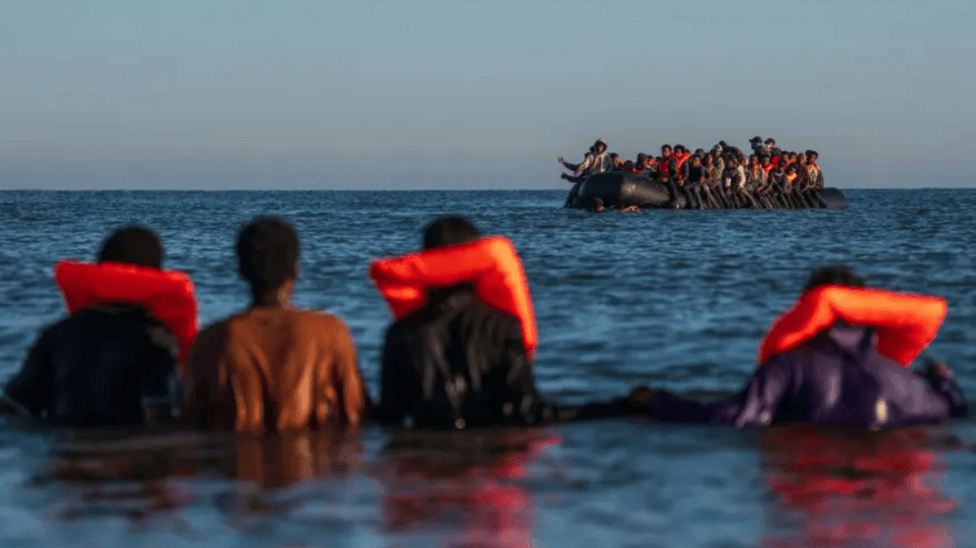
Eritreans represented the largest single nationality among small boat arrivals in the 12 months to June, making up 18% of all crossings, according to figures from the House of Commons Library. The UK government says Eritrean authorities "abruptly" withdrew cooperation earlier this year, leaving the country as the only major source nation refusing to accept returns.
"Eritrea has had every chance to accept the return of criminals and those with no right to be in the UK. Unlike other countries, it has refused,"Mahmood said. She added that she would not hesitate
"to impose further measures on other countries refusing to co-operate".
What restrictions are being imposed?
Eritrean diplomats are now banned from travelling 60 kilometres outside London without permission. The Home Office said this mirrors restrictions placed on British officials in Eritrea's capital, Asmara, creating a reciprocal arrangement.
How has this approach worked before?
Earlier this year, the UK threatened visa bans against Angola, Namibia and the Democratic Republic of Congo (DRC). Angola and Namibia both agreed to changes before restrictions were introduced. Restrictions were announced against the DRC last year, but the Home Office lifted these after cooperation on returns improved.
When announcing changes to the UK's asylum system in November, Mahmood said visa penalties would be applied to countries failing to cooperate with returns policies. Penalties include an "emergency brake" on visas for countries with high asylum claims until they take back citizens in the UK illegally.
What do the numbers show?
According to Home Office data, more than 20,400 people have arrived in the UK by small boats so far since the beginning of this year, representing a 40% decrease from the same period last year. Between 1 January and 5 October 2026, 20,478 people crossed the Channel by small boat, 40% fewer than in the same period of 2025.
There were more than 40,600 returns and deportations from the UK from July 2025 to June this year—an 8% increase on the same period last year. Of those returned, 5,962 had been convicted of a criminal offence, 12,568 had previously claimed asylum and 3,310 had arrived by small boat.
What are the obstacles to returns?
Eritrea presents particular challenges for deportations. Home Office evidence from 2015 showed Eritrea would consider emergency travel document applications only when supported by an Eritrean passport, birth certificate or identity card—documents that can be difficult for migrants to provide.
What is the wider political context?
The government's approach reflects a broader strategy on returns. Reform UK has separately proposed banning visas for Eritreans and nationals of five other countries if they refuse deportation flights under a future Reform government, though this remains a party proposal rather than current government policy.
What happens next?
The UK-France "one in, one out" returns arrangement, which had been due to end in June 2026, was extended into October 2026. The Eritrean embassy in London has been contacted for comment on the new restrictions.
Key Facts:
- Eritreans accounted for 18% of small boat arrivals in the 12 months to June
- Eritrean diplomats face 60km travel restrictions outside London and VIP fast-track visas are suspended
- Small boat arrivals are down 40% compared to the same period last year
- The UK has successfully used visa penalties to secure returns agreements with Angola, Namibia and the DRC
- Eritrea requires specific identity documents for emergency travel permits, complicating deportation processes