

Thursday's front pages were dominated by three overlapping stories: wildfires that tore through homes in the West Midlands, a train derailment near Lewes that left two people seriously injured, and a heatwave that pushed UK temperatures to their highest point of 2026 so far. Several titles combined all three events into a single narrative of a country struggling with extreme weather, while others chose to lead with just one element of the day's chaos.
The Times brought the three stories together beneath a striking photograph of firefighters battling to extinguish burning houses in Stourbridge, running the headline "Houses burn and train derails on hottest day". It is an unusual front page in that it manages to fold three distinct incidents — the West Midlands fires, the Lewes rail accident and the year's hottest day — into one unifying line.
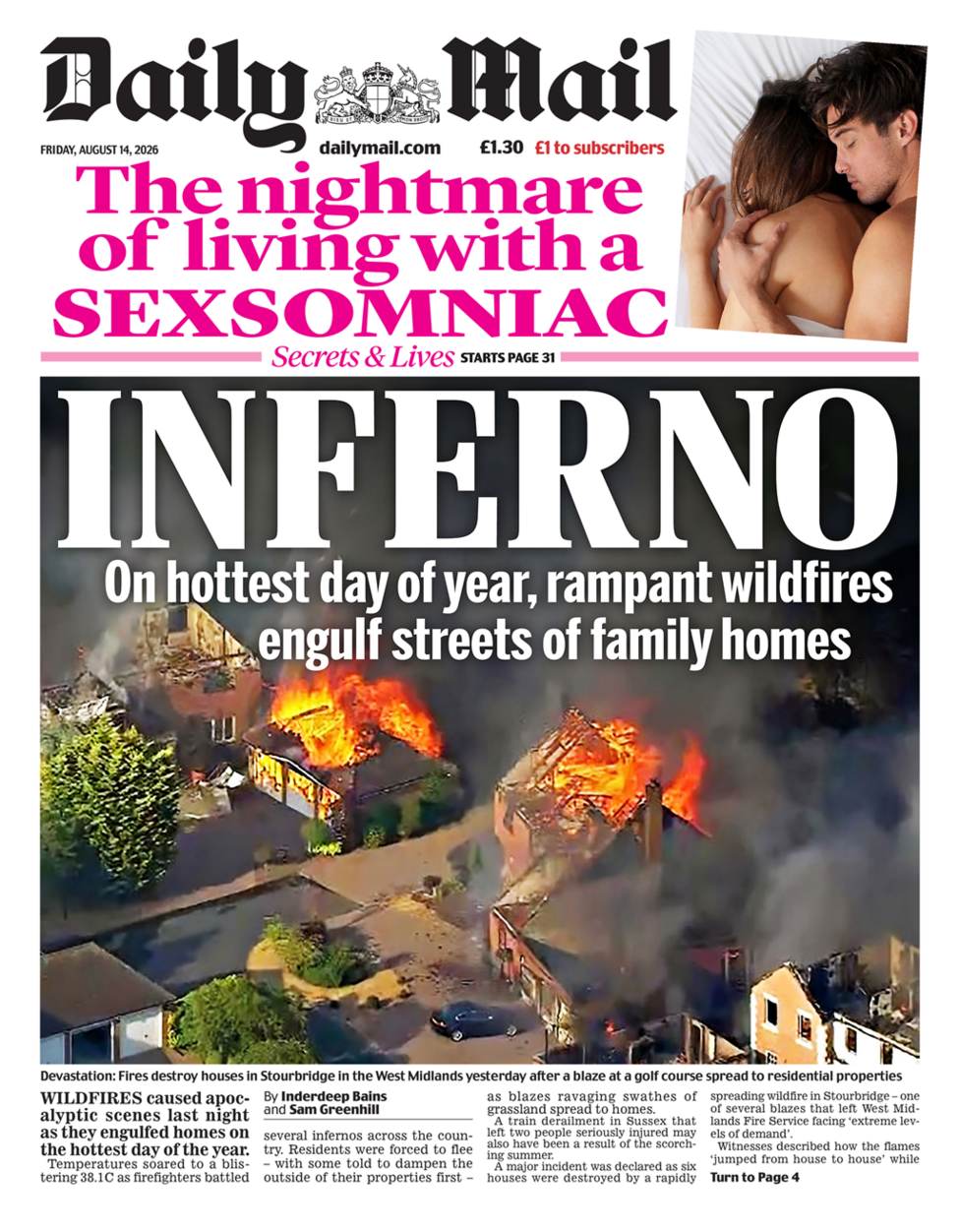
The Daily Mail took a starker approach, running a single-word headline, "Inferno", over an image of the burning properties in the West Midlands. Its coverage opened with the line:
Wildfires caused apocalyptic scenes last night as they engulfed homes.
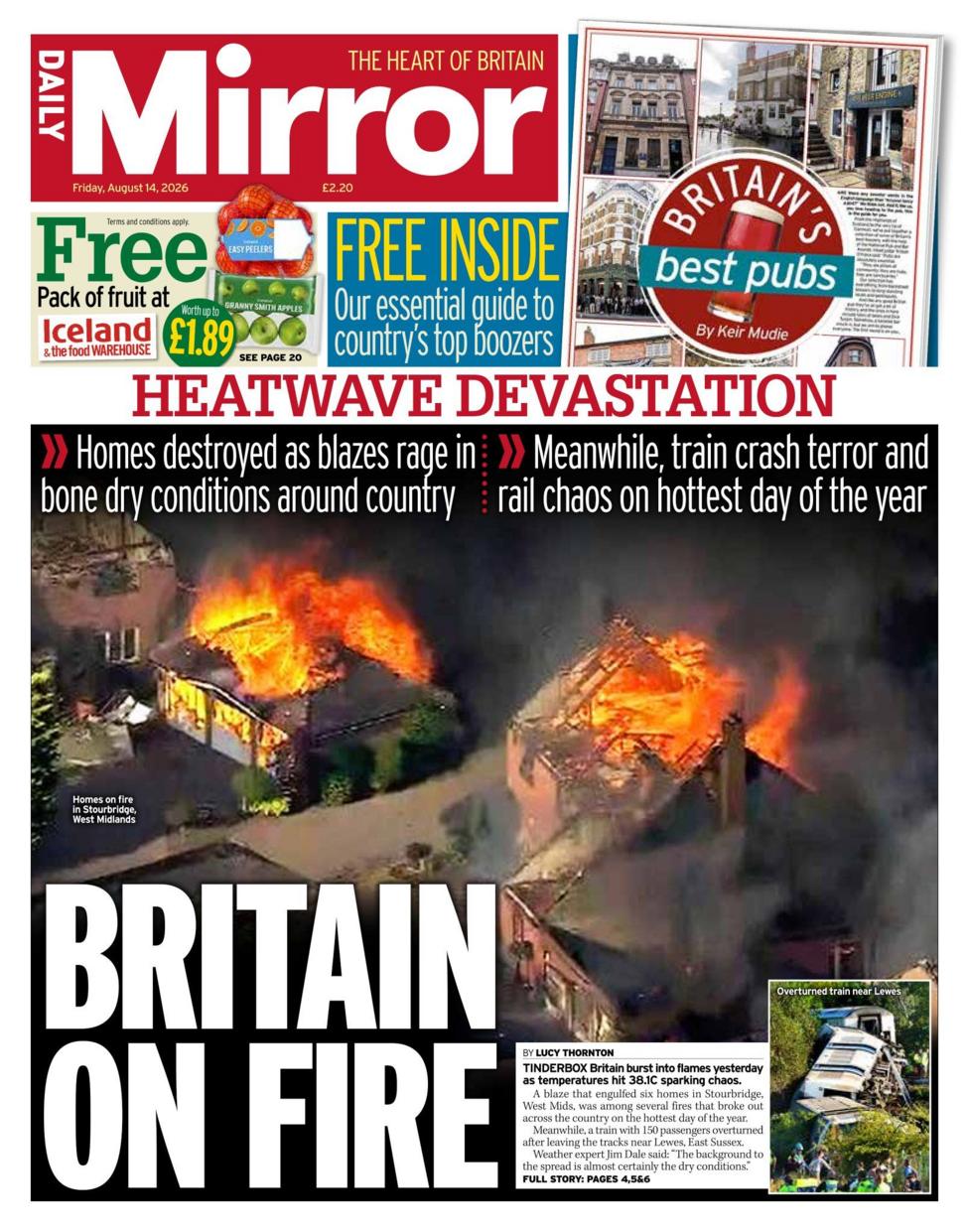
The Daily Mirror carried a similar photograph of the fires under the headline "Britain on fire", alongside an inset picture of the derailed train near Lewes as part of coverage it labelled "Heatwave devastation".
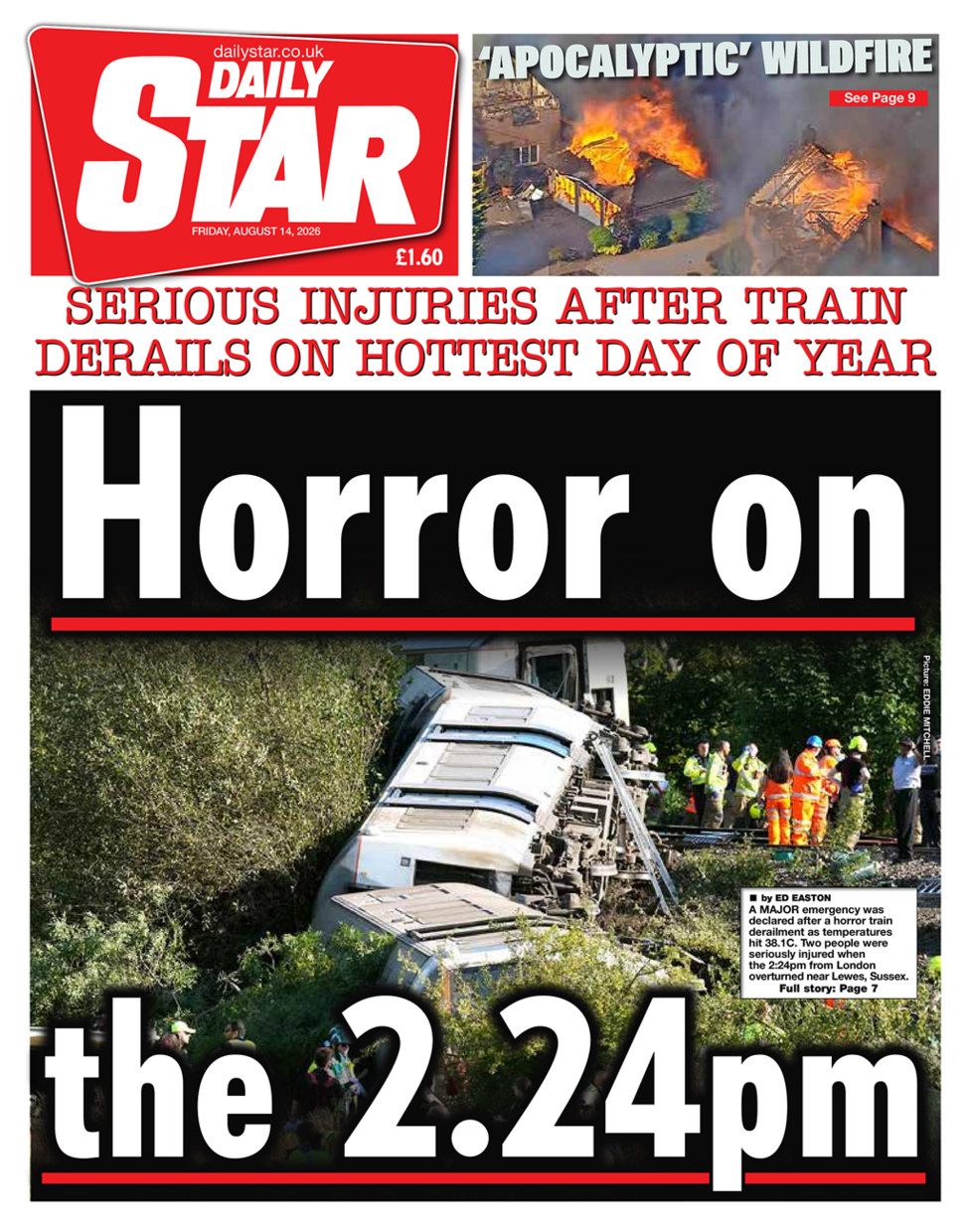
The Daily Star judged the train crash the more pressing story, splashing on "Horror on the 2.24pm" beside a large photograph of emergency crews working near the overturned carriages, which had come to rest in shrubs beside the track. It also carried a smaller image of the burning homes under the line "'Apocalyptic' wildfire".
The Sun likewise led on the derailment, with the headline "Horror on the 2:24" beside a picture of the London to Eastbourne service flipped onto its side. Its report described "pandemonium" as hundreds of emergency responders worked to help passengers and establish what had caused the crash.
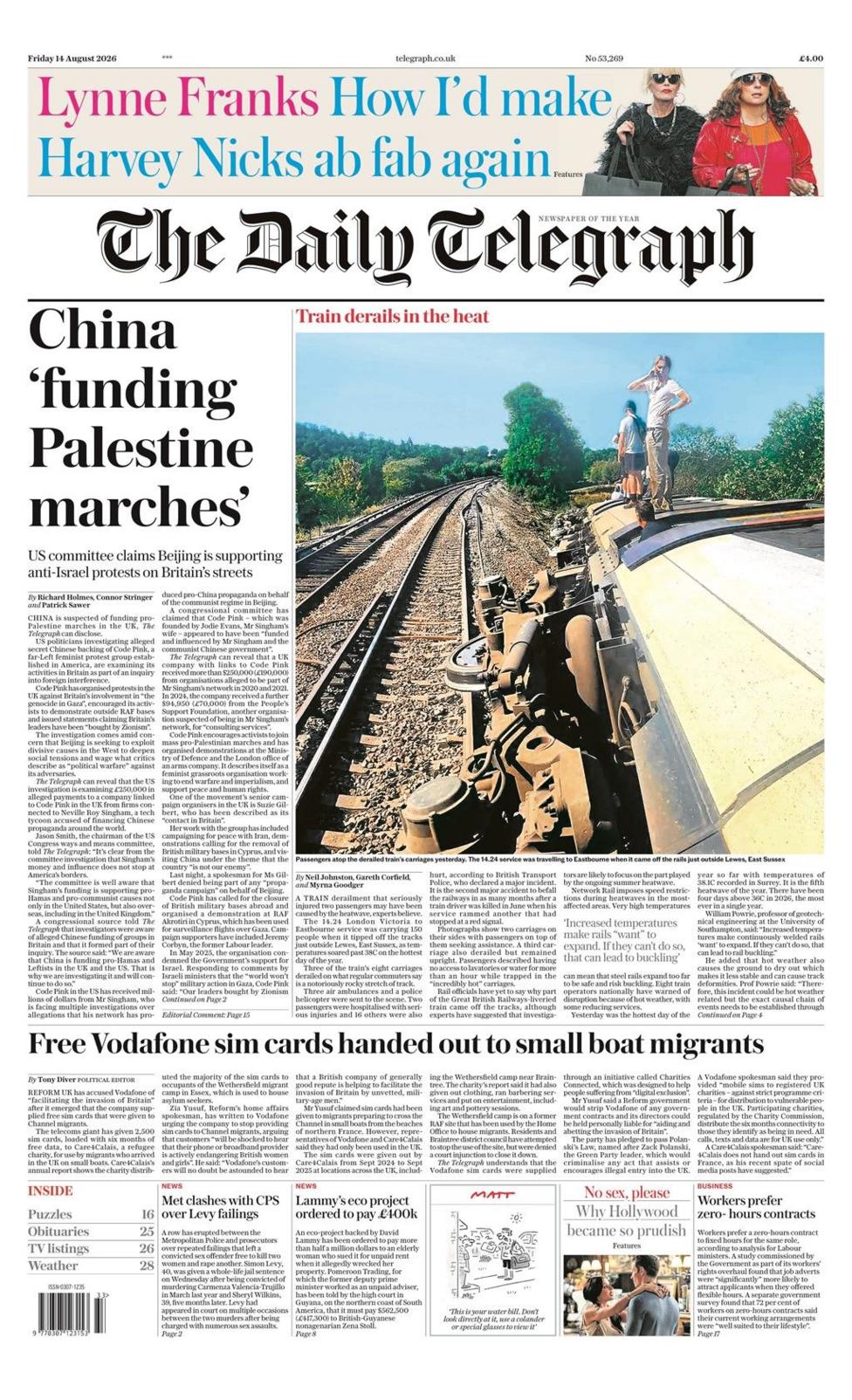
The Daily Telegraph also placed a large photograph of the derailed train — showing people standing on top of the carriage — on its front page, but gave its lead headline to a different story: claims that China is "funding Palestine marches" in Britain. The paper reported that a US committee had examined whether Beijing had been backing the activities of Code Pink, describing the organisation as "a far-left feminist protest group established in America", and said the claims centre on:
US committee claims Beijing is supporting anti-Israel protests on Britain's streets
The Telegraph said the allegations stem from an investigation into funding that helped finance Code Pink, which it reported had received money from a technology figure with links to Beijing. A spokesman for one of the group's UK-based campaigners denied being part of any propaganda effort.
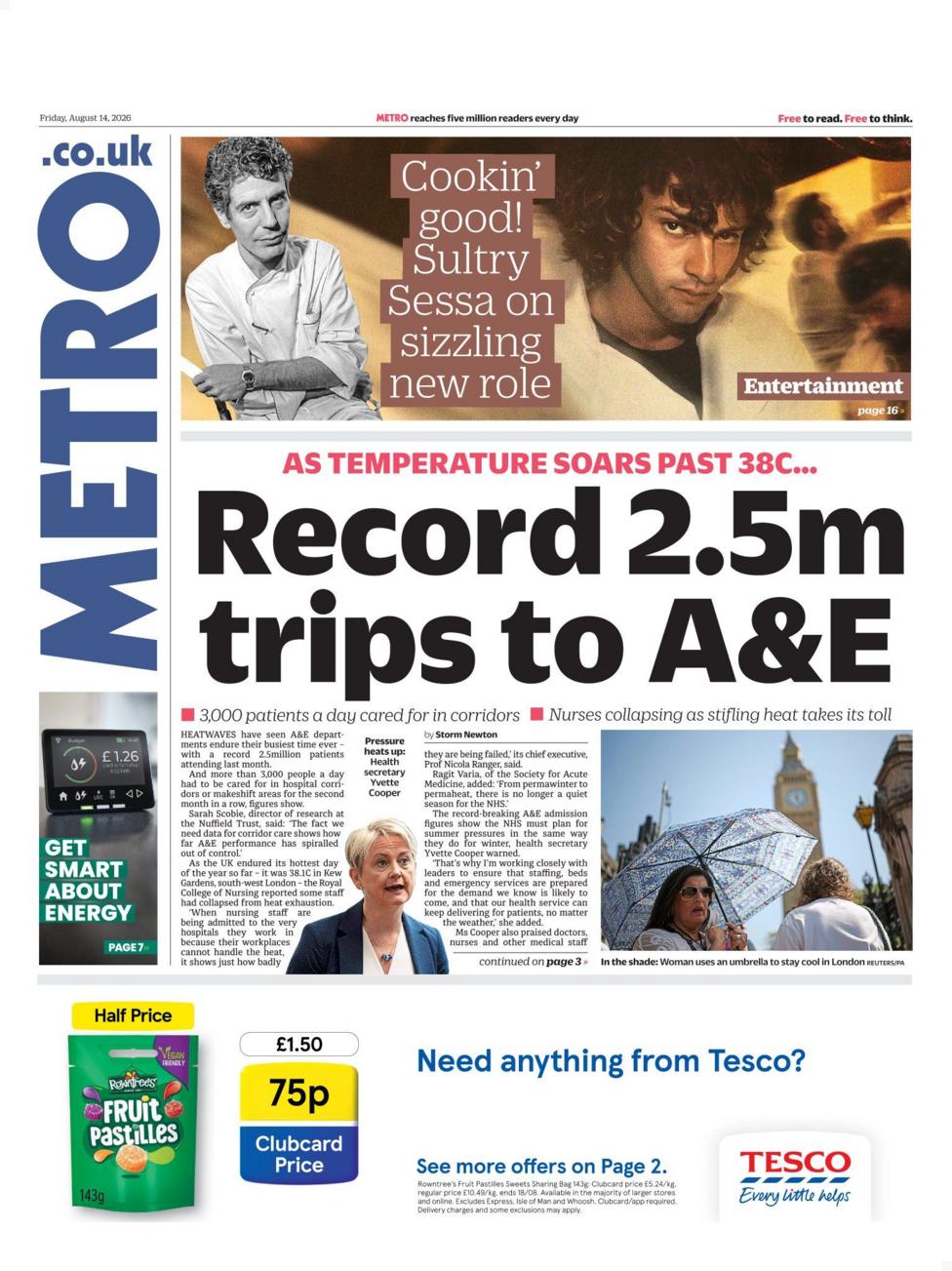
Metro was the only title to make the heatwave itself the main front-page story, reporting that soaring temperatures had driven a surge in attendance at accident and emergency departments. It said last month had been the busiest on record for A&E units, citing a "record 2.5 million patients" needing care, and reported that nurses had collapsed in the "stifling heat" while "3,000 patients a day" were treated in hospital corridors.

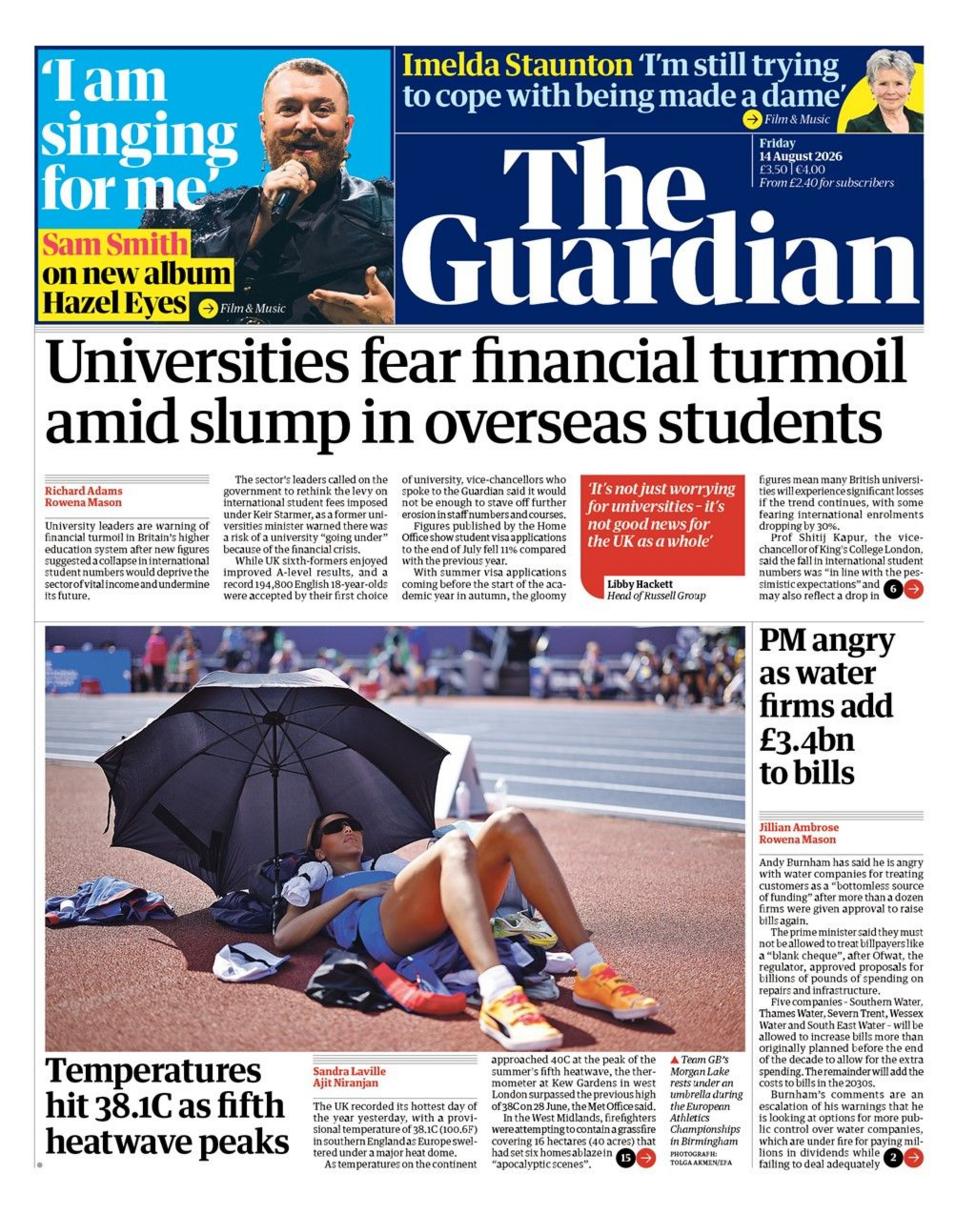
's front page featured Team GB athlete Morgan Lake sheltering under an umbrella during the European Athletics Championships in Birmingham, above a report on temperatures reaching 38.1C "as fifth heatwave peaks". Its main lead, however, warned of financial turmoil across Britain's higher education sector after new figures suggested a sharp fall in international student numbers would strip the sector of essential income. In the wake of this week's A-level results, the paper carried a warning from university leaders that institutions face being pushed toward financial crisis. The head of the Russell Group of universities told the paper:
this isn't just worrying for universities, it's not good news for the UK as a whole
What other stories led the papers?
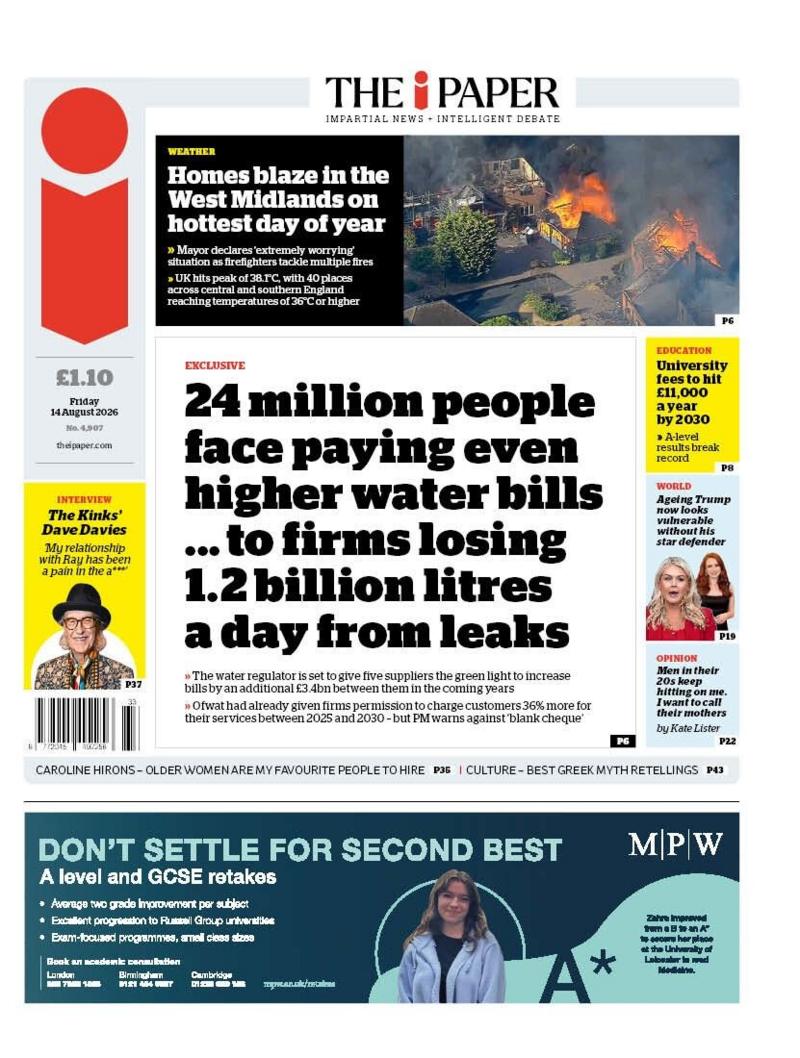
The i Paper focused on water bills, reporting that regulator Ofwat has approved five suppliers' plans to raise charges by a combined £3.4bn in the coming years. The paper set this against the fact that the same companies continue to lose 1.2 billion litres of water a day through leaks, with roughly 24 million customers now facing higher bills.
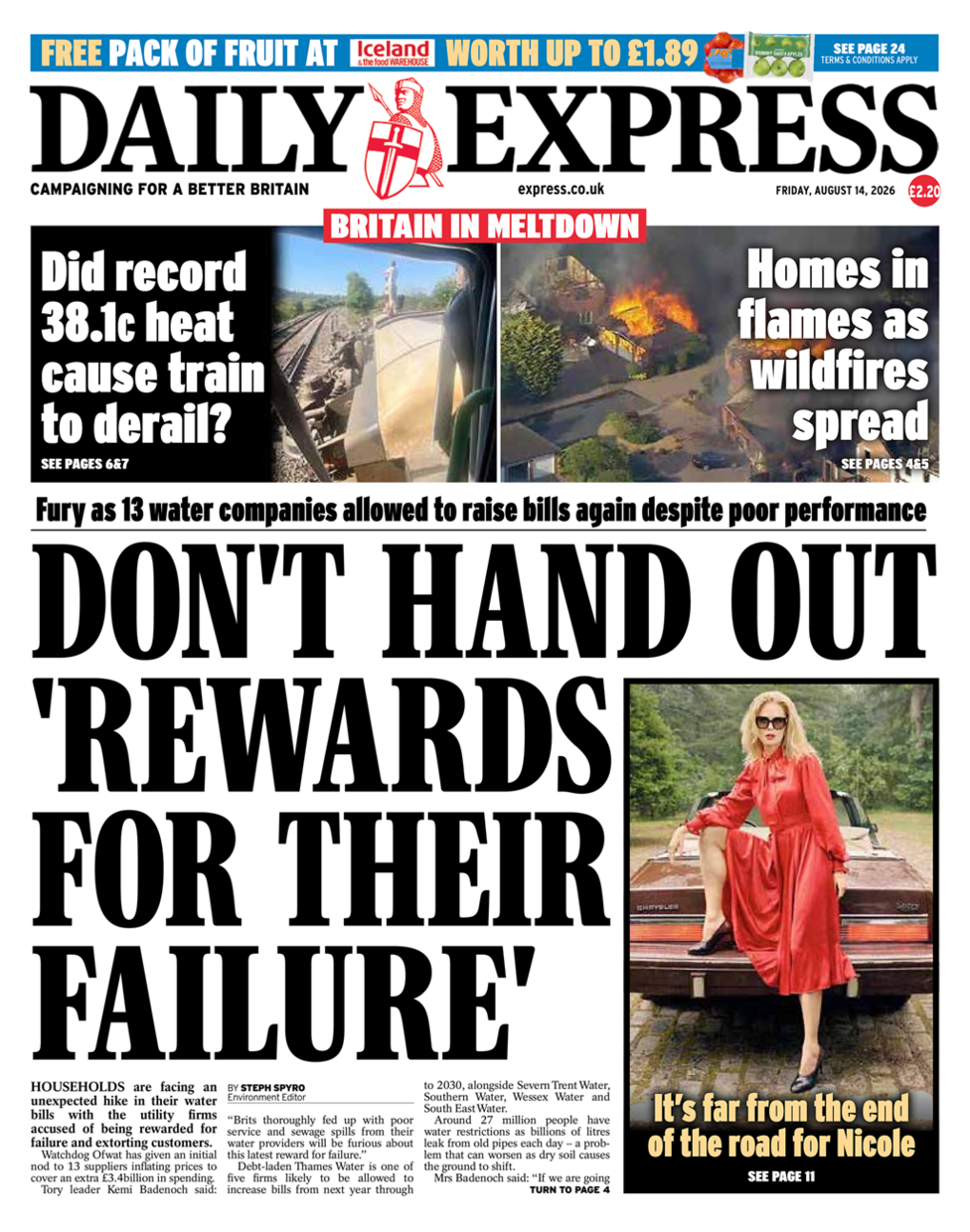
The Daily Express framed the increases as an "unexpected hike", reporting anger over utility firms it said were being "rewarded for failure" while facing accusations of "extorting customers". The paper also combined Thursday's weather and transport stories, running the headline "Did record 38.1C hear cause train to derail" beside an image of the burning houses under the sub-headline "Britain in meltdown".
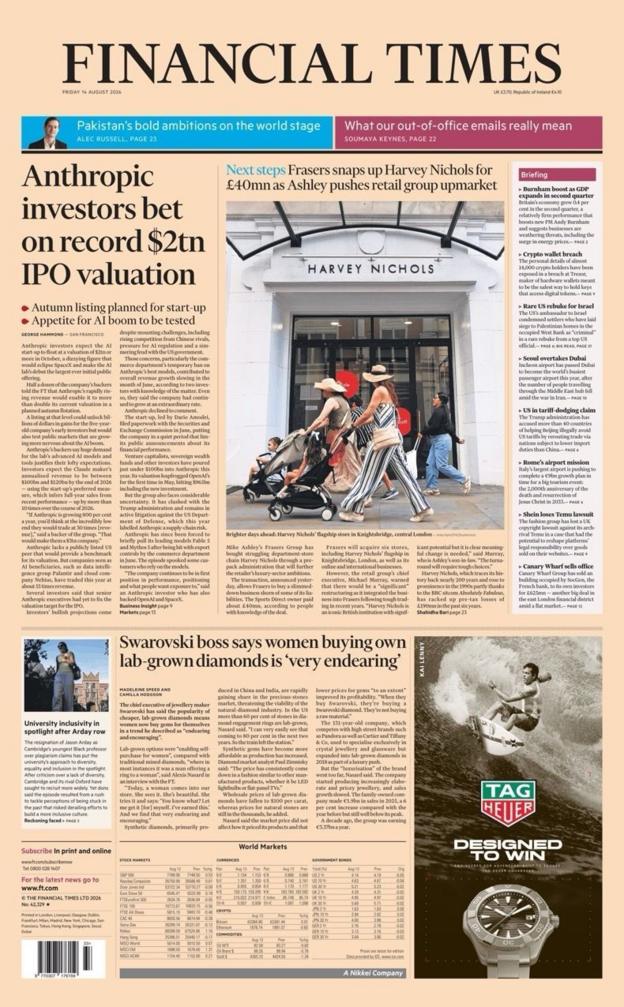
The Financial Times was the sole front page to avoid prominent coverage of the fires, derailment or heatwave altogether. Its lead story concerned hopes among investors in AI firm Anthropic for a "record $2tn IPO valuation", and it also carried a feature on the head of jewellery maker Swarovski, under the headline "Women buying own lab-grown diamonds is 'very endearing'".
Away from the day's main events, the Times reported on a rift on Anglesey between local druids and the owner of an occult shop, who accused druids of disrespecting ancient monuments on the island. The shop owner said druids:
parade around" in cheap robes "claiming to reconnect with Britain's ancient history
The Anglesey Druid Order responded in the paper, rejecting the characterisation:
to imply that such behaviour represents modern druidry as a whole is simply unsupported
How does this fit into 2026's wider heat pattern?
Thursday's extreme conditions form part of a broader run of record-breaking heat this year. Our earlier coverage detailed how the UK faced a record-breaking heatwave in June that disrupted schools, transport and hospitals, while a separate summer of wildfires and rising water bosses' pay had already dominated front pages in late July. Drought warnings and Channel crossing figures also featured heavily in coverage from late July, while a Suffolk wildfire near a nuclear power station was among the stories that led papers just a fortnight before Thursday's fires, as reported in our coverage of that period.
How does Thursday's heat compare with previous records?
According to the tracking of 2026's heatwaves, Thursday's reading of 38.1C at Kew Gardens in London was not only the UK's highest temperature of the year so far but also the fifth hottest day ever recorded in the country. The Met Office has separately noted, in a mid-season review reported by the Met Office's own summer analysis, that by 15 July 2026 the year had already recorded more days above 30C than the whole of 1976, and that 2026 became the first year on record to reach 35C in May, June and July.
The scale of this summer's heat builds on a June heatwave that, according to a Met Office recap of June's temperature records, produced the UK's highest June temperature ever measured, at 37.7C in Lingwood, Norfolk, on 26 June 2026. Separate reporting cited by a national newspaper's analysis of Met Office data found that the same heatwave made England's June the hottest on record, with red heat alerts issued on three separate days.
What happens next?
No specific further Met Office decision or scheduled announcement relating to Thursday's heat has been confirmed in the material available. Investigations into the cause of the Lewes train derailment, and the fires that damaged homes in the West Midlands, are expected to continue, though neither the emergency services nor the papers have set out a timetable for their findings.
Key Facts
- The Times, Daily Mail and Daily Mirror all led on wildfires that engulfed homes in the West Midlands.
- A train travelling from London to Eastbourne derailed near Lewes, leaving two people seriously injured.
- The UK recorded 38.1C, its hottest temperature of 2026 so far and the fifth hottest day ever recorded nationally, according to tracked heatwave data.
- Ofwat has approved plans allowing five water companies to raise bills by a combined £3.4bn, affecting roughly 24 million customers.
- The Daily Telegraph reported claims that China may have helped fund pro-Palestinian protest activity in the UK, allegations denied by a spokesman for one UK campaigner.




