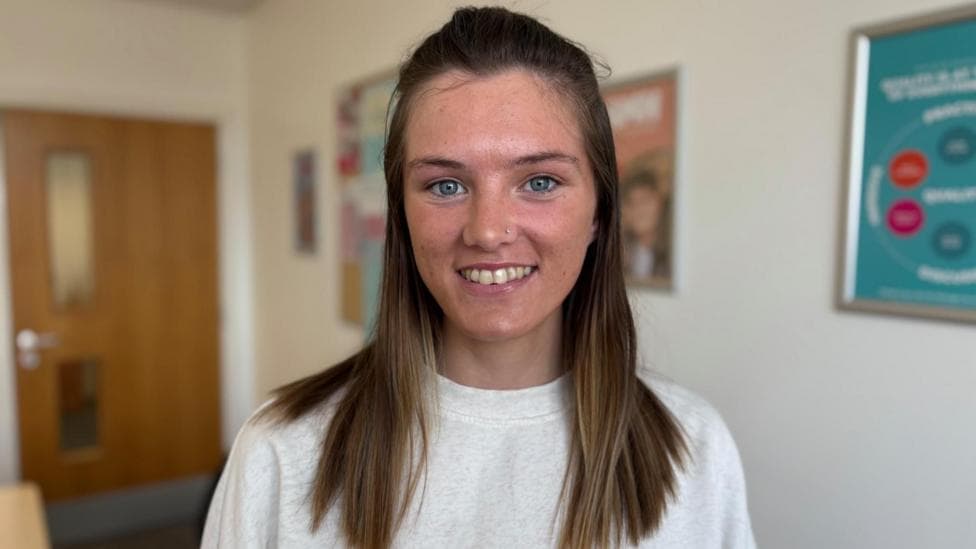
Neala Sheils spent two years submitting job applications with minimal progress before finally landing employment at a hotel last month. The 20-year-old from Glasgow had been classified as Neet—a term describing young people not engaged in education, employment, or training—during her extended search. Her eventual breakthrough came through a specialist employability programme, highlighting both the barriers facing jobless youth and the potential of targeted intervention.
Before securing work, Sheils was part of a growing cohort of young people in this category. According to the Office for National Statistics, 1,012,000 people aged 16–24 were Neet between January and March 2026, representing 13.5% of that age group and marking an increase of 89,000 over the previous year. The majority of those classified as Neet—57%—have effectively withdrawn from the labour market and are not actively seeking employment.
Sheils described her experience with standard employment support as frustrating.
I just felt as if I was repeating the same thing over and over again,she recalls of her interactions with Jobcentre staff. The inconsistency in her support arrangements—encountering a different work coach at nearly every appointment—meant she had to restart conversations repeatedly, hindering her progress toward employment.
How specialist support changed the trajectory
The turning point arrived when Sheils received a referral to an employability programme operated by SAMH, a mental health charity. The service provided targeted assistance in areas including confidence-building, collaborative skills, interview preparation, and job application strategies. Within three months of beginning this support, she secured her position.
Sheils attributes part of her earlier difficulty to her autism, which had affected her performance in previous job interviews.
Some places were basically saying, 'We can't give you the job, you've not got good confidence, your eye contact's not good', stuff like that,she explains.
But obviously that's not easy when you've got autism and those are the traits. So, it knocked my confidence a lot as well.The specialist programme took her neurodevelopmental condition into account, allowing her to address barriers that conventional recruitment processes had highlighted but not accommodated.
Looking ahead, Sheils is preparing to enrol in college, where she intends to pursue a career supporting older people living with dementia. Her journey from prolonged unemployment to employment and further education demonstrates what becomes possible when support systems account for individual circumstances.
The scale of youth inactivity across the UK
Sheils's experience reflects challenges affecting a substantial portion of young people across the country. More than one million people aged 16 to 24 across the UK are classified as Neet, a status that places them in the category of economically inactive—neither seeking work nor able to begin employment immediately. This figure underscores a persistent structural problem in youth labour markets.
Age patterns within the Neet population reveal important variations. Those between 20 and 24 are more likely to be classified as Neet than those aged 16–19 across the UK. This age group faces particular challenges as they navigate the transition from education into employment, a period when unemployment risk peaks.

Why Scotland's data gap matters
Scotland's approach to measuring youth employment differs from the rest of the UK, creating complications for comparative analysis. The nation no longer publishes Neet statistics in the same format as other UK regions. Instead, it employs a different measurement system that ceases tracking young people once they reach 19 years old—precisely when many begin experiencing the difficulties most likely to lead to prolonged joblessness.

Allison Catalano, an economist at the Fraser of Allander Institute, highlights the consequences of this methodological divergence.
They don't make that data publicly available, so we can't really suss it out on our own,she states.
We know that 16 to 19-year-olds in Scotland look better than the rest of the UK. We don't really know what's going on with those 20 to 24-year-olds.This information gap makes it impossible to determine whether Scotland is performing better or worse than the broader UK picture for this critical age cohort. According to Scottish health equity data, the Scottish Government and Skills Development Scotland track the Annual Participation Measure for ages 16–19, with 2025 figures showing 93.3% participation, but comparable metrics for older youth remain unavailable.
Catalano explains that the 20-to-24 age group represents a critical transition period.
That's the age they start moving out of it,she says of education.
So that transition period is when unemployment is most likely.The absence of reliable data for this group obscures the true extent of youth employment challenges in Scotland.
Mental health and neurodevelopmental conditions as contributing factors
Health challenges, particularly mental health difficulties and neurodevelopmental conditions such as autism and ADHD, are increasingly recognised as significant contributors to rising Neet numbers. Alex Cumming, representing SAMH, emphasises that existing support infrastructure falls short of what is needed.
I think there's some fantastic initiatives, there's some good partnership and good projects, but we need to be doing more,he states.
Cumming points to alarming trends in mental health prevalence among young people.
Mental health problems have doubled in the past 10 years. So it's more people suffering with anxiety, depression, low mood.Young people whose schooling is disrupted by these conditions often accumulate educational deficits that undermine their qualifications and erode the self-assurance necessary for progressing to further education or employment. This cascade of disadvantage can trap individuals in cycles of inactivity.
The connection between earlier educational struggles and later employment barriers is direct. When mental health or neurodevelopmental issues impede academic progress, the resulting qualification gaps create obstacles to college entry and workplace readiness. Without targeted support addressing both the underlying health conditions and the practical skills required for employment, many young people remain stuck outside the labour market.
Government response and ongoing monitoring
A Scottish Government spokesperson acknowledged the scale of intervention already undertaken, stating that the administration had supported more than 55,000 young people through employability services between April 2019 and March 2026. The spokesperson also indicated that officials were investigating improved methods to track participation among 20-to-24-year-olds, suggesting recognition of the current data limitations.
At the UK level, policy attention to youth employment remains active. The UK government's "Young people and work" interim report, last updated on 10 August 2026, indicates ongoing governmental focus on youth labour market participation. Additionally, the Office for National Statistics has scheduled a NEET data release for 27 August 2026, which may provide updated figures on UK youth inactivity trends.
What happens next
The forthcoming ONS data release on 27 August 2026 will offer a fresh snapshot of youth employment and inactivity across the UK. This update may reveal whether the upward trend in Neet numbers continues or stabilises. Meanwhile, the government's ongoing "Young people and work" initiative suggests that further policy developments may emerge from that workstream, potentially addressing gaps in specialist support like the employability services that proved transformative for Sheils.