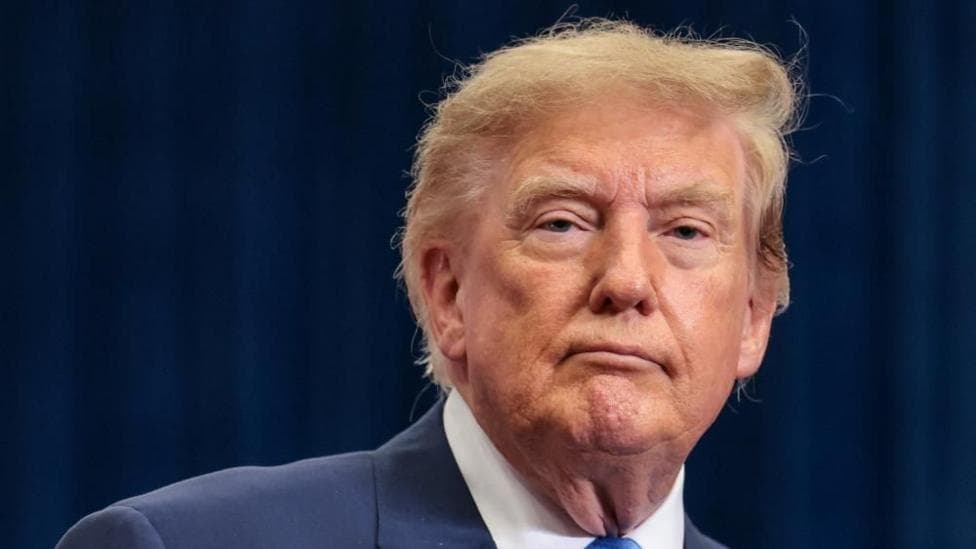
President Donald Trump has indicated that the United States' stance on the Falkland Islands is among numerous foreign policy positions currently under review, remarks that come as he urges the UK to boost its military expenditure. When questioned about the matter on Monday, Trump told reporters that he routinely reassesses American positions globally, describing the Falklands question as simply one item on a broader agenda.
The president's comments followed a question about defence funding, during which he suggested the UK faces challenges that will ultimately be resolved. His statement has reignited concerns about a potential shift in longstanding American neutrality on the disputed territory.
According to reporting on August 31, Trump did not specify whether the review would alter the US position, though he acknowledged Argentina's territorial claim to the islands.
The UK government responded swiftly to Trump's remarks, emphasising that Falkland islanders "are British with a right to determine their own future." A government spokesperson stated:
The islanders have repeatedly expressed their wish to remain a British overseas territory and our commitment to them is unwavering.
This latest development reflects a pattern of Trump administration pressure on NATO allies regarding defence spending. According to , an internal Pentagon email circulated in April proposed reviewing "European imperial possessions," including the Falkland Islands, as a pressure tactic on NATO members. The review was framed as one of several options being considered following US complaints over allied support for military operations in Iran.
The Falklands Dispute: Historical Context
The Falkland Islands, situated in the south-west Atlantic Ocean, have remained contested between Britain and Argentina for decades. In 1982, the two nations engaged in a brief but intense military conflict after Argentine forces landed on the islands to assert a territorial claim. A British military task force was dispatched to eject the Argentine forces, resulting in a 74-day war that claimed 255 British military personnel, three islanders, and 649 Argentine soldiers.
Historically, the United States has generally avoided taking sides on Falklands sovereignty since 1982. Previous US administrations have formally recognised the UK's de facto administration of the islands but have not adopted an official position regarding sovereignty. Argentina, under President Javier Milei—who maintains close ties with Trump—continues to assert its sovereignty claim over the territory.
The timing of Trump's remarks is particularly significant given that Argentina's leadership has cultivated a strong relationship with the Trump administration, potentially influencing how the US approaches the sovereignty question.

Defence Spending and NATO Commitments
Trump's comments about the Falklands have emerged alongside broader US pressure on NATO allies to increase military spending. Prime Minister Andy Burnham has committed to honouring a pledge made by his predecessor, Sir Keir Starmer, to allocate 3.5% of UK gross domestic product to core defence spending by 2035.
Chancellor John Healey has signalled that the government will establish a clear pathway to meeting NATO spending targets at the next government spending review, anticipated in spring 2027. He indicated that this plan will include a specific target date for raising defence spending to 3% of GDP. According to the UK government's defence plan, NATO is scheduled to review allies' capability plans and spending trajectories in 2029.
Healey's current position represents a shift from his earlier stance as defence secretary under Sir Keir Starmer's government, when he resigned in June over frustration with the lack of a clear timetable to reach the 3% target. In his resignation letter, Healey expressed his belief that the UK should achieve the 3% threshold by 2030.
Broader Context of US Pressure on Allies
Trump's willingness to reconsider the US position on the Falklands reflects a wider pattern of using diplomatic leverage to compel NATO members to increase defence commitments. The administration has previously indicated that military support and diplomatic recognition could be contingent on allies meeting spending targets and supporting US foreign policy objectives.
This approach marks a departure from the traditional American role as a neutral arbiter on colonial and territorial disputes. The prospect of the US weaponising its position on the Falklands has prompted concern among UK officials and defence analysts about the stability of longstanding international agreements.
What Happens Next
The UK government has committed to presenting a detailed pathway toward meeting its NATO defence spending obligations at the spring 2027 spending review. NATO allies will conduct a comprehensive review of their capability plans and spending trajectories in 2029, at which point the UK's progress toward its 3.5% target by 2035 will be assessed alongside other members' commitments.
Meanwhile, the Trump administration's formal review of the US position on Falklands sovereignty remains ongoing, with no timeline announced for a conclusion or announcement of any policy change.
Key Facts:
- The 1982 Falklands War resulted in 907 total deaths across all parties and established British military control over the islands
- The UK has committed to reaching 3.5% of GDP defence spending by 2035, with intermediate targets to be set at the spring 2027 spending review
- The US has maintained official neutrality on Falklands sovereignty since 1982, though previous administrations recognised UK de facto administration
- Argentina, under President Javier Milei, continues to assert sovereignty claims and maintains close diplomatic ties with the Trump administration
- NATO will conduct a comprehensive review of member spending and capability plans in 2029