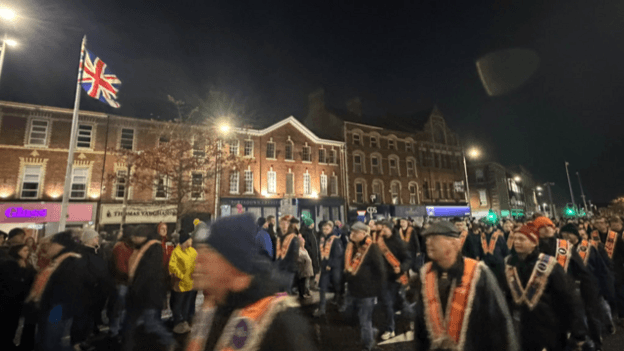
A substantial rally took place in Portadown on Saturday, 24 October, to demonstrate solidarity with the Orange Order during the ongoing Drumcree parade controversy. According to BBC News, hundreds of Orangemen paraded through the town centre alongside bands and supporters, undeterred by severe weather conditions affecting the event.
Organisers reported that the rally, which ran from 7pm to 10pm, drew approximately 5,000 participants with around 10,000 supporters in attendance, according to The Irish News. The number of bands participating had expanded to 22 by the time of the event. The rally proceeded from Watson Street into Portadown town centre for a short gathering before returning to its starting point.
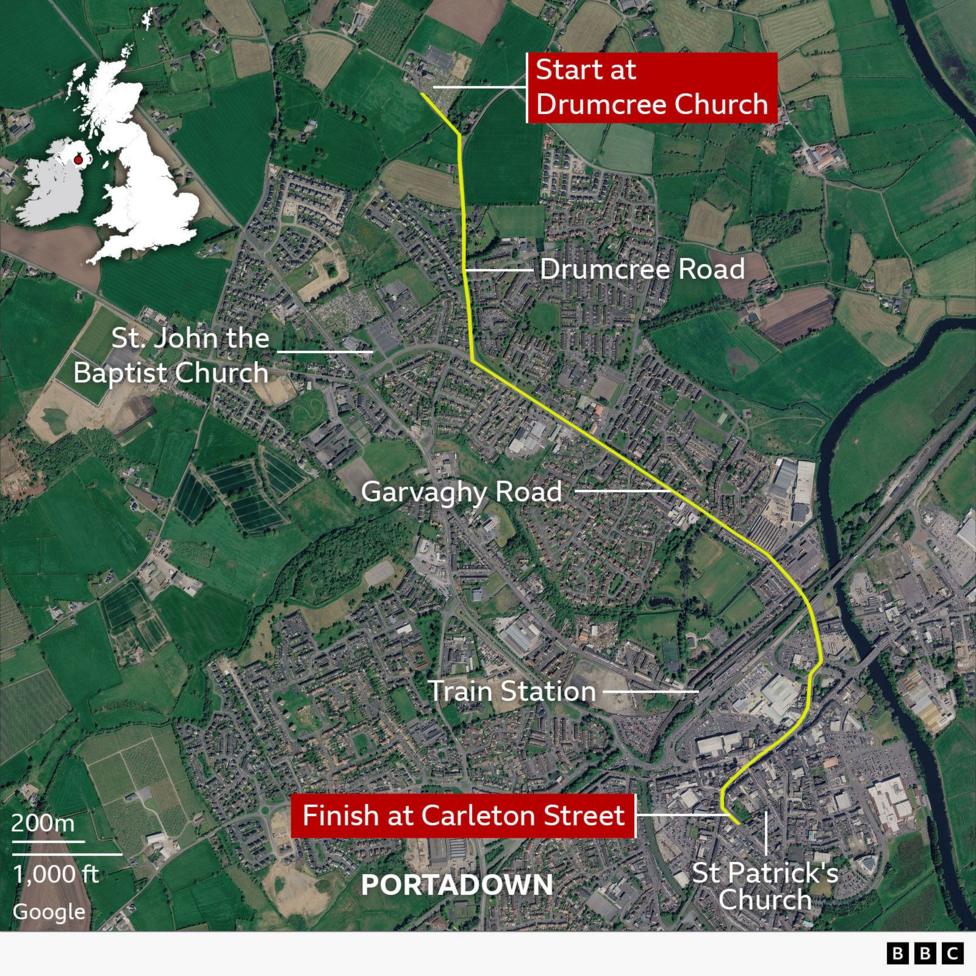
The gathering occurred amid persistent tensions surrounding the long-running Drumcree dispute, in which an Orange Order parade has been prohibited from proceeding down the predominantly nationalist Garvaghy Road in County Armagh. The Orange Order's Portadown District stated that the rally was designed to
demonstrate the strength of feeling within our community, according to Belfast Live.
Adverse weather posed a significant challenge to the event. An amber weather warning had been issued ahead of Storm Boelo, with forecasters warning that some areas could experience winds reaching 70mph during the scheduled timeframe, according to The Irish News. Despite these conditions, participants maintained their presence throughout the three-hour rally.
How did the Drumcree dispute originate?
The Drumcree parade controversy emerged in the mid-1990s and at that time threatened to destabilise the peace process. Disputes connected to the march sparked riots, roadblocks and killings. When police prevented the Orange Order from accessing the route in July 1995, a protracted standoff ensued that persisted for the following three years.
The Parades Commission was established in 1998 with the mandate to oversee marches and work to reduce tensions surrounding processions. Its 1998 determination to prohibit a march along the Garvaghy Road has been contested by the Orange Order continuously for three decades.
What recent developments have occurred in the dispute?
In September 2026, a High Court ruling overturned the Parades Commission's longstanding ban. The Parades Commission subsequently determined on 27 September that the march could proceed with restrictions in place. On that morning, up to 1,000 people, including nationalist politicians, occupied the Garvaghy Road and prevented Orangemen from marching from Drumcree Church, located approximately one mile to the west.
Subsequent attempts by the Orange Order to access the route were blocked by police. Residents maintained a continuous presence on the Garvaghy Road until 9 October, when Northern Ireland Secretary Sir Chris Bryant prohibited the parade following guidance from PSNI chief constable Jon Boutcher.
An Orange Order legal challenge to Sir Chris Bryant's decision encountered a procedural delay after the police chief was added as a defendant to the case. Belfast's High Court was informed that the challenge was being brought against both Boutcher and Sir Chris Bryant. On the same day, residents of the Garvaghy Road were unsuccessful in their attempt to challenge the Parades Commission's decision permitting the march. Court of Appeal judges clarified that their ruling addressed only the lawfulness of the decision and did not determine whether the march should take place. Lady Chief Justice Dame Siobhan Keegan noted that the ruling had been decided before Sir Chris Bryant imposed the ban.
What happens next?
A separate Portadown District parade is scheduled for Sunday, 25 October. The event is due to assemble on Carleton Street at 3pm and proceed to Thomas Street Methodist Church, accompanied by Edgarstown Accordion Band, according to Belfast Live.
Northern Ireland Secretary Sir Chris Bryant has held discussions with representatives from both communities in recent weeks as efforts continue to address the long-standing dispute.