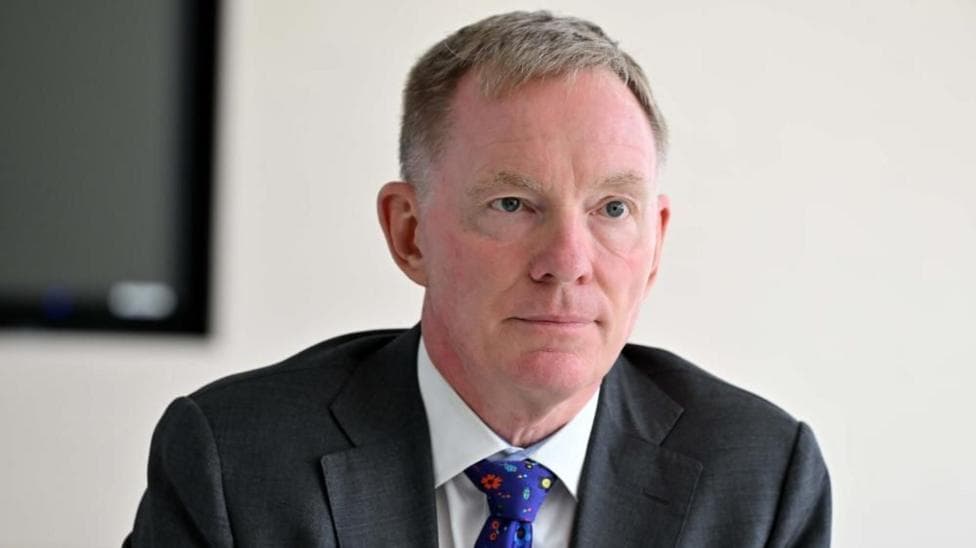
The Northern Ireland executive will reconvene discussions with the secretary of state on Friday to assess the government's financial proposal aimed at resolving the ongoing budget impasse at Stormont.
During a visit to Stormont on Monday, Sir Chris Bryant presented an initial offer of £350m annually across three years to stabilise the executive's finances. However, executive parties rejected the proposal as insufficient, arguing that Westminster would need to substantially increase its contribution for Stormont to balance its books in the current financial year.
The Friday morning discussions are expected to take place virtually. According to reporting on the negotiations, the talks will also focus on reform of Stormont institutions alongside the financial settlement.
The executive has consistently maintained that it cannot approve a budget for this financial year without additional funding from Westminster. Following the passage of an August deadline, Stormont officials obtained legal authority to expend up to 95% of the previous year's funding in the absence of ministerial agreement on the budget. According to earlier reporting, the executive has been operating on contingency budgets since April.
Prime Minister Andy Burnham pledged last week to restore proper functioning to the Stormont government through a budget settlement. While no formal deadline has been established in the Westminster talks, Number 10 is scheduled to publish its budget on 28 October, creating an expectation among some Stormont sources that any financial agreement should be finalised before that date.
What are the parties saying about the offer?
First Minister Michelle O'Neill stated after Monday's meeting with the secretary of state that the executive was now engaged in a formal "negotiation" with the government. She emphasised the need for structural change, saying:
We get to this juncture time after time, crisis point after crisis point - they need to fix the baseline. If they throw a few pounds on the table and walk away we'll end up back in this scenario.

DUP leader Gavin Robinson characterised the initial offer as falling significantly short of departmental needs. He stated:
The initial offer from the government falls well short of even some of the pressures in one department, let alone across the Northern Ireland Executive. Anybody who says we just need to get on and agree this can explain the cuts that will come as a consequence.
Ulster Unionist leader Jon Burrows acknowledged the necessity for compromise between the government and political parties on any financial package. He noted:
We certainly accept the premise that we need to come to this with credibility ....so we don't keep asking for more.
Should financial support be linked to institutional reform?
The Alliance Party has proposed that any financial agreement should be conditional on commitments to reform Stormont's institutions. Party leader Naomi Long stressed the importance of pursuing these reform discussions in parallel, particularly ahead of the next assembly election scheduled for May 2027.
The SDLP, which serves as Stormont's official opposition, has rejected the notion that the executive should avoid responsibility for approving a budget. Party leader Claire Hanna, who also met the secretary of state on Monday to advocate for executive and assembly reform, expressed frustration with the pace of negotiations. She stated:
We don't need months and months of negotiation in a stately home, everybody knows what needs to be done. If they're not done we're going to be right back here and if we fail to put these mechanisms in place ahead of the next election we're facing into more lost years.
What impact has the budget deadlock had on public services?
The absence of an agreed budget has created significant operational challenges for Northern Ireland's public sector. According to analysis from a think tank, the failure to agree a single-year budget represents the "biggest shortcoming" in departmental planning, preventing services from developing coherent strategies. Officials have previously warned that without a finalised budget, departments face potential cuts and services such as university places could be affected.
What approach is the government taking?
The Northern Ireland Secretary has indicated a "checklist not chequebook" approach to the negotiations, signalling that financial support will be accompanied by a separate programme of work involving Stormont and Treasury officials. This suggests the government intends to tie funding to specific reform commitments and performance measures rather than providing funds without conditions.
What happens next?
Friday's virtual discussions will represent the next critical juncture in resolving the budget crisis. Sir Chris Bryant is expected to hold further talks with Stormont parties in the following week to attempt to secure a funding settlement. Although no formal deadline has been set, there is an expectation that any agreement should be reached before the UK budget publication on 28 October, creating an implicit timeframe for negotiations to conclude.