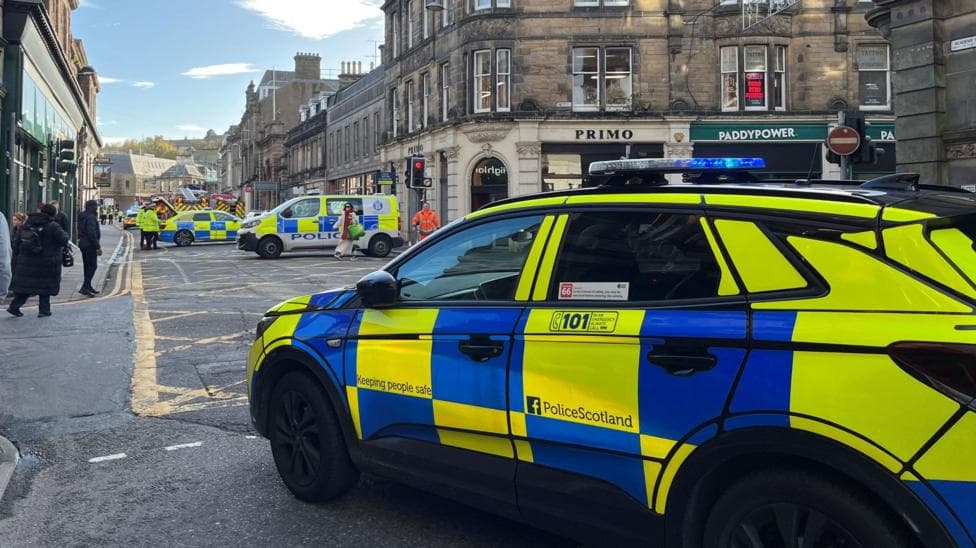
Police forces across Scotland are joining international law enforcement agencies in a coordinated effort to dismantle online networks that groom and manipulate children—predominantly girls—into acts of self-harm. According to BBC News, detectives have identified victims and perpetrators within Scotland as part of a broader investigation into these loose-knit collectives known as "The Com", which operate primarily through gaming platforms and social media.
The groups, typically composed of teenage and young adult males, have grown in visibility in recent years following high-profile cases involving sextortion, hacking, and the systematic encouragement of self-harm among vulnerable minors. Scotland has recorded one arrest to date, while England has secured a handful of convictions. The Molly Rose Foundation, a suicide prevention charity supporting young people and families affected by these networks, characterises the groups as representing "the gravest risk to children online".
The scale of the problem extends beyond individual cases. According to LBC, the National Crime Agency and Counter Terrorism Police received 500 additional referrals concerning Com activity within a six-month period in early 2026, resulting in 14 arrests. In May, the NCA indicated it was investigating approximately 200 cases involving these networks.
How do these networks operate?
The Com—short for "the community"—comprises loosely affiliated online groups engaged in abuse, financial crimes, and extremism. Specific groups identified in recent court proceedings include "The 764" and "CVLT", though membership and group dynamics shift continuously. These networks operate across a cross-border ecosystem spanning gaming platforms, livestreams, and encrypted messaging applications, according to a January 2026 briefing from the Resolver–Molly Rose Foundation.
Perpetrators typically initiate contact through seemingly innocuous gaming platforms before transitioning conversations to social media, messaging services, and private forums. Detective Chief Inspector Craig Faulds, who leads Police Scotland's efforts targeting these networks, described the crimes as "an evolution of online child abuse and sexual exploitation". He explained that abusers identify and manipulate vulnerable young people—predominantly girls aged 11 to 17—coercing them into sharing indecent images and, in the most severe cases, inflicting serious self-harm upon themselves.
In one case examined by Police Scotland's internet investigations unit, detectives reviewed nearly 1,000 images of abuse and injury to identify both the victim and the Scottish perpetrator responsible. The material, flagged by the National Centre for Missing and Exploited Children in the United States, depicted a young girl's arm covered in blood and blood used to create symbols on a bathroom wall. Officers allege the girl was directed to harm herself by a young male she encountered online.

The abusers frequently employ occult or Satanic sigils in their communications, a tactic designed to project an appearance of extreme ideology. However, Det Ch Insp Faulds suggested these symbols serve primarily as tools for demonstrating control and escalating exploitation rather than reflecting genuine ideological commitment. The underlying motivation, he indicated, centres on the degree of control abusers can exert over their victims and the extent of harm they can inflict.
Who are the perpetrators?
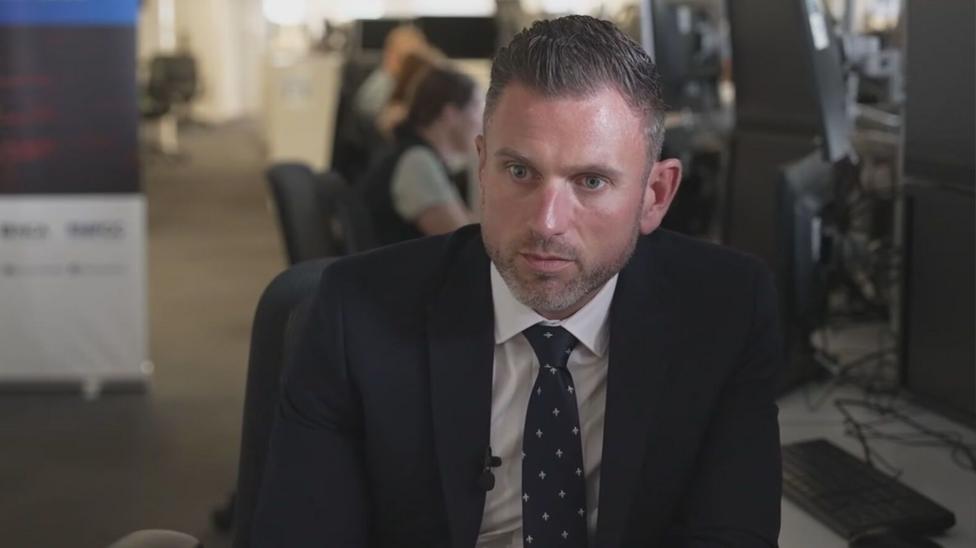
Hazel Stewart, who works for the NCA's Threat Leadership team, characterised the prevalence of Com groups as "low-volume, high-harm", emphasising that the scale of membership is less significant than the severity of harm inflicted. She noted that the abusers themselves are frequently young males who have experienced social isolation or bullying. These individuals construct alternative identities online, positioning themselves as supportive figures before gradually escalating their manipulation.
Abusers typically seek out vulnerable young females on platforms associated with suicidal ideation or eating disorders, drawing them into private communication spaces. The grooming process often begins with seemingly supportive behaviour before perpetrators encourage increasingly harmful acts. Stewart described a typical escalation pattern: initial harm might involve minor self-injury or harm to a pet or sibling, with the severity progressively intensifying as grooming and manipulation continue. Victims become trapped in situations from which they perceive no escape.
The briefing from the Resolver–Molly Rose Foundation identifies heightened vulnerability among children with adverse childhood experiences, neurodiverse children, and those experiencing exclusion due to racial, cultural, or LGBTQ+ identity. Children may be coerced into harming not only themselves but also others within their networks.
What convictions have been secured?
In August, 20-year-old Justin Swaddle received a two-year prison sentence for blackmailing and coercing more than 100 victims into acts of self-harm, including forcing them to carve his online username onto their bodies. In January 2025, 19-year-old Cameron Finnigan was jailed following conviction on charges of encouraging suicide and other offences linked to the 764 network.
Despite these prosecutions, Police Scotland has indicated it cannot provide comprehensive arrest figures for the offence of encouraging serious self-harm of a child, as the data are not currently collated in a retrievable format within freedom of information cost limits.
What is the international response?
Stewart characterised the threat as a "global problem", noting that the UK is collaborating with law enforcement agencies in the United States, Australia, Canada, and New Zealand, as well as with Interpol and Europol. This coordinated international approach reflects the borderless nature of online exploitation networks and the necessity for cross-jurisdictional cooperation in identifying and prosecuting offenders.
What are regulators and charities saying?
The Molly Rose Foundation has intensified warnings about Com networks, with chief executive Andy Burrows describing the threat as "becoming the frontline of child protection online". He criticised the online safety regulator Ofcom for responding slowly to warnings about these gangs, characterising the delay as a "failure" that exposes weaknesses in the Online Safety Act.
Burrows emphasised that Com networks represent the gravest risk to children online, with every UK police force now investigating cases. He highlighted that these risks extend beyond social media to gaming platforms and encrypted messaging applications, arguing that policymakers must move beyond blanket social media bans and instead incentivise all online platforms to implement robust safety measures as a condition of operating in the UK.
An Ofcom spokesperson responded by stating that the threats posed by Com groups are "a particular concern" and that the regulator is working closely with law enforcement and child protection agencies to address them. The statement added that Ofcom will take enforcement action against services that fail to comply with their regulatory duties.
What happens next?
The Molly Rose Foundation is urging the UK Government to strengthen the Online Safety Act and pressing Ofcom to take more concerted action against Com networks. The foundation's briefing also calls for improved information-sharing between agencies and earlier intervention to identify and protect vulnerable children before exploitation occurs.
Key Facts:
- The NCA and Counter Terrorism Police received 500 additional referrals about Com activity in a six-month period in early 2026, resulting in 14 arrests
- Victims are predominantly girls aged 11 to 17, with heightened vulnerability among those with adverse childhood experiences, neurodiverse conditions, or experiences of exclusion
- Com networks operate across gaming platforms, livestreams, social media, and encrypted messaging applications in a cross-border ecosystem
- Every UK police force is now investigating Com cases, indicating the widespread nature of the threat
- The Molly Rose Foundation and law enforcement are calling for stronger regulation and earlier intervention to protect vulnerable children online