Reform UK convenes for its annual conference in Birmingham this week as a substantially larger political force than twelve months ago, with expanded representation across Westminster, the Scottish Parliament, the Welsh Senedd, and local councils nationwide. Yet the party assembles against a backdrop of considerable political turbulence, much of it centred on financial matters and regulatory investigations.
The most prominent issue involves a £5 million donation to Nigel Farage from Christopher Harborne, a British billionaire based in Thailand. Questions have persisted about whether Farage should have declared the gift once he took his seat in Parliament. Adding to the pressure, the Metropolitan Police investigation into donations to Reform UK during the last general election campaign had progressed to interviews under caution by early July 2026, with no arrests made at that stage. Additionally, the £5 million gift was reported to the National Crime Agency by bankers over concerns it may have been laundered money.
Reform maintains that it
takes pride in its stringent vetting of donations.
When the party last gathered at the same West Midlands venue a year ago, it occupied the position of a disruptive force generating intrigue and demonstrating substantial political momentum. That momentum proved consequential enough to accelerate the departure of Sir Keir Starmer as prime minister, as the Labour Party feared the prospect of a Reform government sufficiently to conclude that Starmer's unpopularity would hinder rather than help their efforts to counter Farage's rise. The calculation proved decisive, and Starmer departed.
The political landscape has shifted considerably since then. With Starmer replaced by Yvette Cooper and a more assured Kemi Badenoch now leading the Conservative Party, early polling suggests Labour is recovering some support. Reform no longer commands the lead across all opinion surveys—in several, the party now trails. The emergence of Restore Britain, established by former Reform MP Rupert Lowe, has further fragmented the anti-establishment vote. Meanwhile, the Scottish National Party and Plaid Cymru prevailed over Reform in devolved elections in Scotland and Wales respectively. Collectively, Reform's political opponents appear more energised and competitive than they did months earlier.
No party commands widespread popularity at the national level currently, yet the competitive environment has become noticeably tighter. The party's sustained prominence has inevitably brought the scrutiny that accompanies serious political contention. With Farage positioned as a potential prime ministerial candidate and his senior colleagues as potential holders of major offices, the level of examination has intensified.
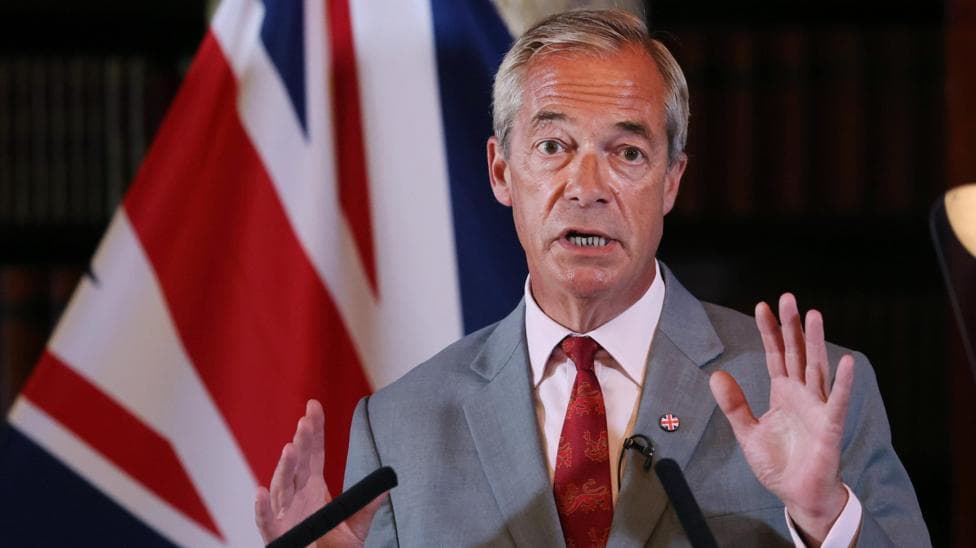
When interviewed at Reform headquarters, Farage maintained that the party has acted appropriately regarding both the £5 million donation and the police investigation. However, he offered a revealing perspective on the questions he faces.
I think what you're seeing is the establishment - in a very coordinated way - fighting back,he stated, characterising the scrutiny as a coordinated effort by entrenched interests.

When pressed on whether this suggested a conspiracy theory—that the entire establishment was arrayed against him—Farage elaborated:
When you read in the newspaper you're under investigation, and you don't even know a complaint's been made, you can see the degree of collusion that has gone on between interested parties. This will not stop. They will continually try and do this to us.
He identified the House of Commons and House of Lords as sources of opposition, describing them as institutions full of his political opponents, but declined to specify other entities or individuals involved in what he characterised as a broader pattern.
I'm talking about normal human behaviour. People who, people who hold positions of power, influence, and money don't want new kids on the block succeeding.
It is important to note that allegations of coordinated institutional collusion to undermine a political party represent a substantial claim, and no evidence supports such a conspiracy. Nevertheless, Farage's framing reveals how he interprets the environment surrounding his party—as one in which established power structures perceive Reform as a threat worthy of organised resistance.
What does Farage say about his approach going forward?
When asked whether he would abandon what critics have characterised as an aggrieved tone, Farage suggested a return to his established pattern.
I've generally, you know, gone through politics with a smile…I'll go back to doing what I've been doing for the last 34 years,he said.
Reform's pitch to delegates at the conference centres on the promise of rapid delivery. The party is presenting a list of commitments it claims it would fulfil within the first 100 days of a majority government, with each senior minister in a potential Farage administration pledging to deliver one specific, measurable objective. The 2026 national conference runs from 3 to 5 September at the National Exhibition Centre in Birmingham, with a dedicated Business Day on Thursday 3 September.
The underlying tension in Reform's positioning is evident: the party claims that numerous institutions are actively working to obstruct its progress, yet simultaneously promises to govern effectively and deliver tangible results. Whether those two propositions can coexist—whether a government convinced it faces institutional obstruction can simultaneously implement an ambitious agenda—remains an open question as the conference proceeds.

What happens next?
Reform UK's conference continues through 5 September 2026, with sessions scheduled across the three days. The party will use the platform to outline its policy agenda and energise its membership ahead of the next general election. Meanwhile, the Metropolitan Police investigation into donations continues, and the Parliamentary Standards Commissioner is examining whether Farage breached Commons rules over the undeclared £5 million donation.
Key Facts
- Reform UK has expanded its representation at Westminster, in the Scottish Parliament, the Welsh Senedd, and across local authorities since its conference a year ago
- The party faces investigations by the Metropolitan Police into donations during the last general election and by the Parliamentary Standards Commissioner regarding a £5 million gift to Farage
- Reform's polling position has weakened relative to a year ago, with Labour recovering support and the Conservative Party appearing more competitive under new leadership
- Farage characterises the scrutiny facing his party as coordinated institutional resistance, though no evidence supports claims of a formal conspiracy
- The party is positioning its conference as a platform to outline a 100-day delivery agenda for a potential majority government