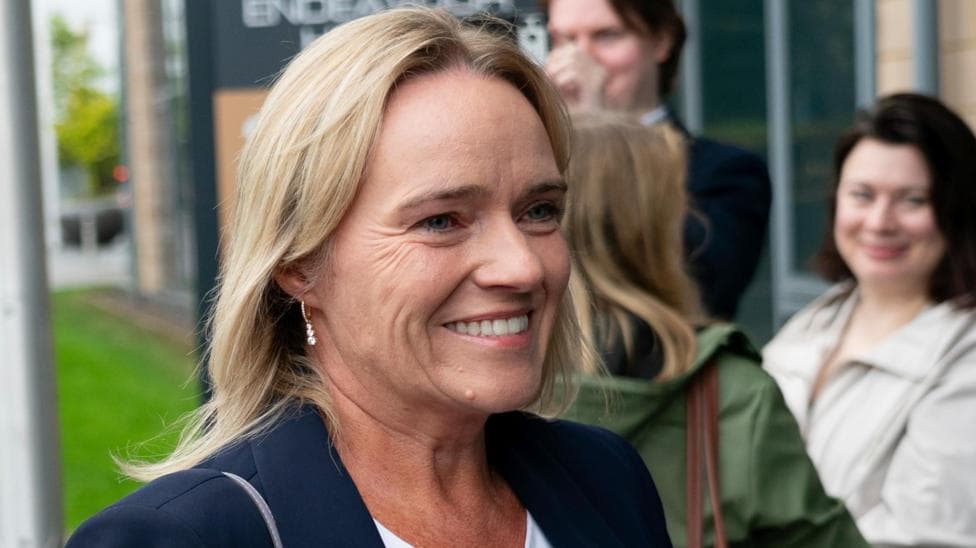
A nursing union has told an employment tribunal that it declined to provide Sandie Peggie with legal advice because her circumstances did not meet its eligibility criteria – and that her gender-critical beliefs had no influence on the decision.
Peggie is pursuing a claim against the Royal College of Nursing (RCN) after the union refused to fund her legal representation following her suspension over a complaint about her behaviour by a transgender colleague. The RCN contests the allegation.
Norman Provan, the union's associate director, gave evidence at the tribunal in Dundee on Wednesday. He explained that although he reviewed Peggie's request for legal assistance, he determined she did not qualify because she had already engaged her own independent solicitor. When asked directly by the RCN's counsel whether her gender-critical views influenced his decision, Provan stated:
They had no bearing on my decision. I applied the rules of the organisation.
This is the second employment tribunal Peggie has initiated over her dispute with Dr Beth Upton, a transgender woman. The disagreement began when Peggie objected to sharing a changing room with the doctor at Victoria Hospital in Kirkcaldy. Tensions escalated in December 2023, leading to Peggie's suspension shortly afterwards.
In her earlier tribunal against NHS Fife, Peggie achieved a partial victory in December 2025, with her harassment claim upheld while her discrimination and victimisation allegations were rejected. That case became high-profile and controversial, and Peggie subsequently pursued action against both the health board and Dr Upton with her own lawyer, Margaret Gribbon.
How the union's legal support rules work
Provan outlined the circumstances under which the RCN declines to provide members with legal advice. He stated that one key criterion is whether a member has already sought independent legal representation. Members are informed of these rules through the RCN website and in written materials, he told the tribunal.

Peggie first contacted her union representative, Stuart Fraser, in early January 2024. Weeks later, she met with then-Alba MP Neale Hanvey, who introduced her to the campaign group Sex Matters. Sex Matters subsequently provided Peggie with funding to support part of her legal action. By May 2024, she had launched her tribunal claim with her own lawyer against both the health board and Dr Upton.
Peggie continued to request legal assistance from the union, which was formally refused by Provan in January 2025. When explaining his reasoning to the tribunal, Provan said her case
didn't fit those rulesand that he had
applied those rules as I would in any case.
The broader context of the dispute
The current tribunal forms part of a longer legal battle. The Dundee hearing is a seven-day case before employment judge Melanie Sangster and is expected to continue through the week of 23–25 September 2026. Peggie's claim centres on whether the RCN discriminated against her because of her gender-critical beliefs when it refused to provide legal support.
The RCN's own guidance, published in 2021, states that members are entitled to support, guidance or representation, though the union retains discretion over the nature and scope of that assistance. This framework appears central to the union's defence of its decision to refuse Peggie's request.
The dispute with Dr Upton began after Peggie objected to sharing female changing facilities with the doctor at the Kirkcaldy hospital. The two had disagreements on the subject which came to a head in December 2023, prompting Peggie's suspension shortly afterwards. After securing her own legal representation, Peggie took both NHS Fife and Dr Upton to tribunal – a case that attracted significant public attention and controversy.
What happens next
The tribunal hearing in Dundee is scheduled to continue beyond the initial opening day, with further evidence expected through the week. Following the conclusion of this case, Peggie's separate appeal against the earlier NHS Fife tribunal ruling is anticipated to proceed, with a preliminary hearing expected before a full hearing in 2027.
The case raises questions about union support obligations and the intersection of employment law with disputes involving gender identity and changing room access in healthcare settings.