Heavy rainfall is raising hopes of relief for firefighters and volunteers battling a wildfire in the Cairngorms that has been burning for two weeks. The fire broke out on 15 July, has burned through about 10 sq miles (25 sq km), and led to the evacuation of some homes in Nethy Bridge at the weekend.
About 70 firefighters and nine fire appliances remain at the scene 14 days after the fire began. Sandy McCook, chairman of Nethy Bridge Community Council, said rain that had been falling since Monday night was expected to make a "huge difference".
How are crews responding to the fire?
The Cairngorms National Park Authority (CNPA) said progress was being made in tackling the wildfire, but added helicopters would likely continue to water bomb hotspots on Tuesday. The authority also said people should avoid the Glenmore, Abernethy and Loch Morlich areas because they were unsafe due to the firefighting operation.
Days of dry and windy weather have made conditions difficult for fire crews and volunteers fighting flames across peatland moors and woodland. McCook said residents in Nethy Bridge hoped the change in weather would help efforts to tackle remaining hotspots.
"The overnight and continuing rain today will undoubtedly make a huge difference to the firefighting."
"There is a distinct smell of smoke around but that will be from the rain and lack of wind."
CNPA said the Scottish Fire and Rescue Service (SFRS) reported on Monday evening that visible flames had reduced, but warned that large areas were still smouldering. The park authority said the fire was still burning deep in the peat soil.
It added that helicopters, sourced and funded by Forestry and Land Scotland, would likely continue water bombing on Tuesday, assisted by drones equipped with thermal cameras to detect hotspots.
What has the fire affected so far?
The fire broke out near the village of Glenmore, outside Aviemore, on 15 July and led to residents and campsites being evacuated. At its height, more than 500 firefighters were involved in the response, and Police Scotland declared it a "major incident" on Friday.
Some local groups have been critical of ministers for being slow in scaling up the response to the fire.

On Monday, Scotland's justice secretary denied trying start a political row after rejecting an offer of UK military support to tackle a major wildfire in the Cairngorms.
The UK government said it would provide military helicopters for heavy lifting, along with support from stand-by battalions, after a major incident was declared at the weekend.
But Neil Gray, whose ministerial responsibilities include the fire service, said it had been unable to fulfil a "specific request" for water-bombing helicopters and that firefighters on the ground had the resources which were needed.
A satellite image taken on Monday morning of areas of the wildfire was captured by SatVu's HotSat-2 satellite at 04:39 on Monday.
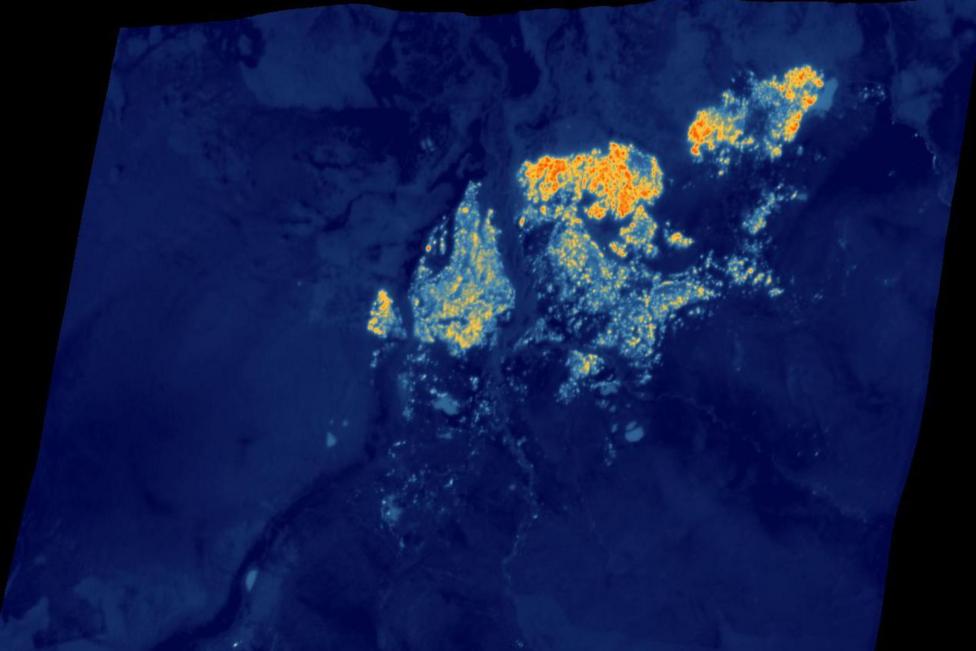
SatVu said the picture showed fire fronts moving north in the Abernethy National Nature Reserve, one of the areas affected by the incident. The company said that behind the most intense "flaming zones", the fire had left a trail of burning vegetation.
Why is the response being debated?
Local criticism has focused on claims that ministers were slow to scale up the response. That debate intensified after the UK government offered military helicopters for heavy lifting and support from stand-by battalions, following the declaration of a major incident.
Neil Gray said the Scottish Government had not been able to meet a "specific request" for water-bombing helicopters and that crews on the ground had the resources they needed.
Key Facts
- The wildfire broke out on 15 July near Glenmore, outside Aviemore.
- About 70 firefighters and nine fire appliances were still at the scene.
- The fire has burned through about 10 sq miles (25 sq km).
- Some homes in Nethy Bridge were evacuated at the weekend.
- More than 500 firefighters were involved at the height of the response.