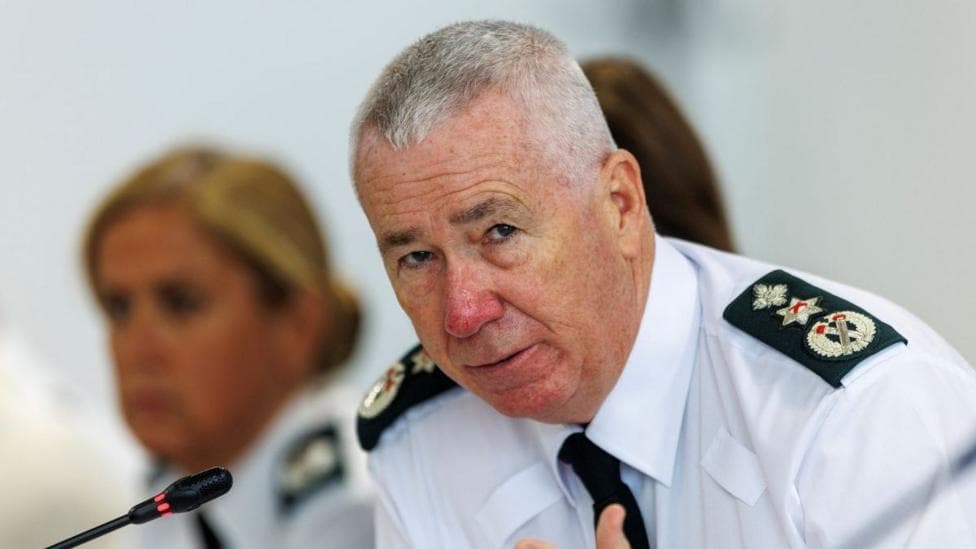
The Police Service of Northern Ireland (PSNI) is preparing to forward initial investigation files to the Public Prosecution Service (PPS) imminently following the October protests on Garvaghy Road, Chief Constable Jon Boutcher announced to the Policing Board. According to BBC News, the number of people suspected of criminal offences connected to the dispute has reached 65, with 23 individuals interviewed so far.
The standoff erupted in October when up to 1,000 protesters, including First Minister Michelle O'Neill and other senior Sinn Féin politicians, blocked Garvaghy Road in Portadown, County Armagh, to prevent an Orange Order parade from proceeding along the predominantly nationalist street. A court had previously ruled the march could go ahead, but the Parades Commission's original decision to restrict the route was overturned in court, leading to the contentious decision to permit it with conditions.
Boutcher confirmed that the operation has cost £5.5m and strained the PSNI's already stretched budget. He stated that files would reach prosecutors within "days rather than months" and emphasised the force's commitment to the investigation.
"We are now reaching stages where files I know imminently will be passed to the public prosecution service but it's going to be an ongoing process and everyday we're interviewing more people... So lets wait to see what the public prosecution say about the evidence, about any potential criminal processes that may result,"Boutcher said.
The investigation is examining potential offences including taking part in an unnotified protest, obstructing a lawful parade and breaching a Parades Commission determination. A dedicated team of 30 officers has been reviewing more than 70 hours of footage from the protest to identify additional suspects.
Who has been interviewed?
Among those questioned are First Minister Michelle O'Neill and other prominent Sinn Féin figures who were photographed blocking the road. The politicians have defended their participation, with O'Neill asserting it was "always the right thing to do to stand on the Garvaghy Road" and stating the party remained proud of its decision. Assembly member Gerry Carroll was also interviewed by police, describing the process as voluntary and noting he provided a prepared statement.
Boutcher rejected suggestions that the investigation is progressing slowly, defending the pace of the operation.
"We're getting on with this very quickly ... I can't say whether 65 (people) is the limit. I know there have ben frustrations in the past about investigations that have taken a huge amount of time and felt like they were glacially slow. That's not the position with this."
What is the Drumcree dispute?
The Drumcree controversy originated in the mid-1990s when tensions over Orange Order parades down Garvaghy Road nearly destabilised the Northern Ireland peace process. When police blocked the march in July 1995, a tense standoff ensued, repeating annually for three years. The Parades Commission was established in 1998 to regulate contentious marches, and its restrictions on the route remained in place until the 2026 decision.
The dispute has a history marked by significant unrest. Earlier violence included riots, roadblocks and killings, linked to tensions that nearly derailed the peace process. The latest escalation began when the Parades Commission initially blocked the march, a decision subsequently overturned in court.
On 27 September, the Parades Commission ruled the march could proceed with restrictions in place. The Orange Order's parade application was scaled back to 35 participants, rather than the 60 it had requested, and the commission required it to begin by 08:00. However, the mass blockade prevented the march from taking place, triggering an almost two-week standoff between protesters and Orange Order members and their supporters.
The Garvaghy Road Residents Coalition has mounted legal challenges to the Parades Commission's decisions. Most recently, the coalition lodged a fresh Court of Appeal challenge, arguing the Parades Commission misrepresented PSNI evidence about the risk of disorder.
Since Chief Constable Boutcher's decision to ban the parade nearly three weeks ago, daily protests have diminished, with the dispute increasingly moving into the courtroom.
What happens next?
The PPS will review the files forwarded by the PSNI to determine whether criminal charges should be pursued. An independent review of the Parades Commission, led by Sir John O'Hara KC, is due to begin shortly and be completed before the end of November 2026, which may provide broader context for how such disputes are managed in future.