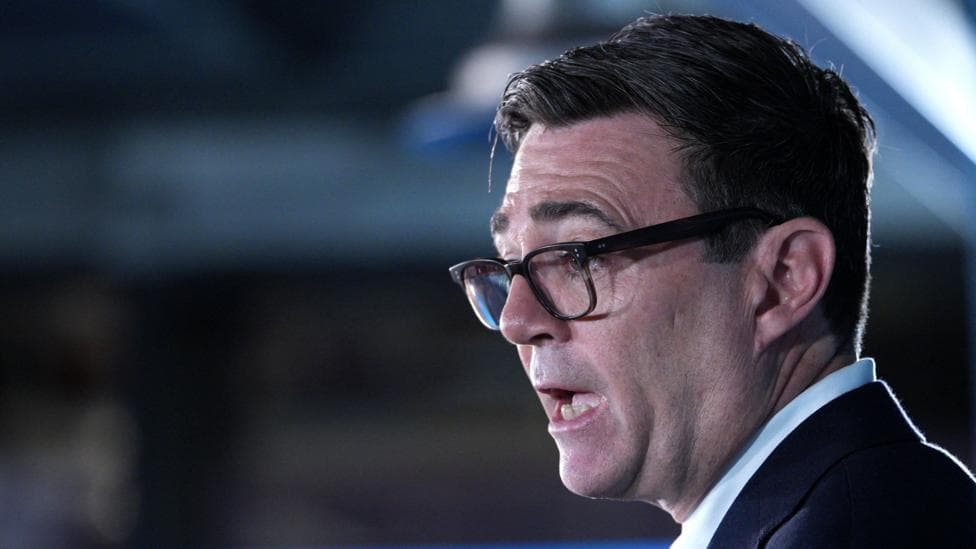
Prime Minister Andy Burnham has stated that Russia interfered with the 2016 Brexit referendum, marking the first time a UK leader has made such an assertion publicly. He also cautioned that comparable interference operations are currently underway in France and Germany, and disclosed that he had sought clarification on Russian involvement upon taking office.
In an interview with The Rest is Politics podcast scheduled for release on 12 October 2026, Burnham explained that he had specifically inquired about potential Russian interference in the 2016 vote when he arrived at No 10.
"I've had the clear answer that, yes, there was."He went on to suggest that the government had not adequately communicated the scale of foreign attempts to destabilise the UK's political system.
"I think we've been too much on the back foot on that actually and we haven't informed people sufficiently about the extent to which people are seeking to disrupt the political process from overseas."
However, Burnham declined to elaborate on the specific nature or magnitude of Moscow's alleged activities during the referendum campaign. According to reporting from a major international news agency, Burnham did not identify who provided him with the assessment about the referendum, what evidence underpinned it, or whether the alleged interference materially affected the outcome. The 2016 referendum resulted in 52% voting to leave the European Union and 48% voting to remain.
What evidence exists of Russian interference?
In 2020, Parliament's Intelligence and Security Committee released a comprehensive report examining Russian interventions in UK elections and referendums. The committee did not reach a definitive conclusion on whether Russia had attempted to sway the EU referendum specifically, but it did criticise successive governments for neglecting to fully evaluate or counteract the threat. According to analysis of the committee's findings, open-source research had identified pro-Brexit and anti-EU material distributed by Russian state-backed outlets RT and Sputnik, alongside suspected activity by social-media accounts characterised as bots and trolls, though the committee did not establish whether these efforts succeeded in influencing voters.
The Russian foreign minister rejected the 2020 report outright, labelling it "Russophobia", while a Kremlin spokesman denied that Russia interfered in other nations' elections. Nevertheless, in the same year, the then-Conservative government stated it was "almost certain that Russian actors sought to interfere" in the 2019 general election. According to recent reporting, Burnham has said the UK possessed evidence Russia attempted to interfere in that 2019 contest and had sought to stoke tensions and unrest following "horrific events."
How is Russia spreading disinformation today?
Contemporary Russian disinformation campaigns employ increasingly sophisticated methods. A fact-checking initiative has documented Russian-linked disinformation operations that utilise artificial intelligence to generate fake videos impersonating journalists and news organisations reporting on Ukraine. One fabricated news website falsely reported that Ukrainian President Volodymyr Zelensky had purchased a mansion previously owned by King Charles at a reduced price.
Vijay Rangarajan, head of the UK Electoral Commission, informed MPs earlier this year that Russian deepfake videos had been "used extensively in elections around the world", cautioning that
"There is no reason to assume Britain would be an exception."
What is the government's response?
During his recent address to the United Nations, Burnham accused Russian agencies of deploying "every means at their disposal to spread lies and disinformation and prey on people's fears". He announced that the UK would establish a new centre designed to "stem the poisonous tide" of disinformation emanating from hostile actors.
A Downing Street spokesperson outlined the government's broader strategy:
"We are focused on ensuring our citizens and our institutions are protected from foreign powers and their proxies seeking to threaten lives and undermine our democratic values. We are doing this by strengthening our powers through the National Security Act, strengthening the resilience of our institutions and critical national infrastructure, strengthening our borders, and strengthening our police and intelligence agencies."
Burnham also discussed the problem of Russian interference with Chancellor Friedrich Merz during a visit to Germany earlier in the week.
"There is certainly misinformation, disinformation that is emanating from Russia into German politics,"he said. He emphasised the importance of transparency on the issue, stating:
"These things are important now to put clearly on the record and I believe help voters in Germany and France understand that some of this politics is instigated via our enemies, namely Russia."

How have pro-Brexit groups responded?
Britain Unbound, a pro-Brexit campaign organisation, characterised Burnham's remarks as
"another crude attempt to undermine the legitimacy of the decision that the British people made in 2016"."The group acknowledged that foreign interference in UK elections was "obviously unacceptable" but contended:
"There is no good reason to believe that Russian intervention influenced the outcome of the referendum in 2016. It is also insulting to suggest that voters were so easily duped."
Key Facts
- Burnham is the first UK prime minister to publicly state that Russia interfered with the 2016 Brexit referendum, which resulted in a 52-48 vote in favour of leaving the EU.
- The 2020 Intelligence and Security Committee report identified pro-Brexit material from Russian state outlets but did not definitively conclude whether interference affected the referendum outcome.
- The government has announced plans to establish a new centre to counter Russian disinformation campaigns, which increasingly employ artificial intelligence and deepfake technology.
- Burnham stated that similar Russian interference operations are currently active in France and Germany, and he has discussed the threat with German Chancellor Friedrich Merz.