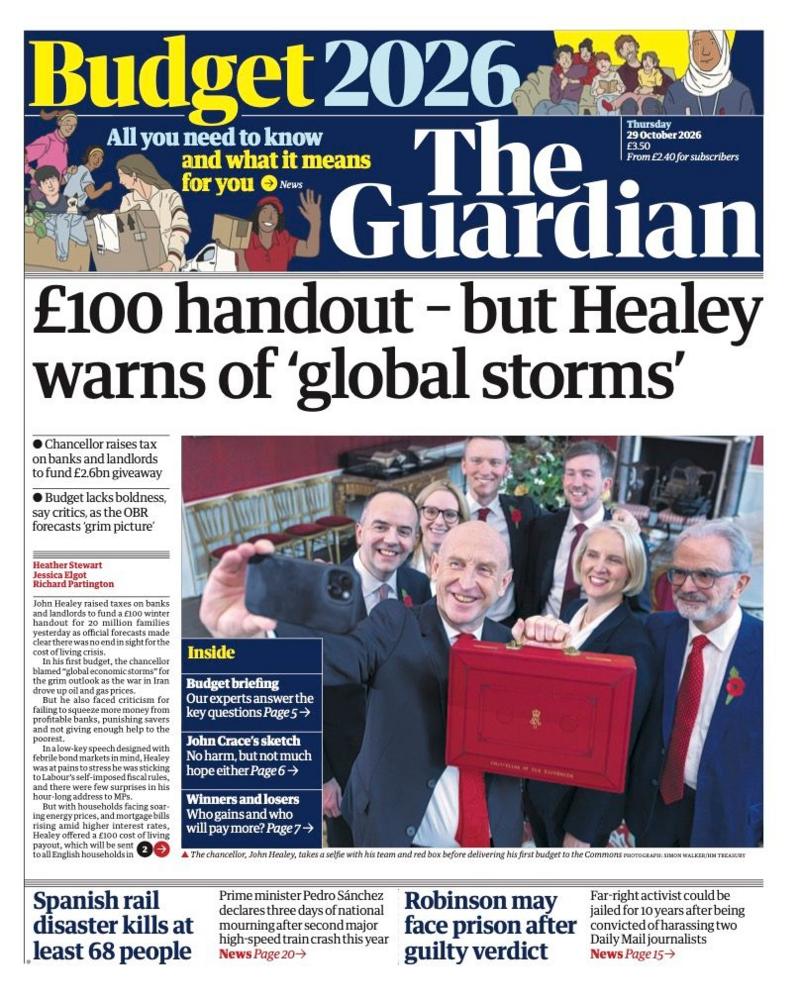
Newspapers across the UK devoted their front pages on 28 October 2026 to Chancellor John Healey's first Budget, delivered to Parliament that day. According to BBC News, the papers offered sharply divided assessments of the fiscal statement, with some praising targeted support for struggling households while others attacked what they saw as a lack of bold decision-making on welfare and defence.
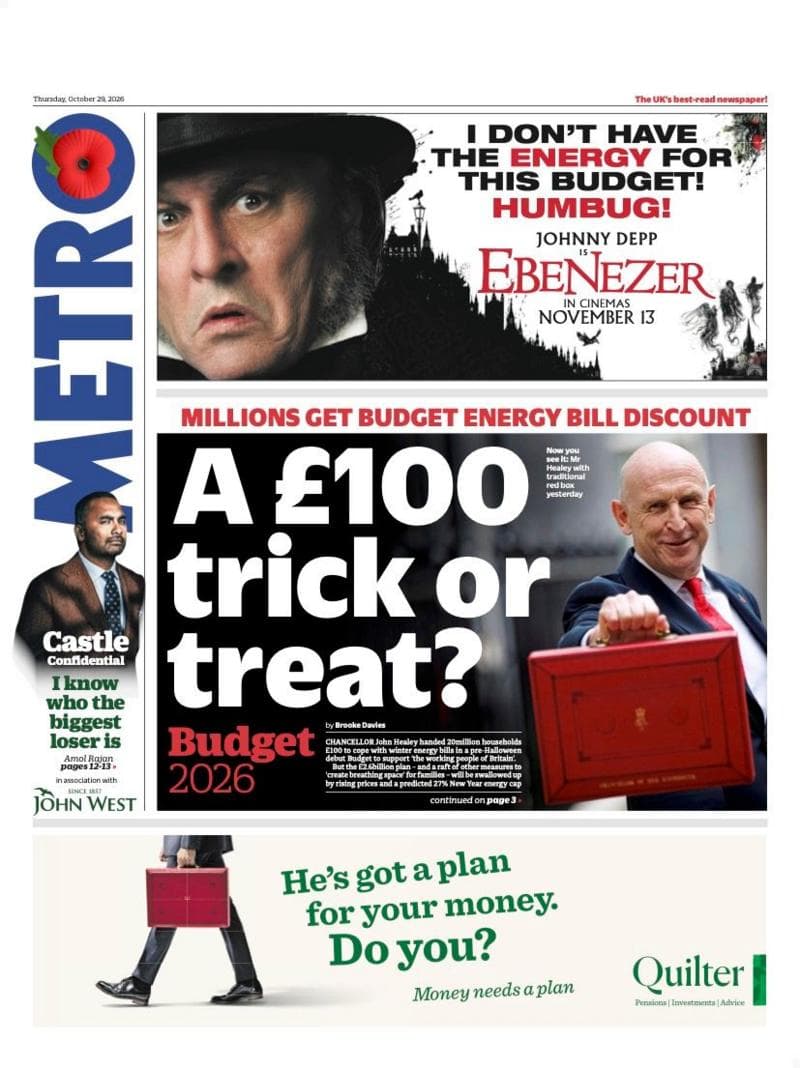
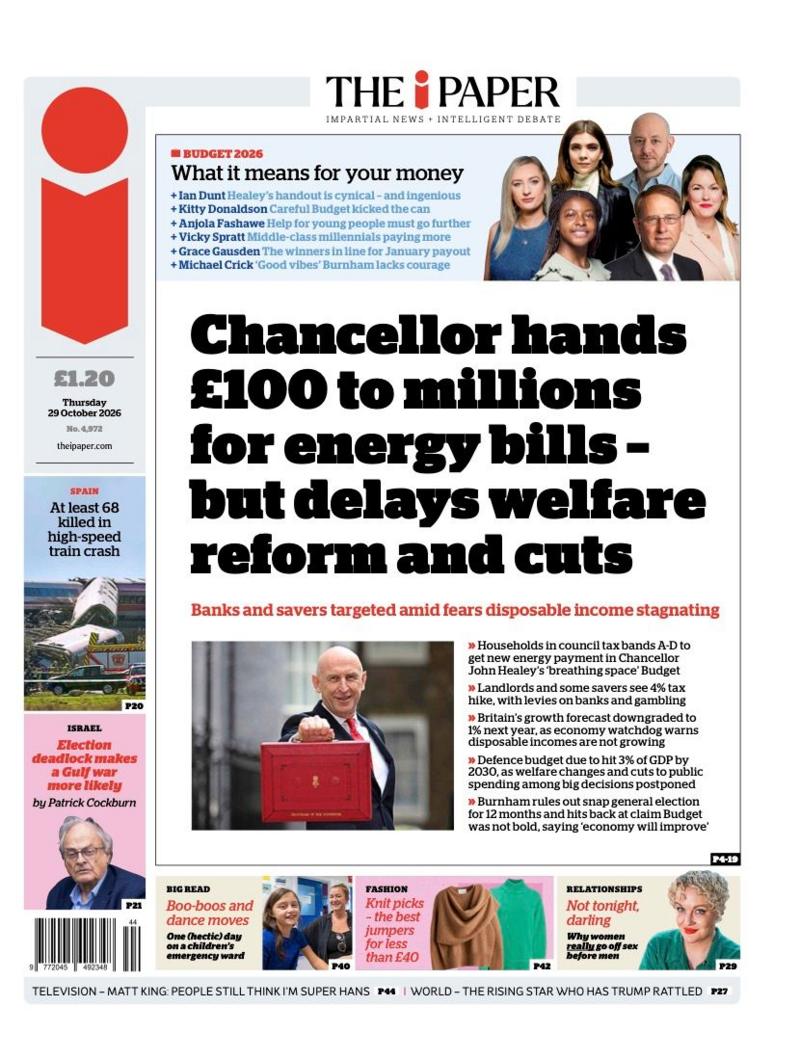
The centrepiece of Healey's announcement was a £100 energy payment aimed at millions of households facing winter heating costs. The £2.6 billion scheme targets households in council tax bands A to D and is expected to be paid automatically in January into the account used to pay council tax, with no application required. The Metro questioned whether this pre-Halloween announcement amounted to a "trick or treat", warning that the discount "will be swallowed up by rising prices".
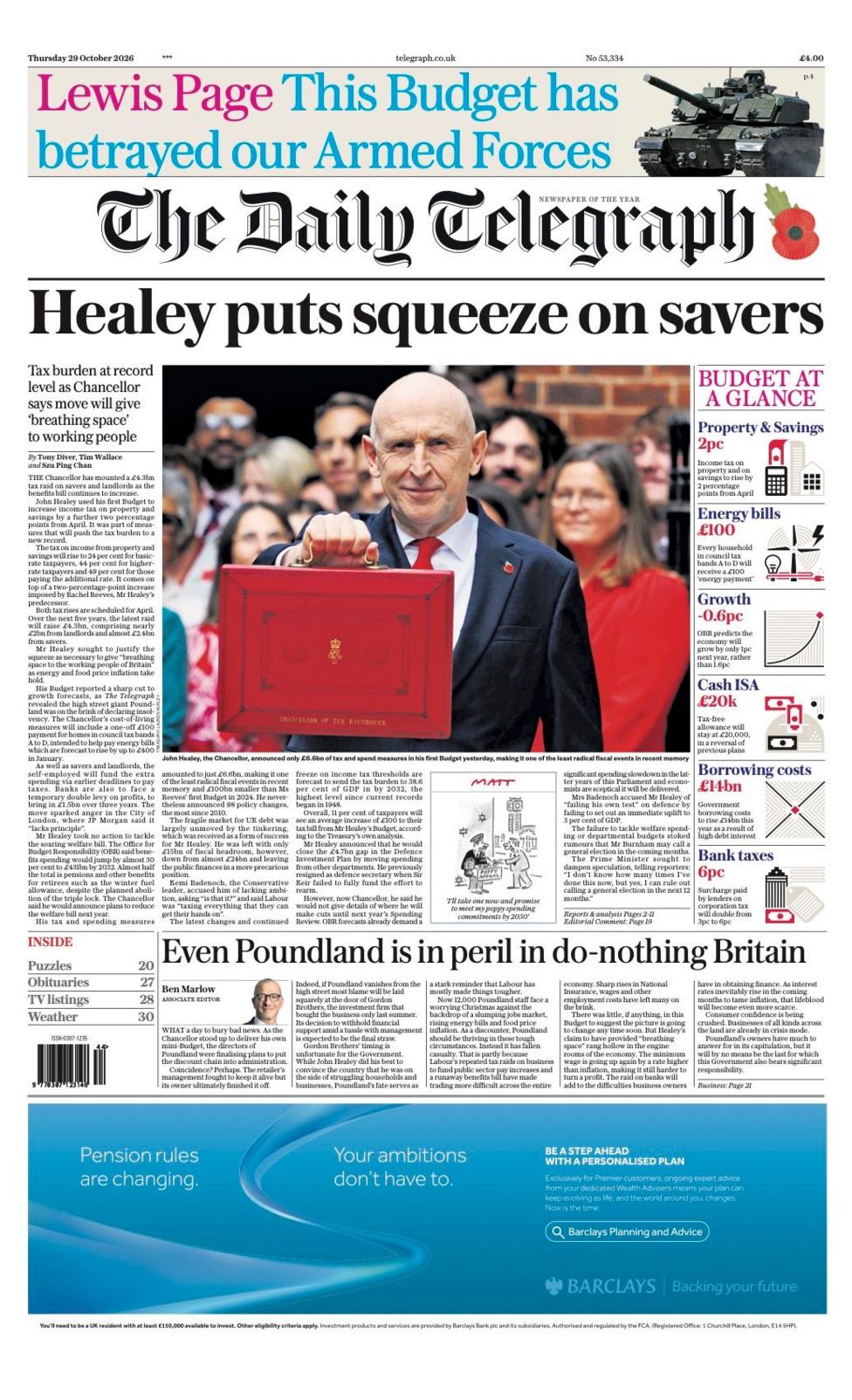
To fund these measures, Healey announced what multiple papers described as a substantial tax raid. The Times reported that the chancellor "has started a tax raid on landlords, savers and banks to fund handouts for 20 million households". The Daily Telegraph highlighted a "£4.3bn tax raid on savers and landlords", characterising it as a "squeeze on savers". The Budget also extends the reduced VAT on electricity through July, which the government says will lower the annual price cap by £50.
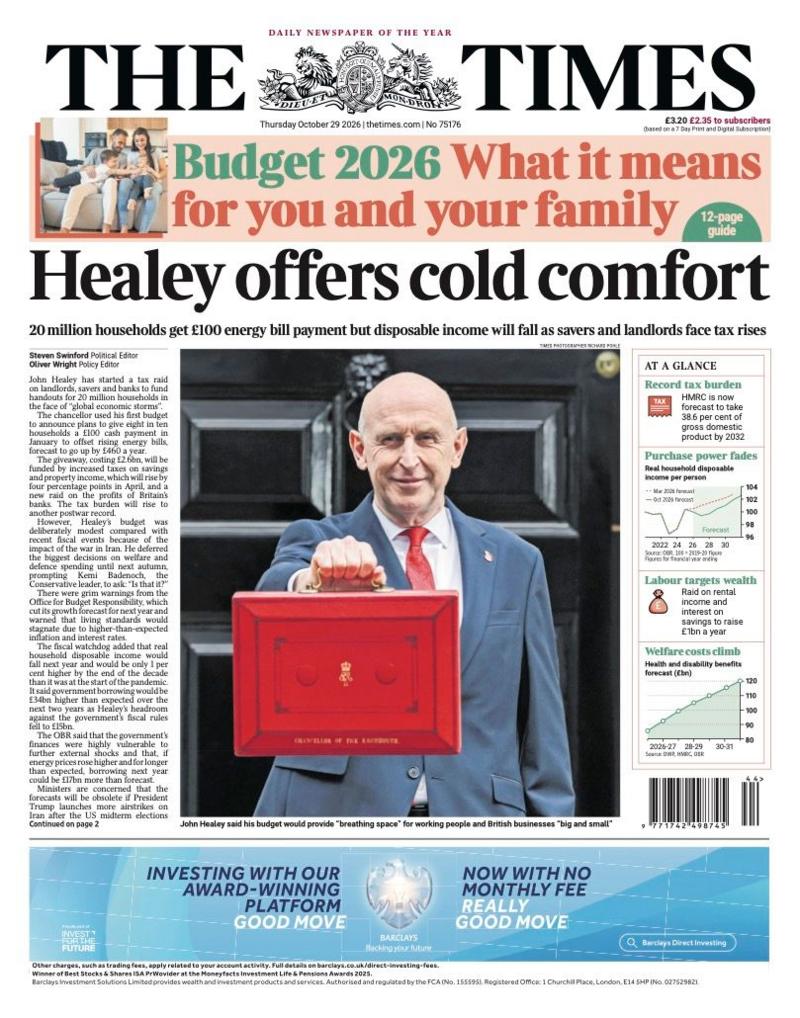
Beyond the energy payment, the government introduced additional cost-of-living support. Gas standing charges are due to be removed for around 23 million homes from next year; shifting the cost to unit rates could save about 60% of households an average of £45 a year, though heavier gas users may pay more. Healey justified these measures by pointing to external pressures, warning that
global economic storms, including the war in Iran, were behind the cost-of-living crisis continuing.
How did the papers assess the Budget's boldness?
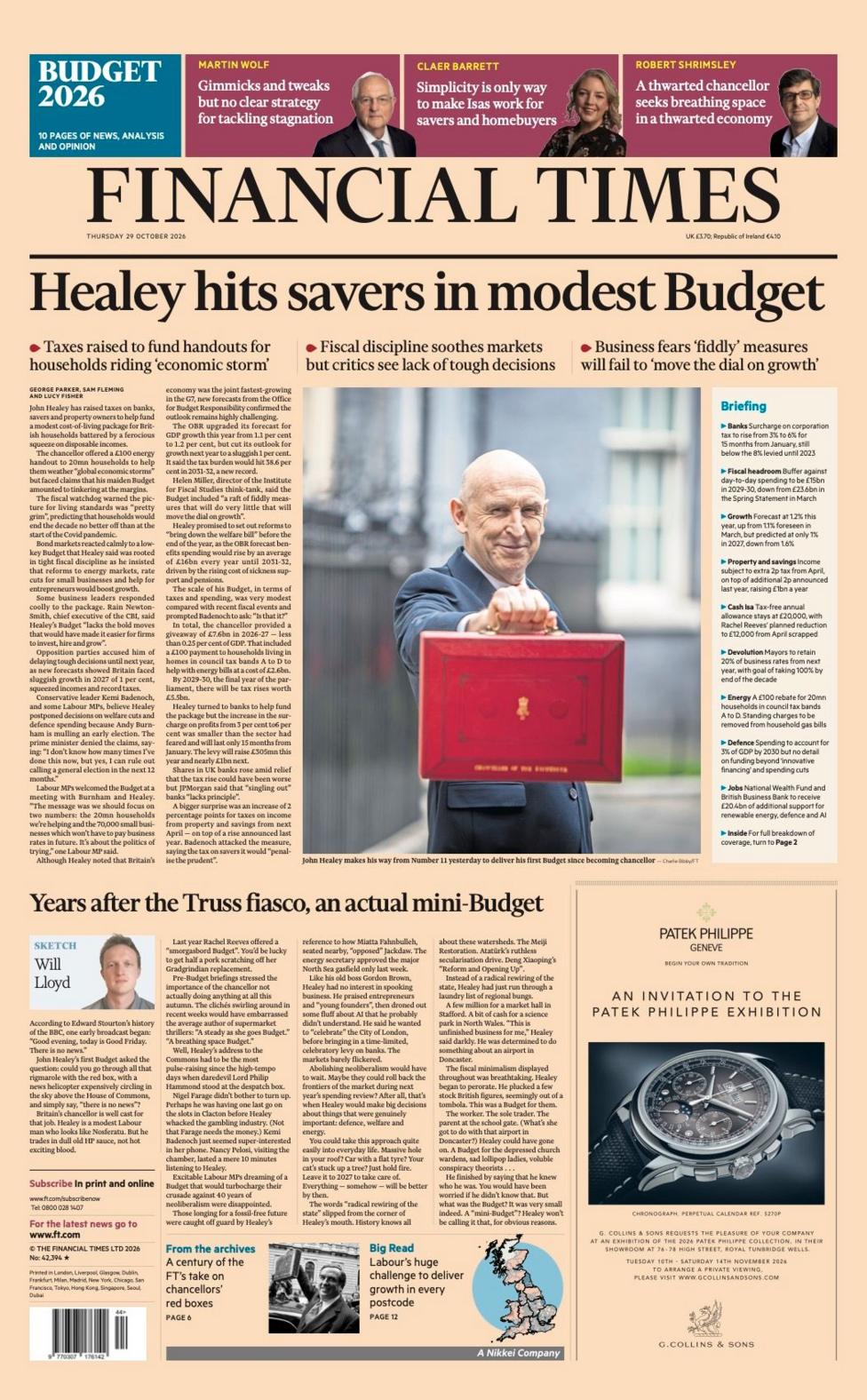
Assessments of the Budget's ambition divided sharply along political lines. The Financial Times and The Times both described Healey's approach as "modest". A senior government figure told the Financial Times the Budget was "not radical, but we don't think the markets would have worn something bigger". The Guardian similarly noted that Healey delivered "a low key speech designed with febrile bond markets in mind". The Times explained that the Budget was "deliberately modest", as Healey deferred major decisions on welfare and defence spending until the following autumn.
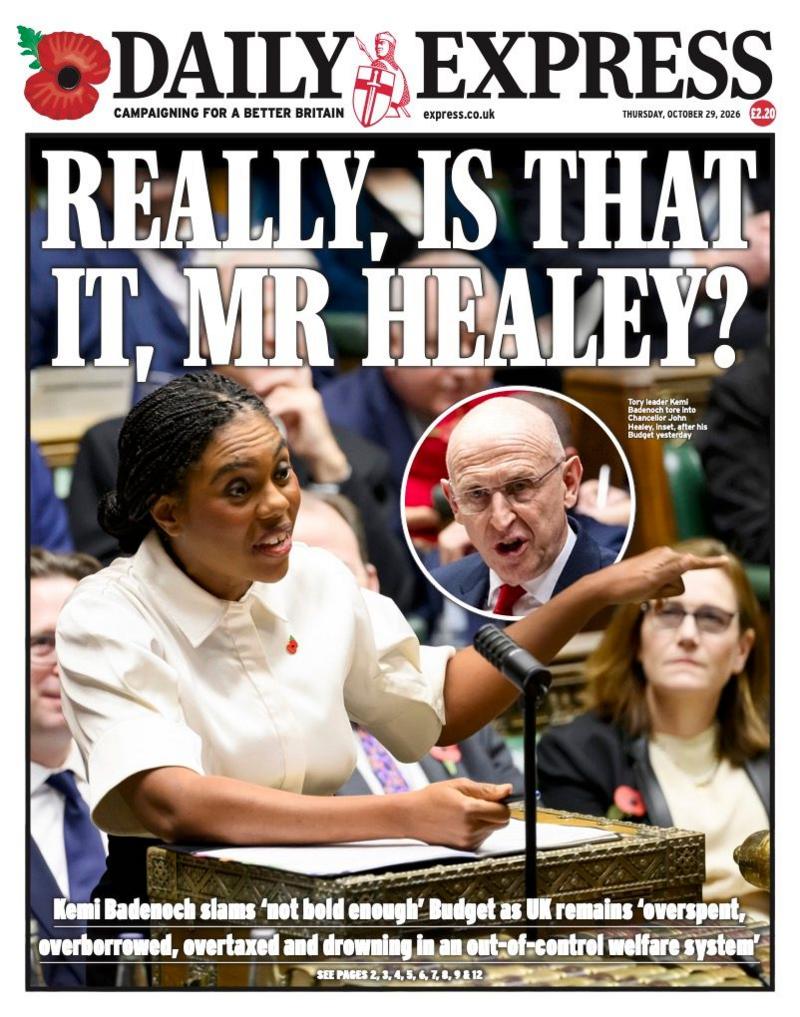
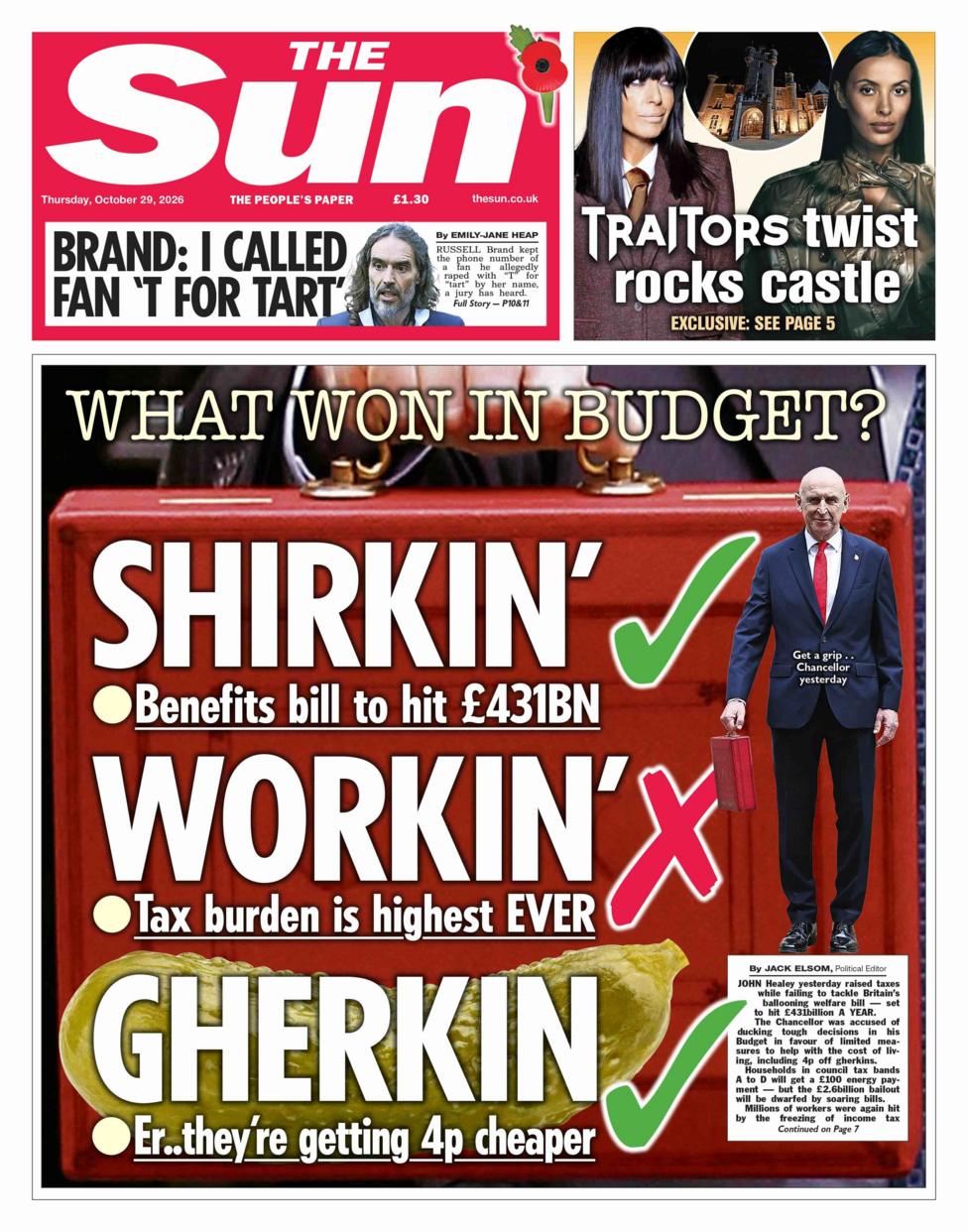
Conservative opposition was swift and pointed. Kemi Badenoch, the Tory leader, criticised the Budget as "not bold enough". The Daily Express quoted her assertion that the government was "overspent, overborrowed, overtaxed and drowning in an out-of-control welfare system". Sir Ben Wallace, the former Conservative defence secretary, accused Healey of putting "benefits before bullets", highlighting concerns about defence spending. The Sun's verdict was blunt:
All the chancellor had to offer was the sound of the cans being kicked down the road.
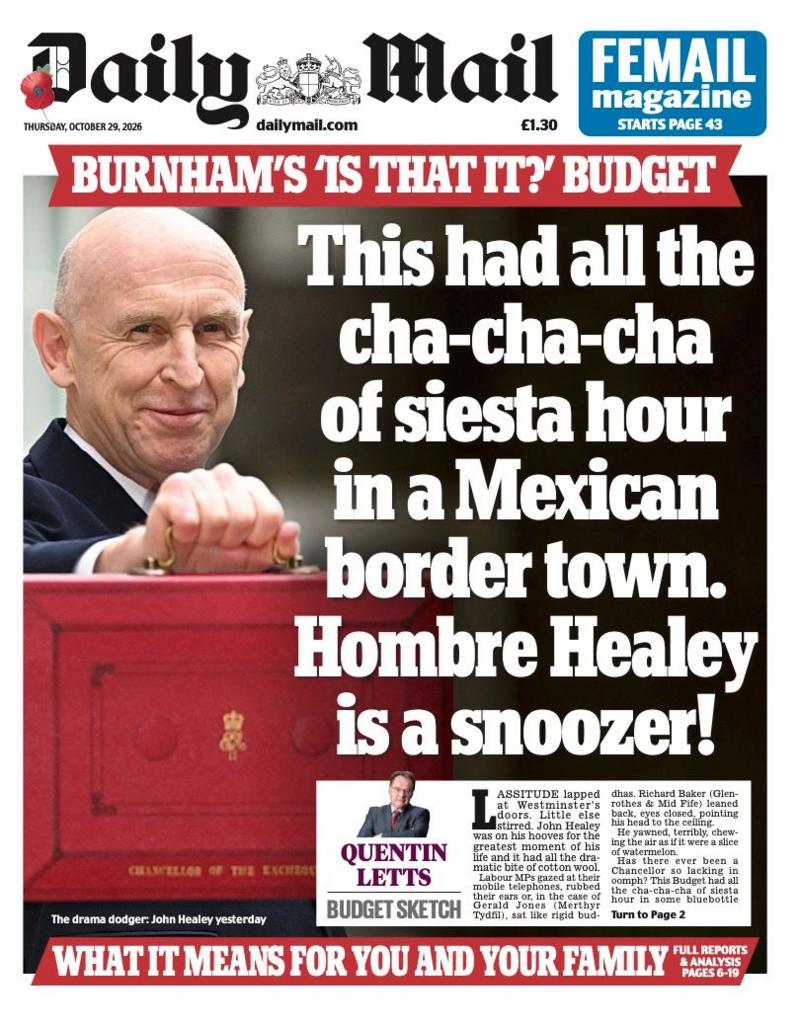
The Daily Mail offered perhaps the harshest assessment. In an editorial, the paper described the Budget as "a snoozer" and argued that rather than serving as a blueprint for national renewal, it was merely a holding statement that postponed every major decision facing the country. Quentin Letts, writing in the Mail's analysis, suggested the Budget "had all the dramatic bite of cotton wool". The Daily Telegraph and The Sun both criticised Healey for raising taxes on banks, savers and landlords while failing to tackle Britain's "ballooning welfare bill".
What positive coverage did the Budget receive?
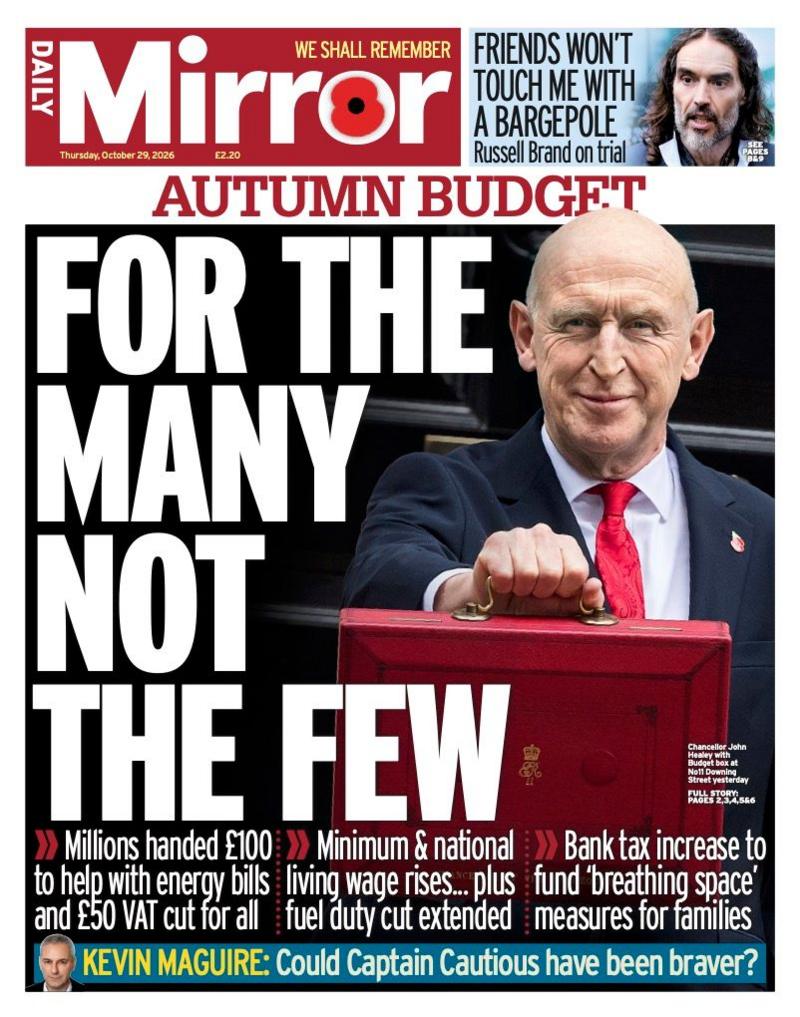
The Daily Mirror offered a more supportive assessment, titling its coverage "For the Many, Not the Few" and highlighting the iconic red despatch box on its front page. The paper emphasised that Healey had unveiled a range of measures to help cash-strapped families and struggling companies. However, even the Mirror's columnist Kevin Maguire questioned whether the chancellor could have been braver and more radical, suggesting a bigger tax raid on banks and oil and gas companies would have been justified.
The i Paper focused on the practical details of the energy payment, noting that households in council tax bands A to D would receive the £100 support. The paper also reported that the Prime Minister had ruled out a snap general election and defended the Budget's approach, saying the "economy will improve".
What other stories featured in the papers?
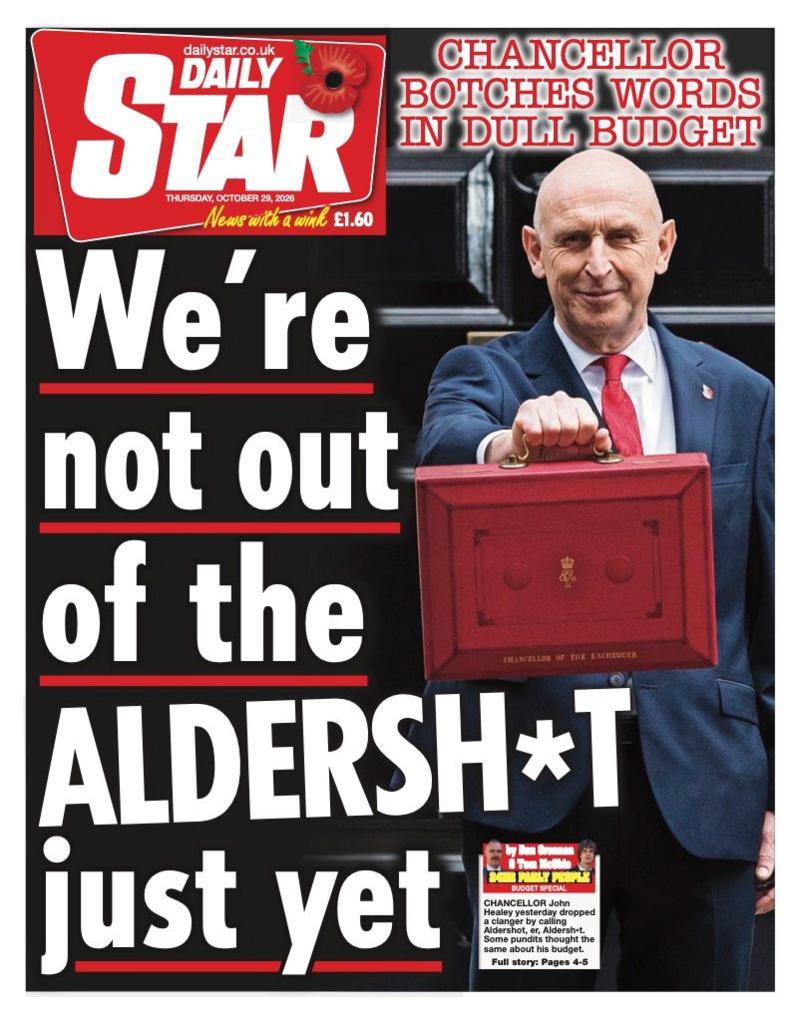
The Daily Star drew attention to a verbal stumble by Healey during his speech, when he called Aldershot "er, Aldersh*t", describing the overall Budget as "dull". The Telegraph reported separately that the high street retailer Poundland was on the "brink of declaring insolvency", raising questions about the effectiveness of government support for struggling businesses even as Healey attempted to help them.
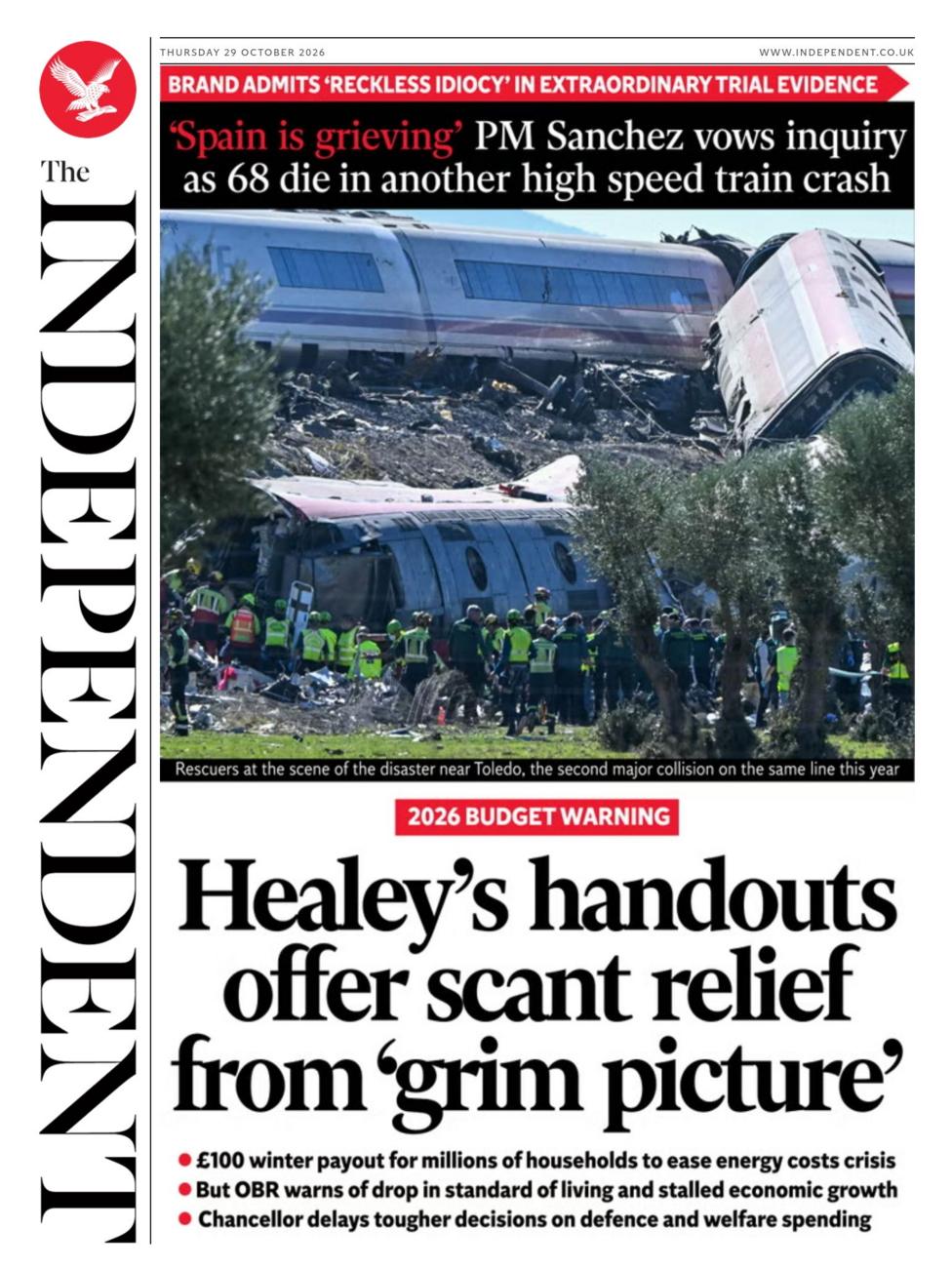
The Independent led its front page with coverage of Spain's deadliest train disaster in 13 years, after two trains collided just south of Madrid on 27 October. The paper noted that
Spain is grievingand observed that Healey's Budget "offers scant relief from 'grim picture'".
The Guardian highlighted a separate controversy involving Nigel Farage, reporting his claim that he had been absent from the Commons on Budget day to avoid a "physical altercation" with another MP over seating arrangements. Farage stated that a green paper slip reserving his seat had been removed. The Guardian explained that the slip was not properly stamped with the date, which accounted for its removal.
The Mirror also reported on a lighter story: a grandmother's jewellery collection discovered in a dusty attic during a house clearance in Malvern, Worcestershire, had sold at auction for more than £500,000. The hoard included pieces spanning from the 19th century through to modern times.
What happens next?
Parliament is scheduled to hold three days of debate on the Budget resolutions, with the Shadow Chancellor due to respond on 29 October 2026. The government's energy support measures will begin rolling out in January, with the £100 payment arriving automatically into council tax accounts for eligible households.