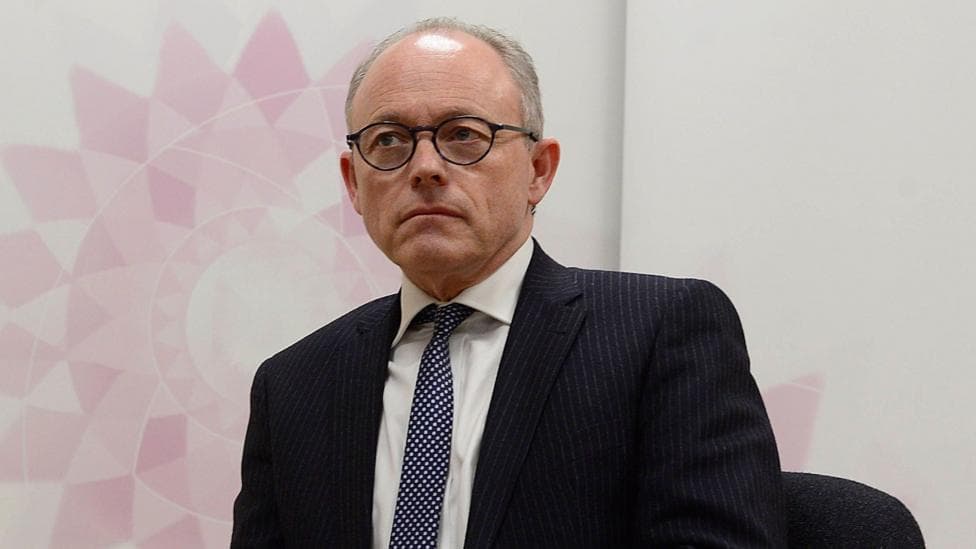
A former director of public prosecutions in Northern Ireland has condemned government plans to give the attorney general for England and Wales final authority over Troubles-related prosecutions, describing the proposal as a significant retreat from hard-won judicial safeguards. According to BBC News, Barra McGrory KC SC warned that the arrangement would damage public confidence in the office and create a damaging two-tier justice system.
McGrory, who served as DPP from 2011 to 2017, said he would not have applied for the position had such oversight existed when he was appointed. The proposal forms part of broader amendments to the Northern Ireland Troubles Bill, which is advancing through Westminster following approval by 330 MPs in the House of Commons.
Why does McGrory object to attorney general oversight?
McGrory contends that requiring the attorney general to approve serious Troubles prosecutions fundamentally contradicts the independence secured through criminal justice reforms following the Good Friday Agreement. The 2010 reforms established the DPP as a completely independent office for the first time, a principle McGrory emphasises was central to his decision to seek the role.
If the director of public prosecutions can't be trusted to independently take decisions on troubles-related cases. Well, then, people are going to start questioning whether or not the DPP can be trusted to take decisions locally, and that is not healthy,McGrory told BBC News NI.
He warned that the arrangement would
wipe away that independence in relation to Troubles-related casesand described it as having
significantly undermined that very carefully crafted suite of reforms that were introduced back in the early 2000s. So it's a backward step.
What concerns does McGrory raise about a two-tier system?
McGrory argues that allowing the attorney general to decide Troubles prosecutions while the local DPP handles all other cases creates an unjustifiable hierarchy. He contends this sends a damaging message about the competence and trustworthiness of Northern Ireland's prosecutorial leadership.
The public will say we are expected to have belief and trust in our DPP as someone who can take his decisions independently and impartially and on the evidence. But when it comes to this class of suspect, we're told that our DPP isn't good enough. So what does that say?he said.
He also raised concerns about victims' rights, stating:
We will have a hierarchy of victim, and that is not healthy.McGrory expressed confidence that DPP staff—whom he described as
highly-skilled... independent people—would handle Troubles cases appropriately if given the authority to do so, but warned that
the decision will no longer be made by their director; it will be made by an English attorney general, and I think that's not healthy for internal confidence.
What is the government's position on the proposal?
The Northern Ireland Office defended the arrangement, noting that the attorney general also serves as advocate general for Northern Ireland and that the proposal originated from Parliament's Joint Committee on Human Rights. A spokesperson stated that the requirement ensures
confidence and consistency in any decisions to prosecuteand that the attorney general
must act quasi-judicially and independently of the government, applying well-established prosecution principles of evidential sufficiency and the public interest.
The government has named Ellie Reeves as the attorney general who would make such decisions, emphasising that she would operate independently of ministerial direction. The Northern Ireland Office further noted that the bill would repeal the Legacy Act's immunity scheme and enable families to seek answers about deaths of their loved ones.
What broader changes does the bill introduce?
The Troubles Bill represents a comprehensive overhaul of legacy mechanisms. The legislation would replace the 2023 Legacy Act and reform the existing investigative body into a Legacy Commission. The government's amendments also include provisions that prevent "on-the-run" letters from being used to prevent or frustrate a prosecution.
What are the international dimensions of McGrory's concerns?
McGrory questioned why the Irish government, as a co-guarantor of the Good Friday Agreement and a supporter of the original criminal justice reforms, has not voiced stronger objections to the proposal.
I would have thought the Irish government would be deeply concerned about this reform. It is a reform that the Irish government would not tolerate in its own jurisdiction,he said.
He also expressed surprise at the current UK government's approach, given the Labour Party's historical commitment to prosecutorial independence.
I would have been shocked had Keir Starmer allowed this to happen as I know how much he valued the independence of prosecutorial decision making and he had a deep understanding of this jurisdiction,McGrory stated.
I worry that the current occupant of Downing Street and the current secretary of state may not appreciate just how significant and potentially damaging this change is.
What happens next?
Following its passage in the House of Commons, the bill now faces scrutiny in the House of Lords, with that process expected to continue into next year. The legislation remains subject to further amendment and debate as it progresses through the upper chamber.