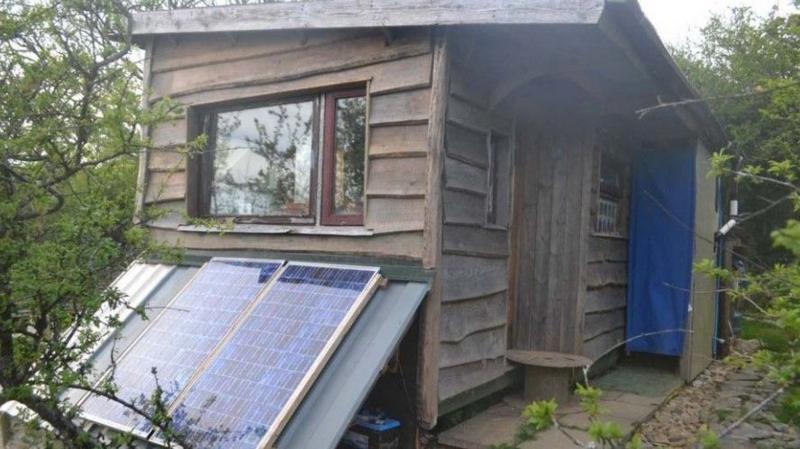
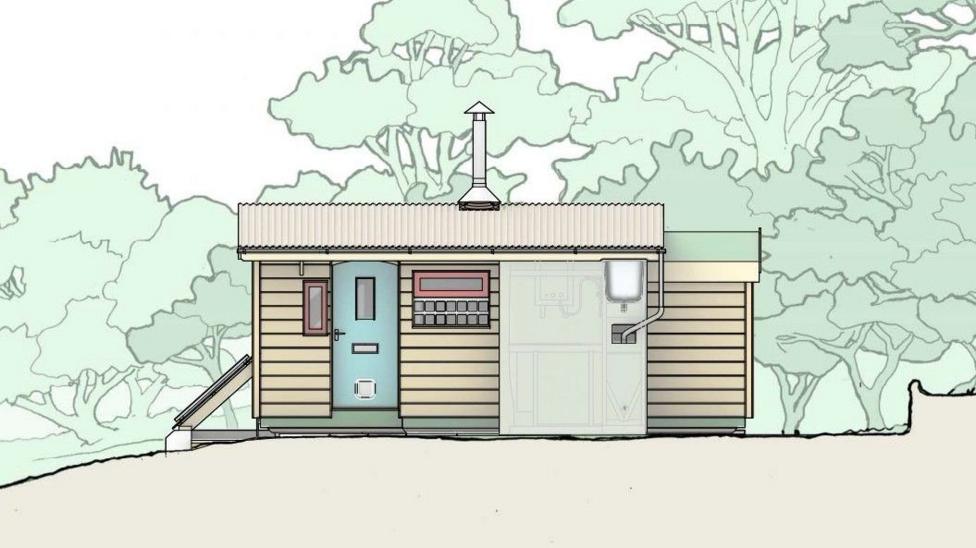
Geoffrey Finnimore, a self-employed architectural designer, has secured the right to remain in an off-grid home he constructed without permission in Glandwr, near Crymych, after Pembrokeshire council determined that his four-year occupation makes the property immune from enforcement action. The council granted him a lawful development certificate, a formal legal document confirming the development is lawful, allowing him to keep the self-sufficient structure that generates its own heating and electricity while collecting rainwater.
According to BBC News, Finnimore erected the hut in 2020 without informing authorities or seeking permission. The council initially required him to apply for retrospective permission, but because he had occupied the property continuously for more than four years before submitting his application, he could not be prosecuted under planning law.
In his personal statement to the local authority, Finnimore explained the circumstances that led him to build the structure. He confirmed he had lived at the site for more than a decade, earns less than £10,000 annually as a self-employed worker, and provided documentation proving his long-term residency. He had previously occupied the 4.5-acre site at Coed Troednoeth, Tir y Gafel in a campervan alongside a lean-to structure since 2014, which he described as inadequate for his health and well-being.
According to the Western Telegraph, Finnimore purchased the land in June 2020 and began using the building as his principal dwelling in November 2020. He was assisted with the application by planning consultant Andrew Vaughan-Harries of Hayston Development and Planning Ltd.
Finnimore's decision to construct the hut reflected his response to broader economic pressures.
Without my home, which I created to solve my own problems without state assistance, having to pay for other accommodation would be catastrophic for my finances and well-being,he stated. In his submission to the council, he framed his actions within the context of the housing and cost-of-living crisis, arguing that by meeting his own needs independently, he reduced the burden on local authority resources.
In the context of a housing and a cost-of-living crisis I have taken care of my own needs. So far as the council's responsibilities in that context goes, I see that as one less problem to solve. Conversely, I would consider a rejection of a well-justified application like this as a contribution that exacerbates these deep and present social concerns.
How did the council reach its decision?
Council officers granted the certificate after determining, on the balance of probabilities, that Coed Troednoeth had existed and been occupied as a home for more than four years before the application was submitted. Under planning law, a use that has continued uninterrupted for four years becomes immune from enforcement action, meaning the local authority cannot compel its removal or alteration.
The council's supporting statement confirmed the timeline:
In June 2020, the land was purchased by Mr Finnimore and in November 2020, he began using the building as his principal dwelling, hence the justification to apply for a certificate of lawful use.
Finnimore's case reflects a pattern emerging in Welsh planning disputes. Clive Hetherington was similarly allowed to remain in his caravan at Warreston Lodge, Pembrokeshire, after living there without planning permission since 1996, with evidence of continuous residence leading to council approval of a certificate. However, Finnimore's situation differs in that his structure was purpose-built rather than a mobile dwelling, and his occupation period was considerably shorter.
What makes the hut self-sufficient?
The property generates its own heating and electricity, reducing dependence on mains utilities. It also incorporates a rainwater collection system, further minimizing reliance on external infrastructure. These features align with growing interest in sustainable, off-grid living solutions, though they do not exempt a building from planning requirements unless it meets specific exemptions or, as in Finnimore's case, achieves lawful status through continuous occupation.
What was Finnimore's previous living situation?
Before constructing the hut, Finnimore had occupied the site in a campervan with a lean-to structure. According to the Pembrokeshire Herald, he had lived at Coed Troednoeth in this arrangement since 2014 and began converting the lean-to into an independent dwelling in 2019. The previous owner of the land had also lived at the site in a campervan with the lean-to before departing in 2018, at which point Finnimore became the principal custodian of the property.
Key Facts
- Finnimore purchased the land in June 2020 and began occupying the hut as his principal residence in November 2020, without seeking planning permission
- Pembrokeshire council granted a lawful development certificate because continuous occupation for more than four years makes the property immune from enforcement action
- The self-sufficient structure produces its own heating and electricity and collects rainwater, reducing reliance on mains utilities
- Finnimore earns less than £10,000 annually as a self-employed architectural designer and had lived on the site for over a decade before constructing the hut
- The decision reflects broader tensions between housing affordability pressures and planning regulations in Wales