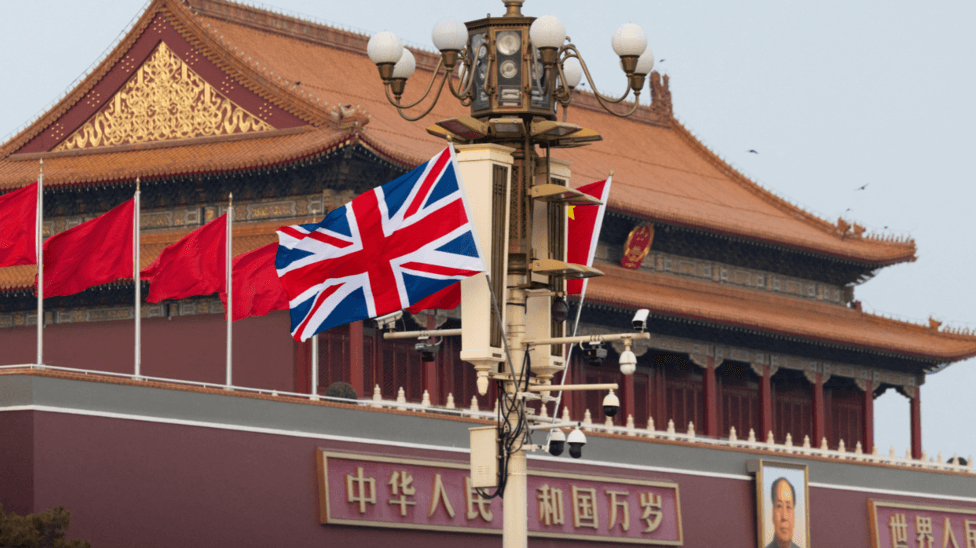
The government has abandoned its pledge to maintain a coherent China strategy and instead formulates policy reactively without a consistent framework, according to a damning assessment from Parliament's Business Committee.
According to BBC News, the committee's 102-page report—Parliament's first official examination of doing business with China—found that ministerial decision-making has been marked by "inconsistency" and is creating heightened national security risks. The committee demanded that ministers impose restrictions on sensitive data transfers to China, establish transparent trading guidelines for businesses, and prohibit the import of goods manufactured through forced labour.
The Department for Business rejected the committee's findings, stating:
Our approach to China is consistent - we will co-operate where we can and challenge where we must. We have placed our relationship on a more stable, balanced, long-term footing, and based it on a clear-eyed assessment of both the opportunities and the risks. Our trade strategy makes clear that we will capitalise on every opportunity to grow our economy while never compromising on our national security, and our increased discussions with China allows us to directly raise concerns where they arise.
Former Prime Minister Sir Keir Starmer had attempted to deepen bilateral ties, contending that Britain could not overlook the economic potential China represented, provided national security remained protected. Yet some MPs objected to this approach, citing concerns about alleged Chinese espionage operations within the UK. An assessment of the relationship was completed the previous year, though the government withheld the full document, claiming it contained classified material. Current Prime Minister Andy Burnham has not yet articulated his position on China relations.
The committee warned that the UK risks having its China relationship shaped by Washington or Beijing if it does not establish its own strategy, and that policy uncertainty could jeopardise British firms' access to major EU manufacturing contracts. The report specifically cited the March decision to block Ming Yang's proposed £1.5 billion Scottish wind-turbine factory after prolonged negotiations, with officials citing unspecified security concerns.
What framework does the committee propose?
The Business, Innovation, Science and Trade Committee proposed establishing clearly defined "red" and "green" zones to specify where trade and investment would be permitted and where they would be prohibited. This framework would provide businesses with the clarity they currently lack when deciding whether to engage with Chinese partners.
The committee also recommended that the government prepare tariffs that could be deployed if China continued to subsidise its industries or refused to grant "fully reciprocal" market access. On the protection of critical infrastructure, the report called for a ban on connected technology devices manufactured in China from being deployed in essential national systems. The committee noted that low-cost Chinese connected technology has proliferated across the UK, and that in this domain the government had "prioritised diplomatic politeness over the UK's national security."
Beyond infrastructure, MPs urged restrictions on Chinese-made connected cars and Internet of Things devices in sensitive locations, and called for monitoring data traffic between connected vehicles and foreign entities in critical sectors. Universities should receive expedited guidance on collaborating with Chinese institutions, the committee added.
How should the government manage trade risks?
The committee advised preparing contingency tariffs to address unfair Chinese trade practices. The committee recommended preparing tariffs if China does not rebalance its economy, continues unfair industrial subsidies or fails to provide reciprocal market access. This approach would give the government leverage to negotiate fairer terms while signalling to British businesses that their interests are being protected.
Why has government transparency been inadequate?
The committee found that successive administrations had "failed to reassure" the public that they had implemented "adequate measures to defend UK national security and economic resilience." The lack of clear government guidance has undermined businesses' ability to plan their engagement with China. In July 2025, the Foreign Affairs Committee had already warned that Parliament was "operating in the dark" after receiving only three paragraphs about the China audit in the National Security Strategy, highlighting the government's reluctance to share critical information about its China assessment.
Liam Byrne, the committee chair and Labour MP, stated:
Britain's businesses cannot plan for the future when the government keeps making up its China policy as it goes along. Ministers promised clarity and consistency. Instead, we have opportunities missed, risks unmanaged and decisions left until the eleventh hour. Britain must shape its own relationship with China, or risk having that relationship shaped for us in Washington or Beijing.
Byrne's comments underscore the frustration among lawmakers that the government has failed to deliver on its commitment to provide a stable, predictable framework for UK-China relations. The committee's report represents a comprehensive indictment of the government's approach and sets out a detailed roadmap for how policy should be reformed.

Key Facts
- The Business Committee's 102-page report is Parliament's first official examination of doing business with China
- The committee called for "red" and "green" zones to define permitted and prohibited trade areas, and restrictions on Chinese connected technology in critical infrastructure
- The government blocked Ming Yang's £1.5 billion Scottish wind-turbine factory in March citing security risks, exemplifying the unpredictability businesses face
- The full China audit conducted last year remains unpublished, with the government citing classified information
- The committee warned that policy uncertainty could cost UK firms access to major EU manufacturing contracts