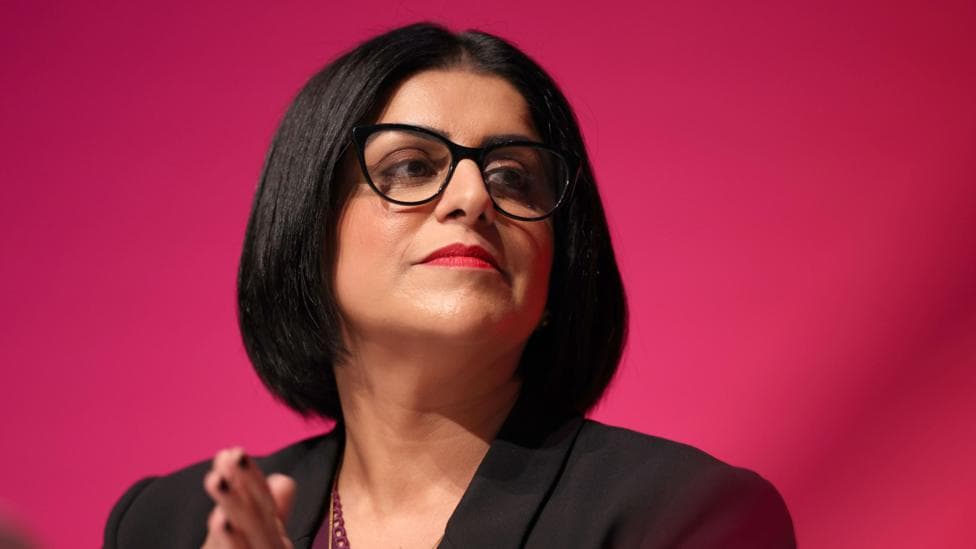
The debate over legal migration in the United Kingdom centres on competing definitions of fairness—and Home Secretary Shabana Mahmood now finds herself at the centre of that contested terrain. As the daughter of parents who arrived in the UK from rural Kashmir, Mahmood has become responsible for fundamentally restructuring the immigration system that enabled their arrival decades ago. According to BBC News, she is preparing to announce revised settlement rules for legal migrants, with her approach drawing both praise and criticism from across the political spectrum.
At the Labour Party conference in September, Mahmood articulated her vision for the policy:
Fair to those who seek a new and better life here, like my parents did. And fair to those already here, including British workers, and especially the young.Yet the path to this moment has been marked by internal party divisions, political pressure, and significant revisions to her original proposals—raising questions about whether the government has genuinely refined its approach or retreated under pressure.
The timing of this policy debate reflects broader anxieties about immigration levels. The United Kingdom has experienced substantial legal migration in recent years, and the prominence of Reform UK in national political discourse has intensified public concern about the scale of arrivals. Labour has sought to demonstrate that it takes these concerns seriously, positioning itself as responsive to public sentiment while maintaining its commitment to fair treatment of migrants.
How did the government develop these proposals?
In November 2025, Mahmood unveiled a plan termed a fairer pathway to settlement, which invited public consultation on the proposed changes. The consultation exercise proved extensive: around 200,000 people submitted responses, with approximately 140,000 of those coming from visa holders themselves. A Whitehall source characterised the process as
a colossal exercise and a genuine one, claiming the government had invested time to ensure the policy was properly developed. Yet critics have suggested the subsequent revisions indicate the government buckled under pressure from Labour backbenchers and the change of prime minister.
Mahmood's original rationale for urgent action rested on migration figures. Between 2021 and 2024, net migration increased by 2.6 million people—a figure she described as equivalent to one in every 30 people in the country arriving within a four-year span. Critics labelled this influx the Boriswave, attributing it to policy changes introduced under former Prime Minister Boris Johnson. Mahmood argued that action was essential because significant numbers of recent arrivals would soon become eligible for indefinite leave to remain, or ILR.
What were the original proposals?
The initial plan targeted migrants on lower wages who brought non-working dependants and children. Mahmood contended that
Migrants on lower wages who bring non-working dependants and children are likely to present significant fiscal costs to the UK.Under existing rules, such migrants typically qualified for benefits and council housing five years after arrival. The government proposed extending this qualifying period to 15 years for this group, with most arrivals from 2022 onwards potentially not becoming eligible for settled status until 2027 at the earliest under the original framework.
The financial argument underpinned the policy. Addressing the IPPR think tank in March, Mahmood stated:
We estimate, based on findings from the Migration Advisory Committee, that the lifetime cost to the taxpayer will be £10bn. That figure would be paid for by working people in this country.She characterised the scale of low-skilled migration as unprecedented, declaring
We have never, in the history of this country, had so much low-skilled migration in so little time.However, the £10bn figure has faced scrutiny. The IPPR argued that the original proposals were unlikely to generate such savings, noting that delaying indefinite leave to remain for care workers would reduce welfare costs but that the broader £10bn estimate included long-term expenses such as state pensions and health and social care use in retirement.
According to Reuters, the original proposal would have established 10 years as the standard settlement route, with some lower-paid workers facing up to 15 years, potentially affecting approximately 350,000 lower-skilled workers and dependants who arrived after Brexit and could become eligible for settlement in coming years.
Why did the government revise its approach?
Internal Labour opposition mounted quickly. Around 100 Labour MPs expressed public dissatisfaction with the original proposals. Housing Secretary Angela Rayner, speaking in March before her return to government, described the ideas as
un-Britishbecause they involved
moving the goalposts—migrants who had arrived in good faith under one set of rules would face their futures determined by new ones. This criticism struck at the heart of fairness arguments, suggesting the government itself was acting unfairly by changing the terms retroactively.
By May, when the government was considering its position, senior Labour figures were signalling that change was likely. Andy Burnham, then an ambitious by-election candidate, told observers it was important to
work hard to get the balance right, though he supported the
broad thrustof what the home secretary was doing. That phrase—broad thrust—would come to characterise the gap between Mahmood's original position and her revised one.
The consultation period, which ran from 20 November 2025 to 12 February 2026, gave the government time to assess public and parliamentary opinion. The government indicated that its final model would be subject to economic and equality impact assessments, and that it was considering possible exemptions and transitional measures—signals that significant revisions were under consideration.
What are the likely changes?
According to BBC reporting, the final proposals are expected to revise the 15-year wait for most people already working in social care, with the Home Secretary due to announce her decision in the House of Commons. Social care workers appear likely to receive exemptions from the extended waiting periods that would otherwise apply to lower-paid workers with dependants.
How are political opponents responding?
The Conservative Party has seized on the revisions as evidence of weakness. Senior Tory figures have privately described the changes as an excruciating U-turn, claiming the shift would be deeply personally embarrassing for the home secretary. Conservatives have also raised legal concerns, arguing that if the government implements changes through secondary legislation rather than primary legislation—such as amendments to the Immigration and Asylum Bill currently before parliament—the revised rules could face successful legal challenges in court.
Mahmood's defence of her position rests on the claim that she has worked to develop a policy that the widest possible range of people might regard as fair. She has characterised the revision process as evidence of genuine engagement with public concerns rather than capitulation to pressure.
What happens next?
Mahmood is scheduled to make a statement to MPs in the House of Commons on Monday, 2 November 2026, setting out her final decision on the settlement rules. The available reporting does not specify when any new rules would take effect, though the government's original timeline suggested implementation would occur before significant numbers of recent arrivals became eligible for indefinite leave to remain. The statement will clarify which groups receive exemptions, how transitional arrangements will operate for those already in the country, and whether the government will pursue primary or secondary legislation to enact the changes.