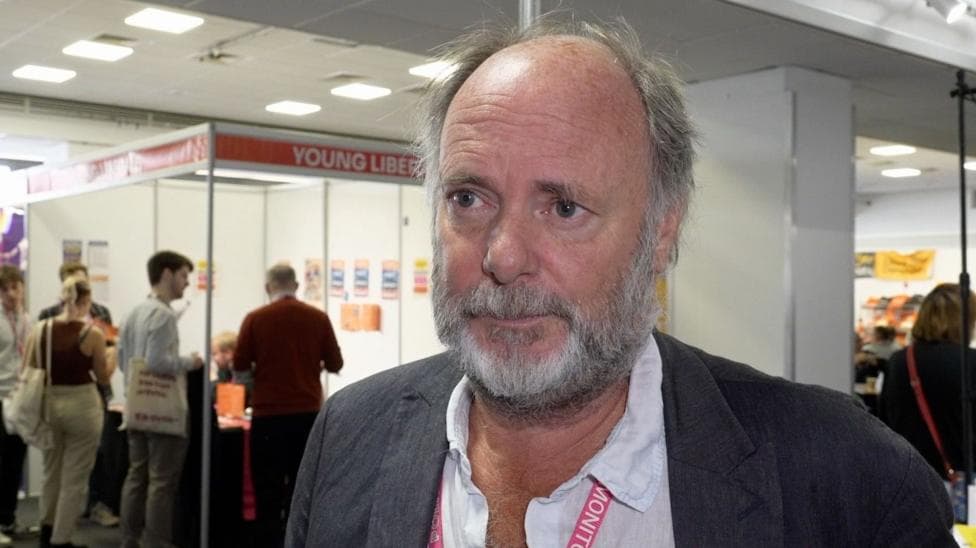
Julian Brazil, leader of Devon County Council, has publicly questioned whether Sir Ed Davey remains the right person to lead the Liberal Democrats, claiming the party is drifting toward irrelevance at a critical moment in British politics.
Speaking to the BBC ahead of the party's autumn conference in Brighton, Brazil said the Lib Dems were "sleepwalking into irrelevance" and "lacking ambition." He argued the party was failing to articulate a compelling vision that resonates with voters, instead asking people to support them primarily as an alternative to other parties.
When asked directly whether Sir Ed was the right leader, Brazil responded:
I wish he was, but all the evidence is no.He added that
something has to change within the party if we're going to move to the next level and it's not happening at the moment.
Brazil's criticism reflects broader frustration within the party ranks. According to a BBC preview of the conference, a "sizeable group" of Lib Dem MPs and senior figures openly question whether Ed Davey himself is the source of the party's struggles. South Cotswolds MP Roz Savage has similarly raised concerns in an essay written ahead of the gathering, asking:
Why are we as a party struggling for relevance at precisely the moment when so many people feel powerless?Savage urged the party to reclaim its "insurgent spirit" rather than remaining the "polite custodians of a system that leaves people feeling powerless."
The party's national standing presents a paradox. Sir Ed led the Lib Dems to their best general election result in a century, winning 72 seats in 2024. Yet in national opinion polling, the party has slipped to fourth or fifth place, behind both the Greens and Reform UK. Brazil told the BBC the party had "allowed other parties to go steaming past us," and described the Lib Dems as "peripheral" rather than occupying the centre ground of politics where he believes they should be positioned.
He elaborated:
We're lacking ambition, we're lacking courage of our convictions. We're not saying the things that people can relate to.
How is the party leadership responding?
A Lib Dem spokesperson rejected the criticism, stating the party was in "an incredibly strong position" under Sir Ed's leadership. They highlighted his focus on issues including the cost of living and the health service, and pointed to the party's record in local elections.
Under Ed's leadership we had our best result for a century, and achieved a record breaking streak of remarkable local election results,the spokesperson said.
We are the most united party in Westminster and with Ed as leader we will stop Reform and the Conservatives and change our country after a decade of failing governments.

Sir Ed himself acknowledged the frustration felt by some MPs during an interview with the BBC's Laura Kuenssberg. He said he shared their
frustrationthat the party could not bring about
real change,which he attributed to the constraints of the UK's political system. However, he insisted the party was making progress.
It's the most successful period that we've had,he said, pointing to council election gains. He acknowledged that while his MPs wanted to change the law,
they've actually had more success than all the other smaller parties, but they want to have more.
At the conference itself, held from 19 to 22 September 2026 at the Brighton Centre, Sir Ed used his opening speech to attack Reform UK and Elon Musk, according to reporting from a national broadcaster. He said the party
won't give up the fightagainst "nasty populism." In the same speech, he claimed the Liberal Democrats were "the most united party" and directly rejected suggestions that the party was struggling for relevance.
What do polling and public perception reveal?
Public perception of Sir Ed presents a significant challenge for the party. According to polling conducted ahead of the conference, a large share of Britons describe Davey negatively, with recurring descriptions including "clown," "boring," "bland," "invisible," and "irrelevant." The same research indicated that while many party members would celebrate the Lib Dems' eighth consecutive set of local election gains, others would raise concerns about the party's weak national impact.
Luke Tryl, executive director of the polling firm More in Common, told a fringe meeting in Brighton that the Lib Dems were not cutting through nationally and needed a more compelling message. He suggested it was possible the party could gain additional seats in traditional Conservative heartlands at the next election, potentially positioning Sir Ed to serve as deputy prime minister in a Labour-led government. However, Tryl warned of a significant electoral risk: the Conservative Party could campaign with the message that
if you vote Lib Dem you will get Labour.
What is Brazil's background and the party's local position?
Brazil became leader of Devon County Council in May 2025 after the Lib Dems overtook the Conservatives to become the largest party, though without overall control of the council. His elevation to a prominent local leadership role has given him a platform to voice concerns that appear to be shared by other senior figures within the party.
What happens next at the conference?
The Liberal Democrat autumn conference continues through 22 September 2026 in Brighton. The conference agenda includes 20 policy motions, up to 3 emergency or topical debates, and 1 business motion. On 21 September 2026, the Institute for Public Policy Research is scheduled to host a conference event titled "The Liberal Democrats in an age of political fragmentation," which will examine the party's positioning within Britain's increasingly fragmented political landscape.

The gathering represents a critical moment for the party as it seeks to reconcile its strong local election performance with its weaker national standing and internal questions about its strategic direction and leadership.