Welsh Labour's leader has called on the Plaid Cymru-led administration to begin construction of an M4 relief road—seven years after his own party abandoned the scheme. Ken Skates told a national broadcaster that tackling congestion around Newport leaves no viable alternative, and he has now endorsed a modified version of the original proposal.
The announcement will be interpreted by some as an effort to separate Welsh Labour from decisions made under former First Minister Mark Drakeford's tenure. Labour intends to bring a motion before the Senedd on Wednesday, 21 October, seeking approval for an "appropriate relief road" to be constructed, with the motion also calling for junction closures to be ruled out as a solution.
Drakeford's administration terminated the previous M4 Relief Road scheme in 2019, citing financial constraints and environmental concerns. The scrapped project had already consumed £114m in public funds by that point, including £44m spent on a public inquiry, with the full scheme estimated to cost £1.6bn.
This development means that all three opposition groups in the Senedd—Reform, Labour, and the Conservatives—now support building a relief road, creating significant political pressure on the Welsh government to reconsider its position.
What does the latest expert review say?
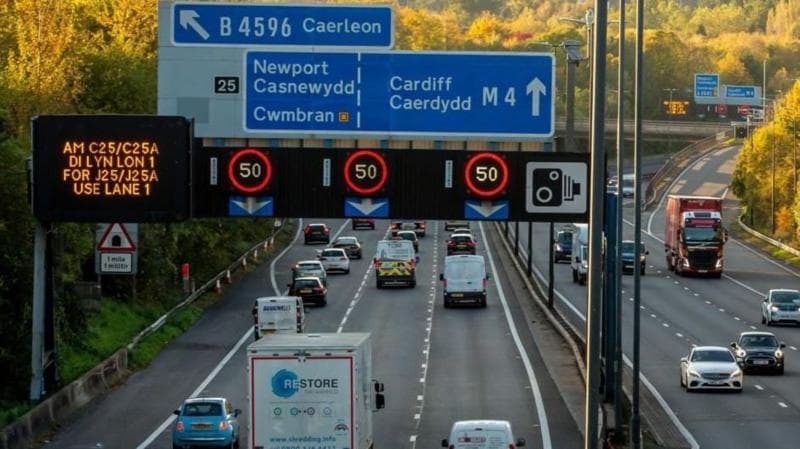
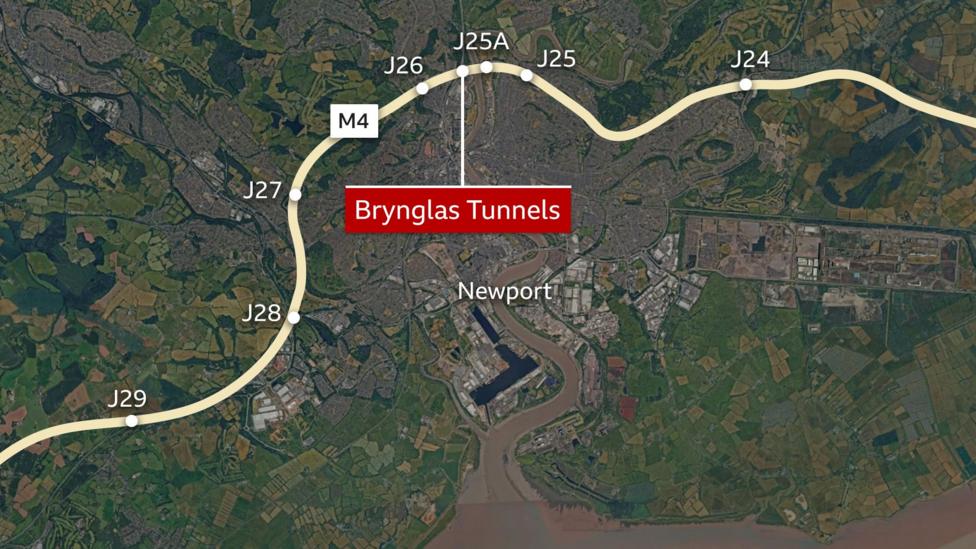
An independent assessment of motorway options, released this month, informed Skates' shift in stance. The report examined multiple approaches to easing congestion but concluded that no single measure or combination of measures would adequately resolve the problem. According to analysis of the Welsh Government's options report, closing junction 27 at High Cross and the eastbound slip roads at junctions 25 and 26 would cost £14m but reduce M4 traffic around Newport by only 3%. The same review noted that junction closures could increase congestion and noise on alternative routes, while widening the Brynglas tunnels would require £1.7bn in investment and carry substantial engineering risks.
Skates stated:
We finally got an expert independent external report on all possible options for alleviating congestion on the M4. What that report shows is that no single or combined solution will adequately alleviate congestion on the M4 around Newport. That means that there is no other option on the table other than a relief road if we wish to solve the problem of congestion on that route.
Which route does Labour support?
Skates has backed the so-called black route—the motorway corridor south of Newport that was examined and endorsed by a public inquiry in 2019—as the appropriate solution, though he acknowledges that an updated version would need to address modern environmental standards. He rejected the blue route alternative, which would repurpose existing roads in part of its alignment.
In reality, the black route remains the only appropriate route. Further work would have to be undertaken to make sure that all environmental concerns today are met and adequately responded to, but something has to be done about congestion.
Skates previously served as transport minister under four successive Labour first ministers, giving him direct experience of the earlier relief road debates.

How does Skates justify reversing Labour's 2019 decision?
When asked about accusations of a policy reversal, Skates argued that circumstances have fundamentally changed since the scheme was cancelled.
Well, it's a world away from where we were in 2019. Back then, we had come out of the EU, Brexit was causing enormous concern, we were planning for a no deal. We were... almost a decade into austerity. There was simply not the sort of money that was required to build the black route available to the Welsh government. It was right not to go ahead with it at the time because of the financial cost. I do believe firmly that had we gone ahead with it, it would have been paused or cancelled during Covid.
Skates also raised questions about the formal protection status of the relief road route, which was withdrawn when the scheme was cancelled. In a Senedd debate on 29 September, Welsh government minister Hooper stated that
The protected route status went when it was cancelled. So, we're talking about decades of work to even get that off the ground.
The Welsh government has not yet responded to requests for comment on Labour's renewed push for the relief road.
What is the Welsh government's current approach?
The Welsh government has commissioned an 18-month review to examine possible road-based solutions to M4 congestion, though it has explicitly ruled out the black route as part of that assessment. Weeks before Skates' announcement, the administration released a range of options for tackling congestion, including the junction closure proposals that Labour now seeks to prevent.
The proposed junction closures could potentially take effect by 2028, but the Welsh government has not made a final decision and has indicated it will consult Newport Council before proceeding. This consultation process is significant given that Newport Council and local politicians have already expressed strong opposition to the junction closure plans, warning of severe impacts on residents and businesses in the area.
What does Labour say about local decision-making?
Skates is addressing the Co-operative Movement conference, where he will emphasise that people in the region
should be trusted, empowered and respected in deciding what affects them. Their need for congestion to be dealt with can only realistically be met through getting to work on a relief road. The debate over an appropriate solution and the balancing of environmental, human and economic concerns should be led by the people of the region, who know best what is needed in and for their communities.
What happens next?
Labour's motion is scheduled for discussion in the Senedd on Wednesday, 21 October, though it would not compel the Plaid Cymru government to act. The Welsh government's separate 18-month review of road-based M4 options remains ongoing, with findings expected to inform future policy decisions. Any decision on junction closures would require further consultation with Newport Council and is unlikely to be finalised before 2028 at the earliest.
Key Facts
- The original M4 Relief Road scheme was cancelled in 2019 after consuming £114m in public funds, including £44m for a public inquiry
- An independent expert review concluded that no single measure or combination of measures can adequately solve M4 congestion around Newport
- Closing three junctions would cost £14m but reduce traffic by only 3%, while widening the Brynglas tunnels would cost £1.7bn with significant engineering risks
- All three opposition groups in the Senedd now support building a relief road, creating political pressure on the Welsh government
- The Welsh government's 18-month review of road-based solutions is ongoing, with junction closure decisions not expected before 2028