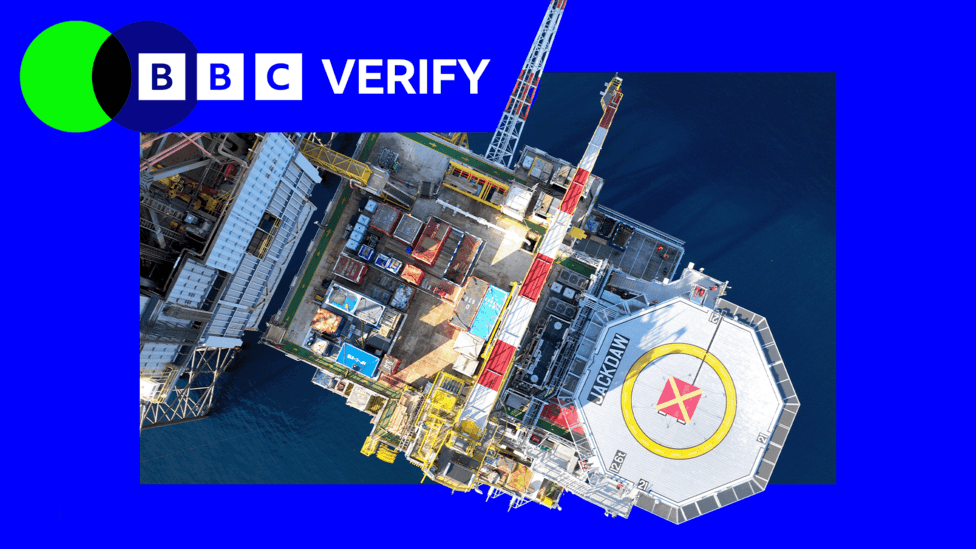
The UK government has given the green light to drilling at the Jackdaw gas field in the North Sea, ending years of debate and legal challenges. According to BBC News, the decision will enable gas extraction to begin within weeks, with supplies flowing into Britain's gas network shortly after. The approval marks a significant moment in the government's energy strategy, though it remains contested on environmental and economic grounds.
The decision comes after the Court of Session quashed the field's earlier consent in January 2025 following concerns that emissions from burning the extracted gas had not been properly assessed. Prime Minister Andy Burnham stated the development will
protect hundreds of jobs, a position supported by trade unions.
Where is Jackdaw and what reserves does it hold?
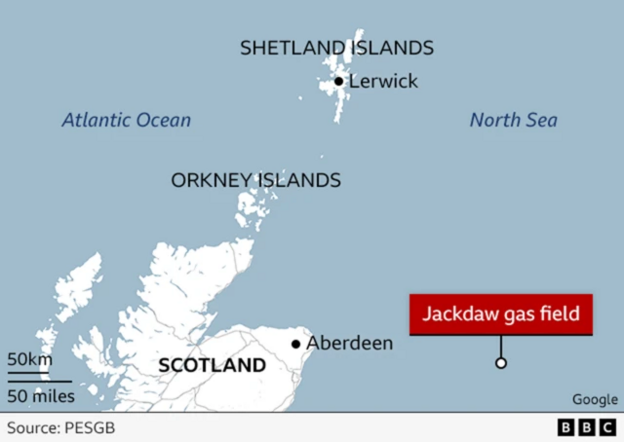
Jackdaw sits 150 miles (241.4 kilometres) east of Aberdeen in the North Sea. The field is operated by Adura Energy, a joint venture equally owned by Shell and Equinor. Originally approved four years ago, the project faced legal delays until now.
The operators estimate the field contains approximately 10 million cubic metres of recoverable gas. Based on official forecasts for UK gas demand over the next decade, this volume could satisfy roughly 1.6% of total projected national gas consumption between 2026 and 2036. The companies behind the project say it could connect to the Great British gas network within weeks and continue producing for the next 11 years.
Adura has stated that Jackdaw was 99% complete and could deliver gas by winter if approved. The operator estimates the field will support around 500 jobs overall, though only 27 of these are direct positions on the Jackdaw extraction platform itself, with the remainder spread across nearby production hubs.
How does Britain currently source its natural gas?
Roughly half of the UK's natural gas supply comes from existing North Sea gas fields, delivered onshore through pipelines. The remaining half is imported, with Norway's North Sea fields historically providing the majority through dedicated pipeline infrastructure.
The composition of British gas imports has shifted significantly in recent years. Liquefied Natural Gas (LNG)—natural gas extracted, cooled into liquid form, and transported by ship—now accounts for a larger share than two decades ago. The UK increasingly purchases LNG from the United States, which accounted for a quarter of all natural gas imports in 2025. This gas is regasified upon arrival and fed into the energy system.
Will Jackdaw approval lead to lower energy bills?
Energy Secretary Miatta Fahnbulleh has stated the gas from Jackdaw
won't lower energy bills this winter. Most energy analysts concur that additional production from Jackdaw will not significantly reduce household energy costs.
The reason lies in how natural gas markets function. Great Britain is integrated into wider European gas markets and physically connected to continental Europe via undersea pipelines. Gas prices for British households and businesses are effectively determined at a pan-European level, reflecting what customers across the continent are willing to pay. Recent years have seen substantial bill increases across Europe, driven by disruptions to gas and oil supplies caused by conflicts in Ukraine and Iran.
The additional gas from Jackdaw will be relatively modest in volume and unlikely to meaningfully shift the European price that British consumers and firms pay. As Karl Matikonis, professor of taxation at University College Dublin, explained to BBC Verify:
Essentially, producing more British energy doesn't necessarily mean cheaper British energy. North Sea oil and gas are sold at market prices rather than reserved for British consumers at a discount.
However, the project could generate increased corporation tax revenues for the UK government, since profits earned by the field's owner are subject to taxation. The government has announced the creation of a new energy wealth fund, which will use tax revenues from North Sea oil and gas production to invest in renewable energy projects. Officials argue this approach will
help get bills down for good in the long termby reducing the UK's dependence on gas for electricity generation.
Conservative Party leader Kemi Badenoch has previously suggested that tax revenue from Jackdaw
could be used to bring down energy billsmore directly by offsetting household costs. Both proposals, however, depend on future profits from the field's operator, which cannot be predicted with certainty.
What are the main arguments supporting Jackdaw?
Proponents of the Jackdaw development emphasise that it would strengthen the UK's energy security. Some energy experts argue that if foreign LNG shipments were disrupted for any reason, having additional North Sea gas available through pipelines controlled by the UK could prove valuable. This concern has been heightened by recent statements from Donald Trump suggesting he may consider restricting US diesel exports to European countries, raising questions about the reliability of American energy supplies.
The environmental case for Jackdaw rests on a comparison of production methods. Advocates point out that carbon emissions from extracting gas at UK North Sea fields are substantially lower than those associated with US LNG production. The North Sea Transition Authority (NSTA), which regulates the sector, has determined that emissions from producing, liquefying, shipping, and regasifying US LNG are approximately three times higher than those from North Sea natural gas production. The liquefaction and shipping process is extremely energy-intensive compared with pipeline delivery.
The NSTA has also noted that Norwegian North Sea gas production—which Britain already imports in large volumes by pipeline—generates considerably lower average emissions than UK North Sea production. This difference arises because UK North Sea gas typically comes from smaller fields using older infrastructure and technology than Norwegian operations.
Adura estimates that Jackdaw's production emissions intensity would be lower than that of older UK North Sea infrastructure, though still higher than Norwegian gas. The company has emphasised that Equinor warned it may stop investing in the UK if Rosebank and Jackdaw are not approved, signalling the commercial stakes involved in the decision.
What are the environmental concerns about Jackdaw?
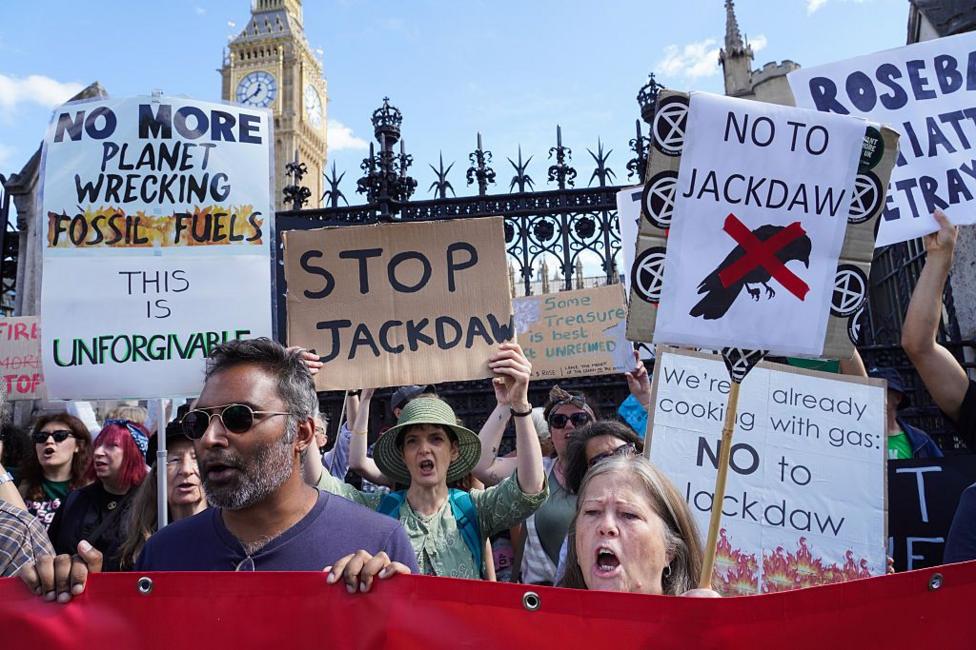
The environmental impact of Jackdaw has been a major point of contention. Critics argue that the field's true environmental effect depends on what mix of gas sources it displaces in the UK's energy system—a question with an uncertain answer.
If Jackdaw production replaces US LNG imports, UK-related emissions could fall, since North Sea production is less carbon-intensive than liquefied gas. However, if it displaces Norwegian gas imports instead, UK-related emissions could rise, as Norwegian production is already more efficient than UK North Sea operations.
A broader concern centres on global emissions. Analysts point out that emissions from burning gas vastly exceed those from producing it. If Jackdaw's approval results in increased total fossil fuel production and consumption worldwide—rather than simply substituting for gas that would have been developed elsewhere—global emissions could rise overall.
Jonathan Stern of the Oxford Institute for Energy Studies told BBC Verify:
If what matters is global rather than UK-related emissions then any new fossil fuel development will increase emissions, because the Norwegian and US gas which might replace Jackdaw will probably be developed anyway.Nevertheless, Jackdaw's direct impact on global emissions would remain relatively small given the field's modest size compared with worldwide fossil fuel production and consumption.
What happens next?
The government has not announced a specific timeline for further decisions on related projects. Energy Secretary Miatta Fahnbulleh indicated that Jackdaw's decision was imminent, while a decision on the larger Rosebank oil field would take longer. The public consultation on both projects closed in August, after which final approval authority rested with the Energy Secretary.