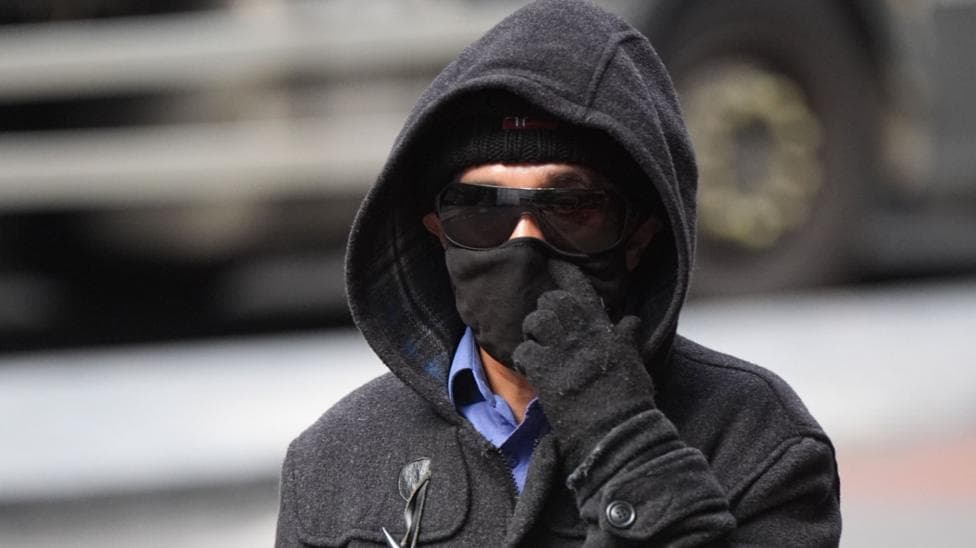
A civil servant accused of fraudulently earning more than £284,000 by holding multiple full-time public-sector positions simultaneously has admitted making errors in judgment but insisted he acted without criminal intent. Kashim Chowdhury, 55, from east London, is on trial at Southwark Crown Court facing nine counts of fraud. According to BBC News, he denies acting dishonestly or intending to make a dishonest gain.
Giving evidence to the jury, Chowdhury acknowledged making mistakes, attributing them to feeling "overwhelmed and stressed" and experiencing "terror and panic" about the prospect of losing his income. He disclosed that he had been diagnosed with post-traumatic stress disorder in 2015, with symptoms resurfacing in 2021. The prosecution alleges that Chowdhury concealed his multiple employments from his employers, though he contended that some of his managers were aware he held other positions.
According to Yahoo News, prosecutors said Chowdhury held eight jobs between February 2020 and September 2023, earning £349,378 in total. The prosecution alleges that at the height of the scheme, in spring 2023, he simultaneously held five full-time positions with full-time salaries across the public sector: the Department for Environment and Rural Affairs (Defra), the UK Health Security Agency, the Food Standards Agency, the Department for Business and Trade, and the Home Office.
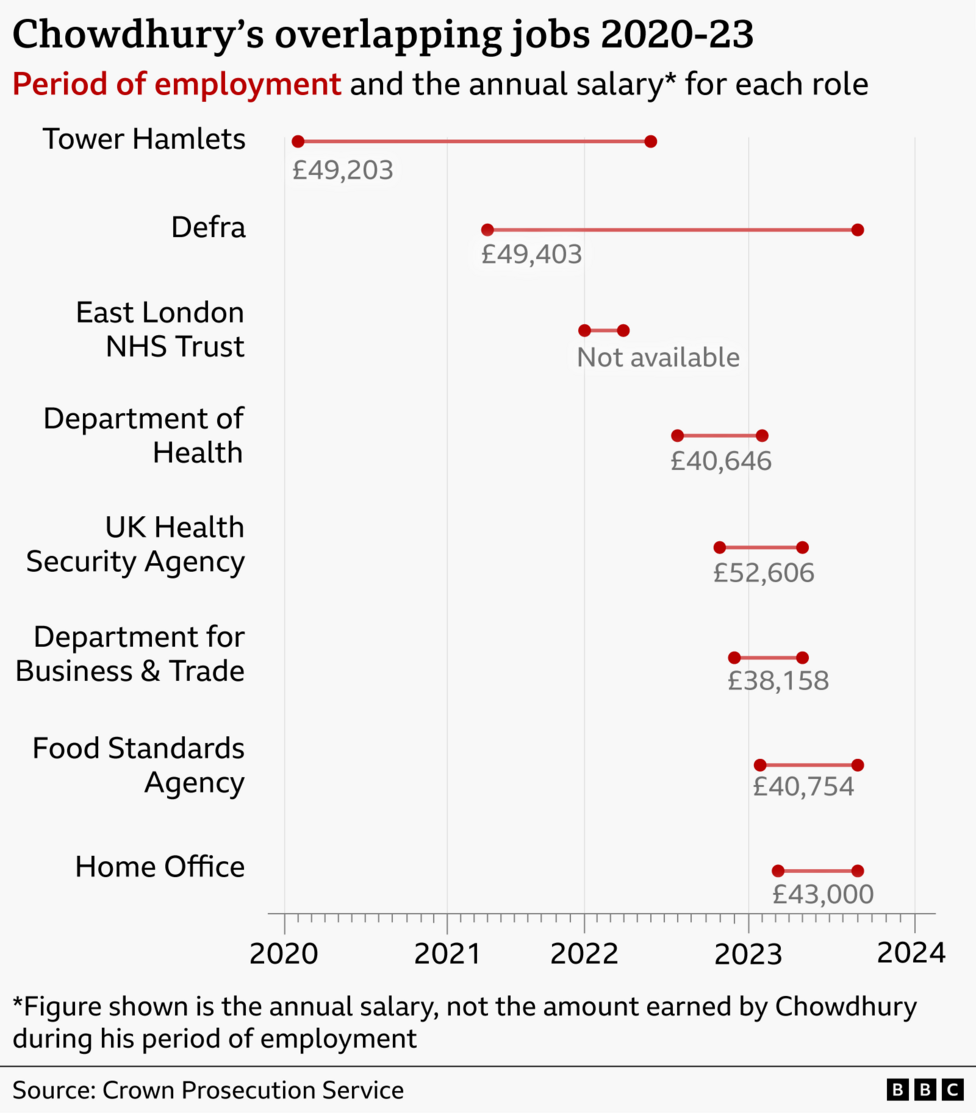
The scale of the alleged deception became apparent when the jury learned that throughout this period Chowdhury was contracted to work 183 hours per week—a figure exceeding the total number of hours in seven days. Each position provided a full-time wage, with Telegraph reporting that court evidence put his take-home pay from five employers at £11,015.62 in April 2023 and £8,745.88 in May. The National Fraud Initiative, a government anti-fraud programme, alerted Defra to the alleged overlapping employment.
Chowdhury's managers at Defra, the London Borough of Tower Hamlets, East London NHS Trust, and the Department for Health and Social Care all testified that they were aware he held other jobs. However, the prosecution maintains that he failed to disclose these arrangements to all his employers, allowing him to maintain the scheme by working entirely remotely.
How did he manage to keep the jobs secret?
The prosecution alleges Chowdhury exploited his status as the sole carer for his elderly mother to justify his remote working arrangements, which enabled him to juggle multiple positions without detection. A succession of his line managers told the court that his work performance was consistently poor across his roles.
Abigail Mounde, his line manager at the Department for Business and Trade, described his work quality as substandard, stating:
Any basic tasks I asked him to do he either did late or not to the standard I would have expected.The prosecution also alleges that Chowdhury used sick notes from his doctor as part of the cover-up strategy.
However, the court heard evidence that while he presented sick notes to some employers claiming unfitness to work due to "mixed anxiety and depressive disorder," he did not provide the same documentation to other employers. The prosecution argued this inconsistency
underlines the dishonesty involved in the whole affair.
What was the make-up incident?
One of the most striking pieces of evidence involved an alleged attempt to disguise his appearance during a video call. Aleesha Adams, his line manager at the Health Security Agency, arranged a video meeting in May 2023 to support his return to work following a period of absence. She told the court she was surprised when he appeared on screen wearing white make-up, as his name had led her to expect to see an Asian man with darker skin.
Adams described watching the make-up deteriorate during the call:
He was sweating, it was like rubbing off so it was darker underneath and darker on the neck.Prosecuting barrister Lucy Organ characterised the incident to the court as evidence of the lengths to which Chowdhury was willing to go, stating:
This almost laughable incident demonstrates quite how far the defendant was willing to go in his deceit.
What happens next in the trial?
The trial began on 13 October 2026 and was expected to last approximately three weeks. As of 20 October 2026, the proceedings were continuing, with no verdict yet reported.