The number of asylum seekers housed in hotels across the United Kingdom has dropped sharply, falling from more than 32,000 in June 2025 to over 16,000 by June 2026. This represents a 50% reduction and reflects broader changes in migration policy and processing speed implemented since the Labour government took office in July 2024.
The decline forms part of a wider shift in how the Home Office manages asylum accommodation. Rather than hotels, the department has increasingly moved people into houses across the country paid for through long-standing contracts with private providers. The number in such housing arrangements rose from 65,000 at the end of 2024 to 69,000 in June 2026.
According to the latest reporting, the figure of 16,021 asylum seekers in hotels at the end of June 2026 represents the lowest level since data collection began in 2022. The government has accelerated hotel closures, with 13 facilities exiting use on 12 August, leaving fewer than 160 hotels still in operation and generating projected savings of £51 million for taxpayers.
How has the asylum backlog changed?
The processing of asylum claims has accelerated significantly. The number of people awaiting an initial ruling on whether they have a genuine case for protection or should leave the United Kingdom stood at 40,000 in June 2026, down dramatically from a peak of 175,000 in June 2023. This improvement reflects the government's July 2024 directive to officials to work faster in deciding claims, with a five-year target to eliminate hotel use entirely.
Removals of people found not to have grounds to remain in the country have also increased. In the year to June 2026, approximately 40,000 individuals—comprising foreign offenders, visa overstayers, and failed asylum applicants—were removed, representing an 8% rise compared to the previous 12 months. Officials report that roughly one-third were failed asylum seekers, marking the highest number in 16 years and double the removal rate recorded in 2021.
What do the small boat crossing figures show?
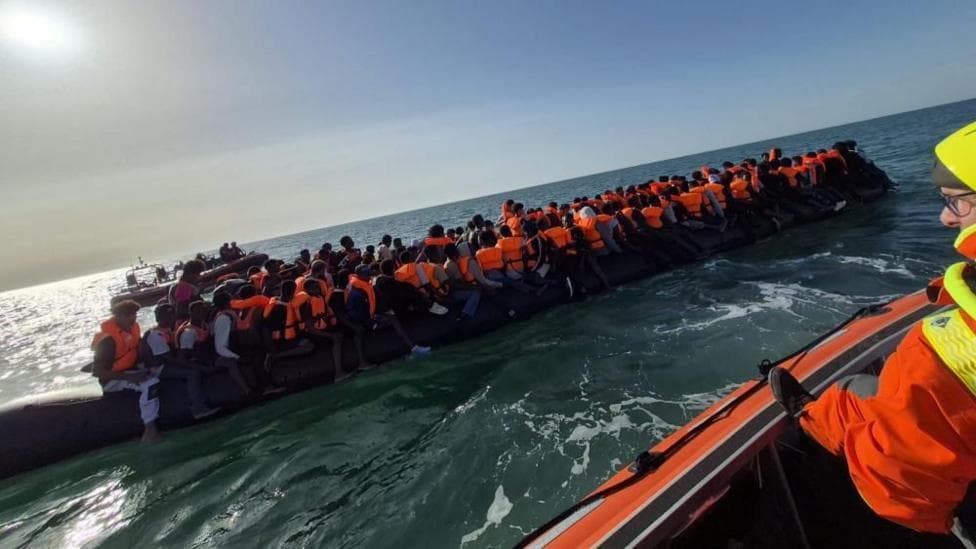
Arrivals by small boat across the English Channel have declined compared to the previous year. In the 12 months to June 2026, 38,000 illegal arrivals were detected, with 33,000 occurring via small boat. More recent provisional data indicates that 14,526 people had crossed the Channel in small boats by 1 August 2026. According to a Home Office statement on 25 August, more than 48,000 Channel crossing attempts have been prevented and 1,100 boats and engines seized since the election.
Asylum claims have also fallen, with 86,000 people seeking asylum in the year to June 2026—a 20% decrease from the previous year. Notably, approximately half of those applications came from people already legally in the United Kingdom rather than from those who had arrived on small boats.

How have other migration routes changed?
Work visa numbers have contracted substantially. The Home Office issued 235,000 work visas in the year to the end of June 2026, representing an 18% decline from the previous year and 62% lower than the December 2023 peak. That earlier peak reflected policies under former Prime Minister Boris Johnson to liberalise the work visa system, though the Rishi Sunak government tightened rules in its final months.
The specialist health and care worker visa route experienced the most dramatic reduction, falling by 90% following progressive tightening of eligibility criteria. Foreign student arrivals also declined, with 383,000 students coming to the UK in the year to June 2026—an 11% drop from the previous year and 41% lower than the June 2023 peak.
Family reunion visas have similarly contracted. Only 58,000 such visas were granted in the year to June 2026, representing a 19% decrease from the previous 12 months. Statisticians attribute this fall largely to new rules making it exceptionally difficult for refugee families to reunite in the UK. This policy, which has faced legal challenges in the High Court, remains in place as the government believes it deters illegal arrivals across the English Channel, though critics argue it prevents genuine refugees from rebuilding their lives.
What has the government said about these figures?
Home Secretary Shabana Mahmood stated:
A little over two years into office and the asylum backlog is down, the number of asylum seekers in hotels is falling, illegal working arrests are at record levels, and deportations and returns are up markedly. Small boats numbers are also now falling, but we are not complacent and there is more we must do.
The Home Office has characterised the data as evidence that migration control policies are producing measurable results, though officials acknowledge that further action on small boat crossings remains necessary.
What is the opposition response?
Shadow Home Secretary Chris Philp criticised the government's approach, stating that Labour was
moving illegal immigrants out of hotels and into flats in your building.He argued that a Conservative government would deport every illegal immigrant and withdraw from the European Court of Human Rights, adding:
The surest way to empty the accommodation is to make plain that nobody who crosses the Channel gets to stay.
What is the broader context?
The rise in hotel use for asylum seekers coincided with increased arrivals across the English Channel from 2019 onwards and a slowdown in Home Office decisions on claims. The Migration Observatory notes that the share of asylum seekers housed in hotels fell from 42% to 21% by the end of March 2026, though London remained the highest-rate region at 58%.
The government's wider accommodation strategy includes plans to expand the use of military sites to house asylum seekers, reducing further reliance on hotels amid ongoing immigration reforms and local opposition to accommodation facilities. The latest hotel closures form part of a reduction in asylum accommodation costs of almost £1 billion since the 2024 general election.
Key Facts
- Hotel accommodation for asylum seekers halved from 32,000 in June 2025 to 16,000 in June 2026, the lowest figure since 2022
- The asylum backlog fell from 175,000 in June 2023 to 40,000 in June 2026 following government efforts to accelerate claim decisions
- Work visas issued fell 18% year-on-year to 235,000, with specialist health and care worker visas down 90%
- Removals of people without grounds to stay reached 40,000 in the year to June 2026, the highest number of failed asylum seekers removed in 16 years
- Small boat arrivals declined, with 48,000 crossing attempts prevented and 1,100 boats seized since the election