

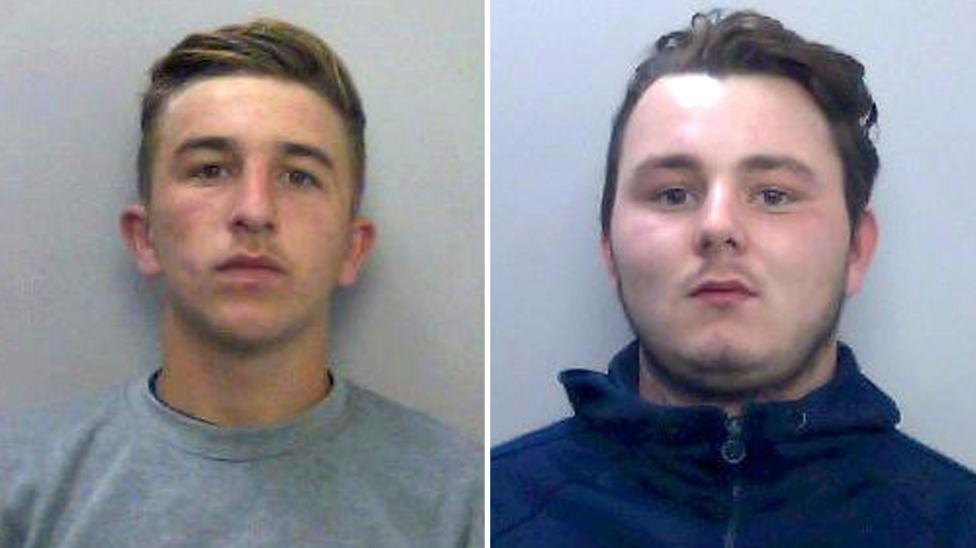
Fifty police chiefs from across the United Kingdom have written to the prime minister demanding that every available legal avenue be used to stop the early release of the two men convicted of killing PC Andrew Harper. The officer, 28, died in 2019 after being dragged along a road behind a getaway car driven by teenagers who had just stolen a quad bike in Berkshire. The letter follows Prime Minister Andy Burnham's recent statement that he was confident the release of Jessie Cole and Albert Bowers, expected in January, could still be prevented.
The chiefs, representing forces in England, Scotland, Wales and Northern Ireland, said they welcomed the prime minister's willingness to intervene. Their letter stated:
This provides an opportunity not only to examine every lawful avenue in PC Andrew Harper's case, but to ensure similar concerns do not arise again.
Downing Street responded to the open letter, published on Tuesday evening, by pointing back to Burnham's earlier assurance that he would do everything in his power to halt the release of Cole and Bowers.
What exactly are the police chiefs asking for?
The letter sets out three specific requests. First, it asks the government to pursue every lawful option to determine whether the early release of those responsible for PC Harper's death can still be prevented, something Burnham has already committed to examining. Second, it calls for greater scrutiny of an offender's crimes whenever sentences are altered, arguing that cases involving a death, extreme violence or an ongoing risk to the public should trigger explicit consideration of public protection and victim impact before any release terms are changed. Third, the chiefs want victims and bereaved families to be properly consulted whenever significant changes are made to sentencing or release arrangements.
The letter argued that releasing officers' killers early risks undermining confidence in what it called the value placed on police service and sacrifice, particularly for those who put themselves in danger to protect the public.

Why does this case carry such weight for police leaders?
Cole and Bowers were each sentenced to 13 years for manslaughter in 2020, and under changes made to the Sentencing Act this year they would become eligible for release after serving just half of that term. The driver of the vehicle, Henry Long, received a longer 16-year term and was given an extended determinate sentence, which means he does not qualify for the same early-release scheme. This disparity, combined with the scheme's broader rollout, has kept the case at the centre of a wider debate about how victims and their families are treated when sentencing rules change.
This is not the first time the case has driven public pressure on ministers. In earlier coverage, PC Harper's mother, Debbie Adlam, described the proposed scheme as another letdown for families of victims, and separately called it an insult that the men convicted of manslaughter over her son's death could qualify for early release at all. Police leaders and Harper's former senior investigator have also voiced anger, with the Police Federation reportedly weighing legal action over the plans.
What has the government actually done so far?
Ministers have shifted position more than once in recent weeks. According to a national broadcaster's report, the government excluded rape, grooming and serious child sex offenders from the early-release scheme, but left manslaughter convictions inside it, meaning Cole and Bowers remained eligible even after that change (bbc.com). A separate broadcaster reported that the scheme's start was then pushed back to October following a review, rather than beginning in September as originally planned (itv.com). By 3 August 2026, however, reports said Burnham had approved the scheme despite that review, with manslaughter offenders still included among those eligible (telegraph.co.uk). Days later, on 5 August 2026, the chief constable of Thames Valley Police said he was considering joining legal action if the government failed to block the release, according to a report cited by a national newspaper (a national newspaper's report). Officials have said the revised policy would exclude roughly 1,000 prisoners from the scheme, while the wider programme is still expected to release around 5,000 prisoners over ten months starting in October, and some offenders would see their eligibility threshold cut from two-thirds of a sentence to half.
What has PC Harper's mother said?
Debbie Adlam told the BBC that a phone call from a senior Downing Street official had given her some hope that Cole and Bowers could remain in custody past January. She said the official had told her the prime minister wanted to do everything he could to find a resolution.
For me, it's hope, but I can't afford to be too hopeful.
Adlam said she was not seeking a special exemption for her son's case alone, but wanted the killers of all emergency workers excluded from the early-release scheme. Her comments echo concerns she raised in earlier coverage, when she said the proposed release rules amounted to another blow after months of shifting government messaging on the case.
What happens next?
The early-release scheme, aimed at easing prison overcrowding, is now expected to begin in October 2026 following the government's review, according to reporting cited above. Cole and Bowers had been due for release in January, making that date the key point at which any legal or policy intervention would need to take effect. Around 5,000 people are expected to be released nationally under the scheme, down from an initial estimate of 6,000 after exemptions were announced for those convicted of the most serious offences, including rape, child sex offences and grooming.
Key Facts
- PC Andrew Harper, 28, died in 2019 after being dragged behind a getaway car following a quad bike theft in Berkshire.
- Jessie Cole and Albert Bowers were sentenced to 13 years for manslaughter in 2020 and could be released after serving half that term.
- Driver Henry Long received a 16-year extended sentence and is not eligible for early release.
- Fifty police chiefs from across the UK signed the letter to the prime minister published on Tuesday evening.
- The early-release scheme is expected to begin in October 2026 and release around 5,000 prisoners nationally over ten months.


