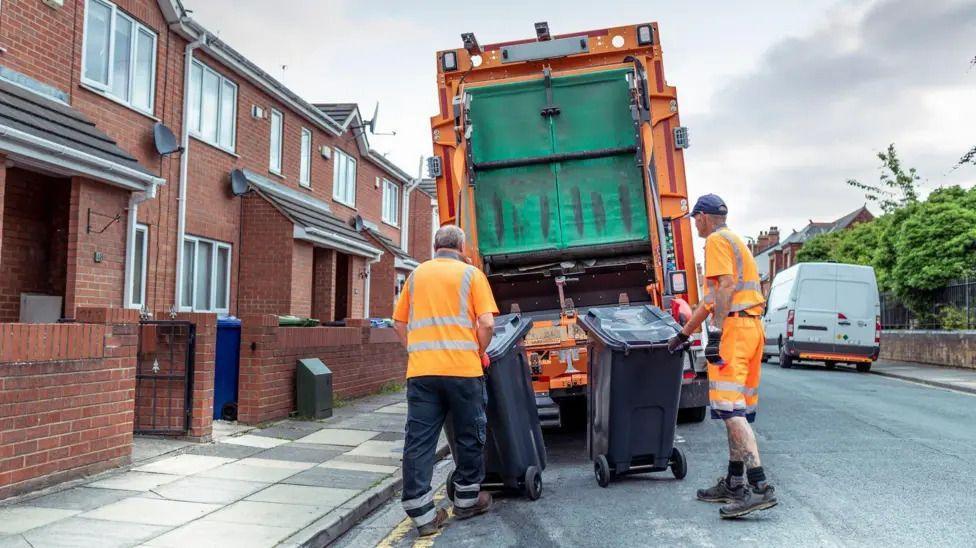
Missed bin collections across Flintshire during the summer months were partly caused by extreme heat that posed a genuine threat to the lives of waste workers, according to a senior council official. Chris Goddard, Flintshire County Council's streetscene service manager, described the situation as a "perfect storm" of operational difficulties that converged during the UK's record-breaking hot weather.
According to BBC News, the council faced multiple challenges simultaneously, with the heatwave emerging as a significant contributing factor to widespread service disruption. Despite these difficulties, Flintshire remained on track to meet the Welsh government's national 70% waste recycling target for the year, the Local Democracy Reporting Service reported.
The scale of the disruption became clearer through council records. Deeside.com reported that from January to September 2026, Flintshire recorded 12,171 missed-collection reports across approximately 4.81 million scheduled collections. The situation peaked in June 2026, when 1,582 outstanding cases accumulated before a recovery plan implemented in July brought the figure down to 133 by September.
Why did the heatwave affect bin collections?
Goddard explained that worker safety took absolute priority in decision-making.
We do have to make some difficult decisions but ultimately if there is a fatality in the workplace because of a decision I've made, that's something that I would have to live with – and probably defend.He identified five or six operational challenges that coincided during the summer months, with the heatwave being one of several factors alongside staffing shortages and other service pressures.
During the summer period, drought was declared across Wales and wildfires caused significant damage in parts of the country, creating additional strain on council resources and emergency services.
We had maybe five or six operational challenges that all came at the same time in a perfect storm this summer. Unfortunately, the heatwave was one of them and it was a contributing factor. We do have to prioritise staff safety above all else.
Goddard emphasised that ensuring workers returned home safely remained his primary responsibility.
My number one job every day is to make sure that everybody goes home safely and we take that really seriously within streetscene. That was only one of several contributing factors. That level of change is naturally going to cause a few bumps in the road, particularly with staff being asked to do a little bit more. There were some staffing issues during that period too.
How has the three-weekly collection system performed?
Councillors praised Flintshire residents for adapting to the three-weekly residual waste collection schedule, which was introduced in April 2025. The change reduced the black-bin allowance from 90 litres every two weeks to 60 litres every three weeks, a transition that initially proved controversial. Despite the summer disruptions, the modified collection pattern has helped the council maintain progress toward its recycling goals.
Saltney councillor Richard Lloyd acknowledged the initial resistance to the change but highlighted its success.
Three-weekly was very controversial at the time it came in. It's quite clear to see now that the three-weekly black bin collection has been a good new factor. Recycling has improved at the kerbside.Councillors noted during the authority's meeting that the shift to three-weekly collections positioned the council to meet its statutory recycling rate despite the summer's operational challenges.
The council also achieved a reduction in waste sent to landfill or Parc Adfer of 6,467.49 tonnes between 2024 and 2026, with that improvement trajectory continuing through 2026 despite the disruptions experienced during the heatwave period.
What are the financial implications?
However, the council faces significant financial penalties related to recycling performance. A November 2026 report indicated that Flintshire faces a £1,022,386 Welsh Government fine for earlier recycling shortfalls, with a potential additional penalty of approximately £65,000 for narrowly missing the 2025/26 recycling target. The 2025/26 recycling rate ultimately reached 69.55%, falling 0.45 percentage points below the statutory 70% requirement.
Earlier quarterly data showed stronger performance, with recycling rates of 70.87% recorded in the first quarter and 75.13% in the second quarter of 2025/26, though the third quarter results were still being verified at the time of reporting.
What happens next?
The council remains subject to six-monthly Welsh Government review of its recycling performance. The authority continues to operate under this oversight framework as it works to improve collection reliability and meet statutory targets in future years.