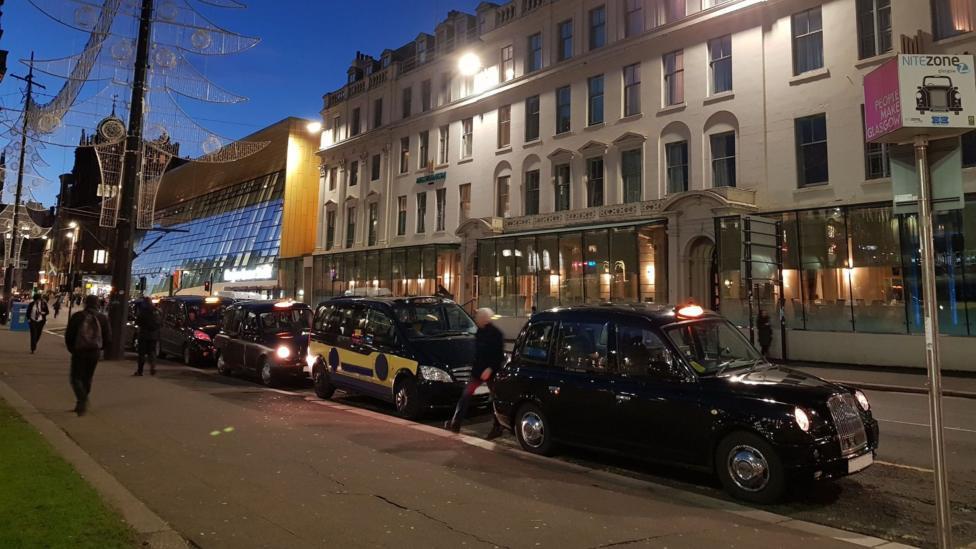
Glasgow's licensing committee has mandated that taxi drivers accept card payments, with the requirement taking effect on 1 February 2027 for those obtaining new licences or renewals. The decision follows overwhelming public support, with more than 80% of consultation respondents backing the proposal. According to BBC News, councillors approved the measure at a meeting on Wednesday, introducing a phased implementation that will eventually require all drivers to carry card readers.
The council received 1,666 responses to its public consultation, with 72.39% from members of the public and 15.23% from taxi driver licence holders. The approval was unanimous at the 11 November meeting, according to STV News. Drivers granted new licences or renewals from the February deadline will operate under conditions requiring them to accept credit, debit card, and contactless payments via a card payment device, with printed or handwritten receipts provided upon request.
The licensing committee has not set a single deadline for existing licence holders to comply, meaning the requirement will be phased in over time as current licences expire and are renewed. Since Glasgow taxi licences run for three years, full compliance across the fleet will take several years to achieve. The council will not prescribe a card-terminal supplier, requiring drivers to arrange their own payment facilities.
Why the change is happening
Councillor Alex Wilson, who chairs the licensing committee, welcomed the decision, noting that complaints about the lack of card readers in Glasgow taxis are persistent. Supporters of mandatory card payments argued that consumer habits have shifted significantly, with the public now expecting non-cash payment options as standard. They also contended that the change will reduce congestion at taxi ranks and improve overall service quality.
The requirement reflects broader shifts in Scottish transport payment methods. Glasgow's subway now accepts contactless payments with fares capped daily and weekly, and Scotland's £2 bus fare cap has launched across the west, covering 12 local authority areas with 25 operators. These developments demonstrate a region-wide movement towards cashless and capped fares in public transport.
What are the new licence conditions?
Drivers must ensure their card payment device is fully operational before accepting any fares. The licence conditions explicitly state that in the event of a network outage or technical malfunction affecting card payment devices, the driver must inform passengers as soon as they become aware of the problem. This provision acknowledges concerns raised during consultation about technology reliability and ensures passengers are not left without payment options.
What did opponents say?
Those who disagreed with the mandatory requirement argued that taxi drivers, as self-employed operators, should retain the freedom to choose their payment methods. They raised concerns about the cost of purchasing and maintaining card payment devices, as well as transaction fees or percentage charges levied by payment processors. Some respondents also highlighted the risk of cards being declined at the end of a journey and noted that passengers may be less inclined to tip when using card payments rather than cash.
Will passengers still be able to pay in cash?
Yes. Passengers will continue to have the option to pay by cash if they prefer. The requirement applies only to drivers' obligation to accept card payments; it does not eliminate cash as a payment method. Taxi drivers who do not already have a card payment device will need to purchase one to comply with the new conditions.
What happens next?
The requirement begins on 1 February 2027 for drivers receiving a new licence or renewing an existing one. Since Glasgow taxi licences are valid for three years, full compliance across the entire fleet will be achieved gradually as licences expire and are renewed over the coming years. The council has not announced a single deadline by which all existing licence holders must comply with the card payment requirement.