

Andy Burnham posted more than 50 times on Instagram in his first month as prime minister, ranging from meetings with world leaders to a meme-based ranking of pub snacks with Chancellor John Healey, as his Downing Street team builds a social-first communications operation. According to , on 5 August 2026 his posts were racking up millions of views and he was rapidly adding followers on TikTok and Instagram as he sought to close the gap with populist rivals online. The approach marks a striking departure from the caution shown by several of his predecessors in No 10.
Where did Burnham's digital team come from?
In early 2015, flower crowns and hearts began appearing, photoshopped onto pictures of the then Labour leader Ed Miliband, by a movement of young, mostly female supporters calling themselves the \"Milifandom\", who used Twitter to push back against what they saw as a distorted media portrayal of their candidate. The campaign was started by Abby Tomlinson, a 17-year-old sixth-form student who defended the man she nicknamed \"Milibae\", and the hashtag #Milifandom trended widely before Labour went on to lose the 2015 general election.
David Cameron, whose Conservatives increased their number of seats that year, later remarked:
Britain and Twitter are not the same thing.
Tomlinson has said that seeing her hopes for a Miliband government dashed turned her into a \"political pessimist\", once she realised that winning voters over online:
doesn't happen in a day, a week or even months, it's going to take years.
More than a decade later, Tomlinson is again helping a Labour leader court an online audience — this time from inside government. She now works in the press office at 12 Downing Street as head of content for Burnham, whose rapid rise to the premiership was tracked in earlier coverage of whether he represented Labour's best hope or its true saviour.
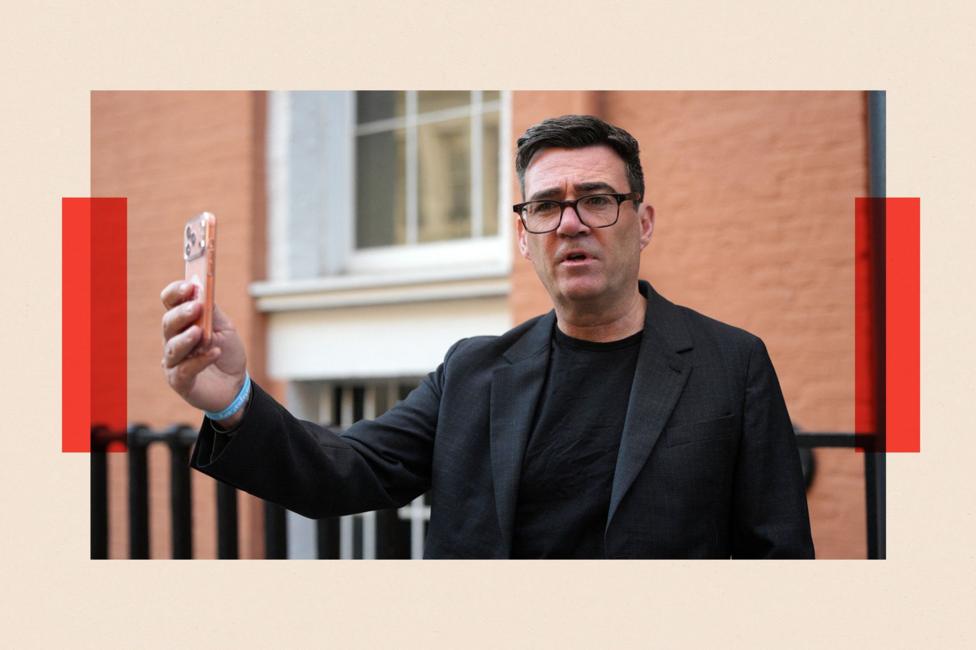
How aggressively is Burnham using social media as prime minister?
In his first month in office, Burnham posted more than 50 times on Instagram alone, covering everything from meetings with world leaders, campaigners and farmers to lighter, meme-based content. Strategists around him believe platforms such as Instagram and TikTok suit his communication style and sense of humour. According to , Burnham had around 730,000 followers on X, 450,000 on TikTok and 600,000 on Instagram at the time of its report on 5 August 2026, and had gained 50,000 new followers on TikTok and Instagram in a single day the previous week — though he still trailed far behind Nigel Farage's online reach.
Separately, Bloomberg reported on 3 July 2026 that a \"fact check\" selfie video Burnham posted after Kemi Badenoch mocked his appearance drew more than four million views on Facebook and over five million on X, a rare instance of him outperforming Farage on the platform where the Reform UK leader is normally dominant.
Peter Hyman, a former adviser to both Tony Blair and Keir Starmer in Downing Street, said the strength of Burnham's early digital output lay in \"quantity as well as quality\":
You have to narrate the story of what you are doing three or four or five times a day so that you are out there regularly. Keir Starmer wasn't out there enough and therefore it wasn't landing.
Whether Burnham is more popular in the polls because of his social media performance, or performing well online because voters already like him, remains an open question. Earlier reporting found that while Burnham thrives on public engagement, he faces a tight timeline to turn his broad vision for devolution into detailed policy.
Not everyone is convinced by the approach. Cody Dahler, a comedian who posts sweary political explainers to two million followers, has warned that voters will grow cynical if they sense politicians are using social media purely \"as a comms tool\", saying Burnham comes across like a:
cool substitute teacher.
After Burnham released a video discussing regional names for a bread roll — barm, cob or bap — to promote his devolution plans, broadcaster Piers Morgan urged him to:
stop wasting your time and ours with these cringe videos.
Bea Timpson, a former press secretary to Liz Truss and Rishi Sunak who says she prefers \"trad media\" such as broadcast and print, summed up the balancing act:
I have to accept that it's now non-negotiable to be online a bit, but you definitely can be too much.
How do other party leaders compare online?
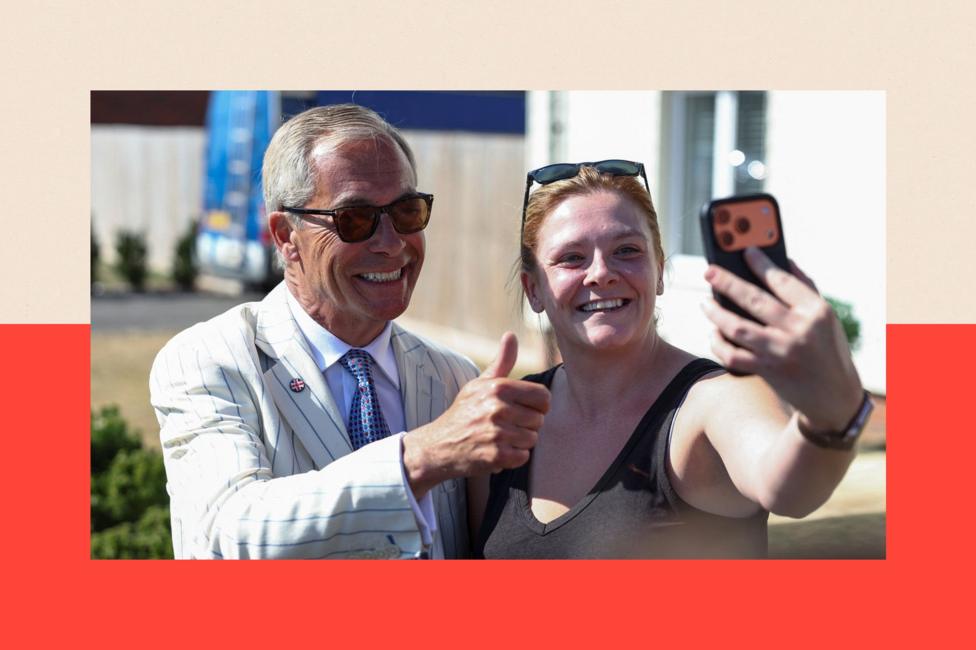
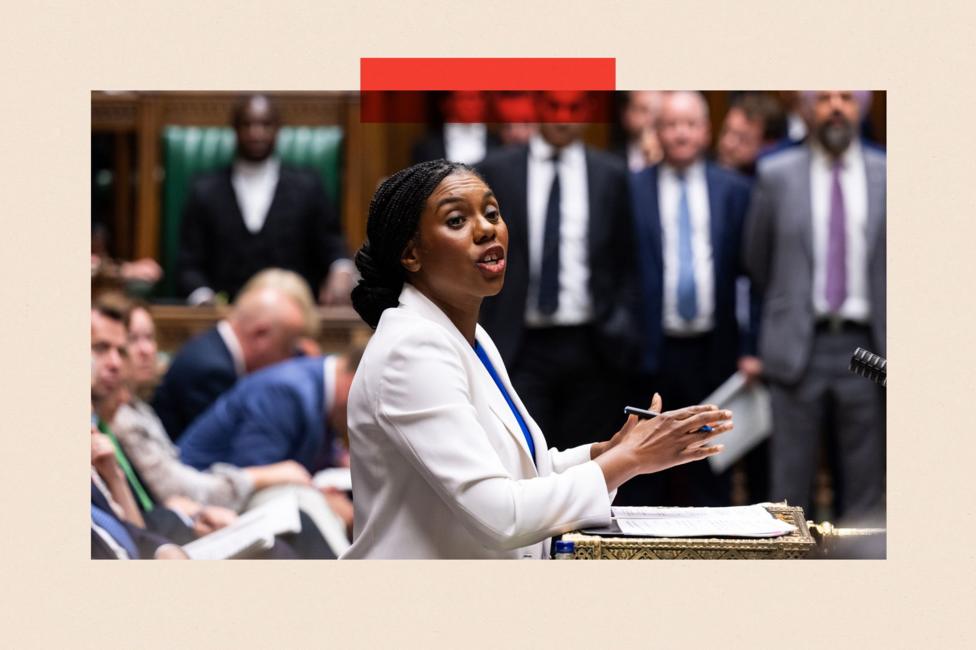
Burnham is far from alone in chasing viral moments. Videos of Conservative leader Kemi Badenoch tearing into the budget, or mocking former prime minister Sir Keir Starmer, have gone viral, while Reform UK's Nigel Farage has by far the largest online following of any UK party leader, with 7.6 million followers combined across Facebook, Instagram, X, TikTok and YouTube.
In Scotland, the SNP has long mobilised an online campaign network in support of independence, building a following larger than that of the Liberal Democrats, who campaign across Britain and whose leader Ed Davey has had some success with viral campaign stunts. Restore Britain, founded by former Reform MP Rupert Lowe, has its strongest support among users of X, a platform owned by Elon Musk, who has publicly endorsed the party and helped expand its reach.
Plaid Cymru, newly in government in Wales, is still finding its voice online, mixing \"fun\" memes featuring First Minister Rhun ap Iorwerth with more serious interview clips. The Green Party's Zack Polanski has made a point of running his own accounts — though, as recent weeks have shown, that approach carries risks of its own.
Why did previous prime ministers keep their distance from social media?
Cameron's successor, Theresa May, was similarly sceptical of social media's value. When urged by aides to start tweeting after taking office, she reportedly replied:
People don't say 'pass me the hashtag newspaper, or I'd like a hashtag coffee'.
Ministerial appointments during May's first reshuffle were instead announced formally, in press statements issued beneath the government's coat of arms. By contrast, during Burnham's first reshuffle this summer, a two-person social media team from No 10 was visibly stationed to film new ministers as they arrived, a scene witnessed while presenting a radio programme live from Downing Street.
Prime ministers have long had to adapt to new media technology. Winston Churchill made effective use of radio but reportedly regarded television as a vulgar diversion. In the 1960s, Labour's Harold Wilson modelled his television campaigning on that of John F Kennedy in the United States, while leaders such as Tony Blair were, by the 1990s and 2000s, just as likely to appear on a chat-show sofa as on a morning news programme. Podcasts now offer long-form, less combative opportunities to reach voters, while social media offers a quicker hit of direct feedback.

Is there evidence that any of this changes votes?
Academic research on the question remains inconclusive. Emma Connolly, who has studied political social media use at the Digital Speech Lab at University College London, said:
We don't necessarily have really strong evidence or convincing evidence that it could really persuade or transform the opinion of opponent voters or even those that are undecided.
Data from media regulator Ofcom shows that television and websites remain the most-used sources of news overall, but a growing share of the public also gets news from social media. That figure is highest among 16-24 year olds, at 78%, though a majority of adults in every age group below 65 now use social media for news, and even among the over-75s, 22% say they find out about world events through social platforms. For political parties, this means social media is no longer simply a tool for reaching younger voters — it now reaches the entire electorate.
Not all platforms carry equal weight. Even since Elon Musk's rebranding of Twitter as X, MPs, advisers and journalists in Westminster continue to use the platform heavily, but digital strategists argue that \"real voters\" are more likely to be found elsewhere. The main parties collectively have around four million followers on Facebook — a much more widely used platform overall — compared with a combined 3.2 million on X.
What risks come with chasing viral moments?
Politicians have often looked overseas for campaigning ideas, and social media strategy is no exception. Those on the right have sought to emulate the impact Donald Trump has achieved on Truth Social, while some on the left point to Zohran Mamdani's successful campaign to become mayor of New York.
Some parties have imported specialist digital talent from abroad. In 2019, Boris Johnson hired New Zealand strategists Ben Guerin and Sean Topham to run the Conservatives' digital general election campaign. The pair brought the concept of \"shitposting\" into UK politics — deliberately releasing rough or unpolished content designed to provoke a reaction, including a tweet featuring the slogan \"Get Brexit Done\" rendered in Comic Sans, a font widely disliked by graphic designers. Guerin explained the thinking behind it:
People are more likely to engage with something if they feel like it's been written by a human, not by a committee of design experts. It's pretty easy to go viral for doing something weird and wacky, but that doesn't always advance the objectives of your campaign.
Recent figures appear to bear this out: a TikTok post from Burnham rating pub snacks attracted around a million views, while a plainer video simply listing five things he had achieved in his first week as prime minister reached five million.
Does authenticity make political social media riskier?
There is a built-in tension in political social media use: authenticity is prized, yet few genuinely expect a prime minister to be filming and uploading content personally. In 2013, a report on how Cameron's Twitter account had \"favourited\" a tweet mocking William Hague — posted from an account that had also made a crude joke about the injuries suffered by former Conservative MP Norman Tebbit in the Brighton bombing — prompted a complaint from the prime minister's director of communications, who described the reporting as:
slapdash and crappy.
The complaint centred on a single sentence acknowledging the possibility that someone other than Cameron might have clicked \"like\" by mistake — a suggestion that, it was argued, risked spoiling the illusion for the roughly 500,000 followers who believed the prime minister ran his own account.
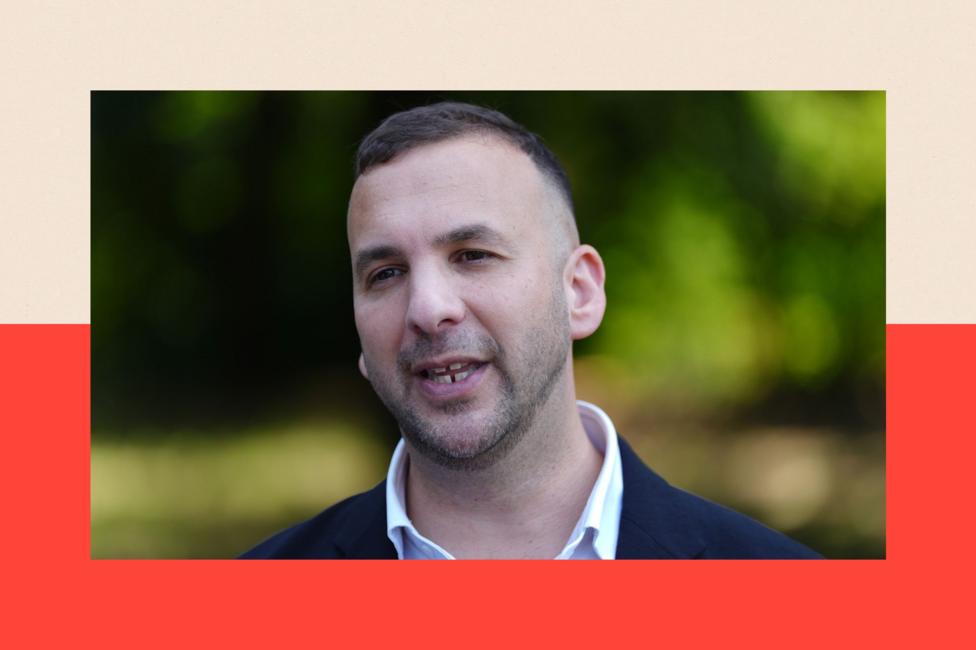
Zack Polanski's own experience shows the account really is his. The co-leader of the Green Party in England and Wales faced criticism in May 2026 for sharing a post condemning police actions during the Golders Green attack, for which he later apologised. In July 2026 he accepted an Instagram collaboration featuring a man wearing a T-shirt printed with a cartoon guillotine alongside the lyric \"we're only making plans for Nigel\" — prompting Reform UK to describe it as incitement of violence against Nigel Farage. Polanski responded:
I'm accepting my responsibility in that I shouldn't have accepted that collaboration.
He did not, however, apologise outright. Reform UK's Gawain Towler, a long-time media adviser to Farage, offered his own summary of the episode:
My big takeaway is: don't be a berk on social media, which I think was Zack Polanski's big takeaway too.
Kemi Badenoch has faced her own controversy over social media messaging. On 2 May 2026, she apologised after a post defending UK veterans used footage from Bloody Sunday, according to a national newspaper's report, illustrating how quickly online messaging can misfire for party leaders.
Dov Forman, who helped Conservative-turned-Reform MP Robert Jenrick grow his following from 20,000 to more than half a million through viral clips — including footage of him confronting fare evaders on the London Underground — says running personal social media as a party leader is \"risky\", though sometimes a risk worth taking. Badenoch has taken to directing her own videos, telling aides what she wants posted, and has attracted endorsements on X from American rappers Nicki Minaj and Azealia Banks — the kind of authentic third-party endorsement politicians prize.
What happened when Burnham appeared on a TikTok career show?
On the day he became prime minister, a video was released of Burnham being interviewed on Career Ladder, a series hosted by Ukrainian TikToker Max Klymenko, in which guests discuss their career while standing on a ladder. Klymenko said of guests unfamiliar with the format:
If they personally haven't seen the channel it's sometimes quite difficult to make sense for them.
Burnham had reportedly seen the show in advance, and used the ladder as intended.
What happens next for Burnham's online strategy?
Downing Street is expected to lean further into casual, creator-led content. According to earlier reporting on Burnham's plans for more social media creator collaborations, published on 23 July 2026, his team is working on a social-first Downing Street strategy built around influencer outreach, TikTok clips and partnerships with content creators. A report from a national broadcaster on the same date, available at this link, said his team was examining further collaborations with creators, though no specific date or event has yet been confirmed for the next phase.
Peter Hyman cautioned that the underlying substance of governing still matters more than the format used to communicate it:
The politicians who get this wrong think that social media is now the only place to be, and a substitute for doing the hard work and the heavy lifting of actually getting the right policy, getting the right narrative, and telling that story properly. Politics is about winning arguments.
Politicians, Hyman's argument implies, have always wanted to be liked — it is simply that today's leaders can measure that affection instantly, one heart-shaped icon at a time.

Key Facts:
- Burnham posted more than 50 times on Instagram in his first month as prime minister.
- According to , he had roughly 730,000 X followers, 450,000 on TikTok and 600,000 on Instagram as of 5 August 2026, still far behind Nigel Farage's combined 7.6 million.
- Bloomberg reported that a Burnham \"fact check\" video drew more than four million views on Facebook and five million on X after Kemi Badenoch mocked his appearance.
- Ofcom figures show 78% of 16-24 year olds get news from social media, compared with 22% of over-75s.
- Zack Polanski and Kemi Badenoch have both faced criticism this year over controversial social media posts.


