

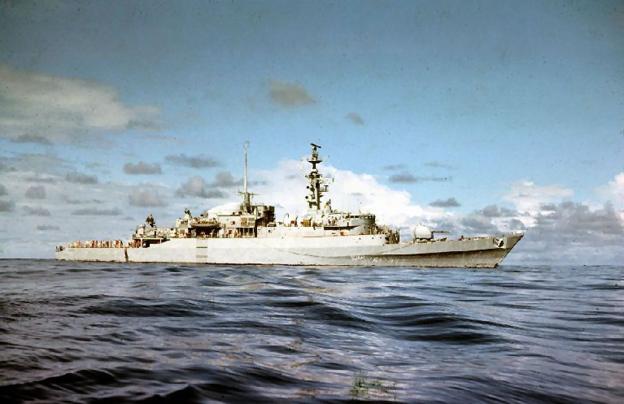
A retired Royal Navy frigate that served in the Falklands War faces destruction unless campaigners can raise £2m to bring it home to Scotland before a September 2025 deadline. HMS Ambuscade, built on the River Clyde in 1975, has been ordered out of Karachi by the Pakistan Navy amid rising transfer costs, and the charity Clyde Naval Heritage (CNH) says it is running out of time to save the vessel. CNH wants to convert the ship into a floating museum on the Clyde, but soaring insurance costs linked to regional conflict have nearly doubled the funds required.
The Type 21 frigate was constructed at the Yarrow shipyard in Glasgow and remained in Royal Navy service until 1993, when it was sold to Pakistan. Renamed PNS Tariq, the ship later took part in a rescue operation that saved 377 tourists in the Maldives during the 2004 Indian Ocean tsunami.
Why has the cost of bringing the ship home doubled?
The bill has risen sharply because of increased insurance premiums tied to the ongoing conflict between the United States and Iran. Shipping routes through the region have been disrupted since Iran blocked the Strait of Hormuz earlier in 2025, while vessels using the alternative route through the Red Sea have faced repeated attacks.
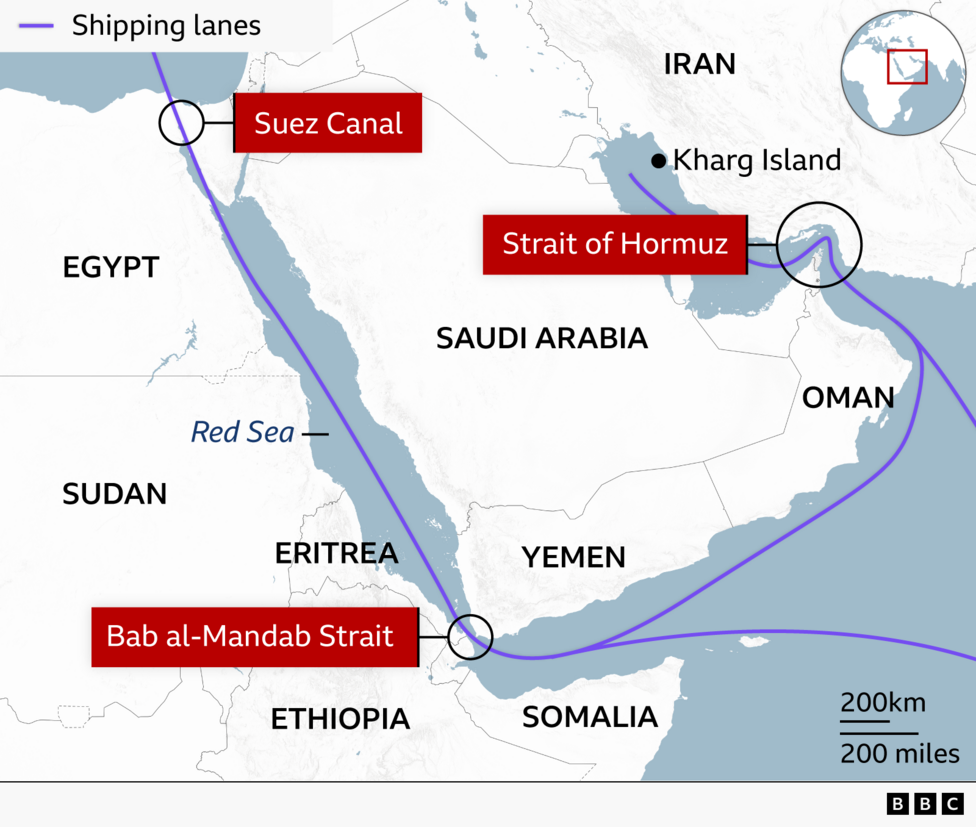 " alt="Map of the Middle East and northeast Africa highlighting major global shipping routes through three key maritime chokepoints. Purple lines show shipping lanes connecting the Gulf, Arabian Sea, Red Sea and Mediterranean Sea via the Strait of Hormuz between Iran and Oman, the Bab al-Mandab Strait between Yemen and the Horn of Africa, and the Suez Canal in Egypt. Countries labelled include Iran, Saudi Arabia, Oman, Yemen, Egypt, Sudan, Eritrea, Ethiopia and Somalia, with Kharg Island marked in the Persian Gulf. An inset map shows the region's location within the wider world.">
CNH chief executive David O'Neill said Pakistani officials have warned they will dispose of the ship if it is not moved by the end of September, and that the situation currently looks bleak.
We cited the continuing attacks on shipping, UK government advice and international shipping advice not to transit, but they don't accept this.
O'Neill signed an agreement with the Pakistan Navy in September 2023 that transferred ownership of the ship to him on the condition that he arrange its return to Scotland. His plan involves permanently mooring the vessel near the Beacon Arts Centre in Greenock, creating a museum dedicated to the Clyde's shipbuilding history while also offering a cultural landmark for Scotland's Pakistani community.
What extra costs and plans has the charity revealed?
Beyond the £2m transport target, CNH has said it separately needs £125,000 for preparation work before the ship can be moved, according to a Scottish heritage news report. A recent survey of the ship in Karachi found it fit to make the voyage, and the charity has said it wants the vessel to become the United Kingdom's first post-war naval, Falklands and shipbuilding museum. The same report noted that organisers have been framing the project around a symbolic timeline, aiming for the museum to open in time for the 45th anniversary of the Falklands conflict next year.

O'Neill said he remains in discussions with both Inverclyde Council and Glasgow City Council, both of which have backed his museum proposal in principle. However, he cautioned that raising £2m within such a short window is unlikely, particularly after regional conflicts scuppered an earlier sponsorship and branding arrangement that had been expected to help fund the project.
What would be lost if the ship is destroyed?
O'Neill described the potential loss of HMS Ambuscade as a quiet erosion of Scottish maritime heritage. He said the Clyde would lose a prospective tourist attraction along with the associated heritage, cultural, employment, economic and educational benefits it could have generated.
How does this compare with other Falklands-era ships?
The threat facing HMS Ambuscade echoes the fate of HMS Plymouth, another surviving Falklands War veteran. In 2014, that vessel was towed out from the River Mersey and destroyed despite a campaign to preserve it, having played a significant part in the recapture of South Georgia from Argentinian forces in April 1982. It had been decommissioned in 1988. At the time, Peel Ports, which owned the Birkenhead dock where the ship had been berthed, said it had no practical alternative but to dispose of it responsibly, without disclosing the vessel's ultimate destination.
This is not the first Clyde-built vessel O'Neill has attempted to preserve. He previously led a campaign to return the Falls of Clyde, a Victorian sailing ship, from Hawaii, where it had operated as a museum vessel since the 1960s before deteriorating. That effort stalled amid legal complications and was further delayed by the pandemic. The ship was ultimately scuttled by the Honolulu Harbour Board last year. Built in Port Glasgow in 1878, the Falls of Clyde had spent decades transporting cargo to and from East Asia and Australasia before relocating to Hawaii.
Separately, Clyde-built maritime heritage has seen more positive developments elsewhere in Scotland. Earlier this summer, a full-sized replica of Henry Bell's Comet — widely regarded as Europe's first successful steamship, launched in 1812 — was unveiled in Port Glasgow, celebrating the town's shipbuilding legacy.
What happens next?
CNH is racing against the Pakistan Navy's deadline to remove HMS Ambuscade from Karachi by the end of September 2025, according to the Scotsman's coverage of the fundraising effort. Failure to meet the deadline and the £2m target could result in the ship being scrapped, ending hopes of establishing what organisers had hoped would be the UK's first dedicated post-war naval, Falklands and shipbuilding museum.
Key Facts
- HMS Ambuscade was built at the Yarrow shipyard in Glasgow in 1975 and served in the Royal Navy until 1993.
- The ship was sold to Pakistan and renamed PNS Tariq, later rescuing 377 tourists during the 2004 Indian Ocean tsunami.
- Clyde Naval Heritage needs roughly £2m for transport plus an additional £125,000 for preparation work.
- The Pakistan Navy has set a deadline of the end of September 2025 for the ship's removal from Karachi.
- Campaigners hope to open the vessel as a museum in Greenock in time for the 45th anniversary of the Falklands conflict next year.


