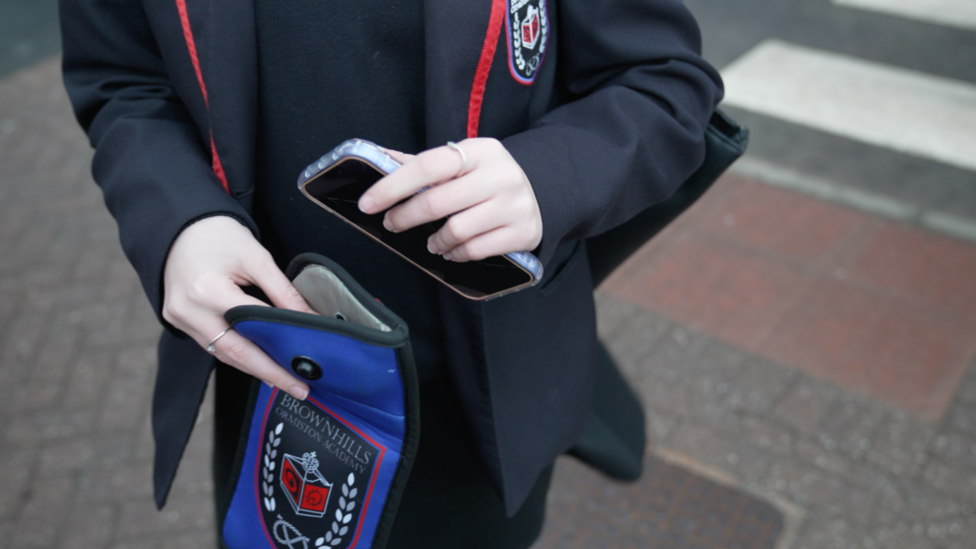
Schools in England will be required to prevent pupils from carrying mobile phones anywhere on their person during the school day under stricter government guidance taking effect from September 2027, moving beyond current policies that allow devices to remain in bags if unused.
According to BBC News, statutory guidance that came into force in June made schools and trusts legally responsible for maintaining phone-free environments throughout the day. The updated rules represent a significant shift from existing "no see, no hear" approaches, where phones can stay in pupils' bags provided they remain silent and out of sight.
Education Secretary Lucy Powell framed the government's position as protecting learning time and peer interaction.
School is for learning and friendship, not scrolling, she said, emphasising that access to phones
risks pulling children away from their learning and from each other.
How will schools implement the new rules?
Schools retain flexibility in deciding how to comply with the guidance. Implementation methods already in use include sealed pouches, secure lockers, collection of devices at the start of the day, or outright prohibition of phones from school sites. The government's statutory guidance covers not only mobile phones but also other smart technology with similar functions, including devices that send or receive messages or record audio or video, according to official government publications.
The guidance applies to maintained schools, academies, free schools, non-maintained special schools and independent schools, though it does not extend to standalone post-16 institutions. Schools are also required to make reasonable adjustments for pupils with disabilities, medical conditions or young-carer responsibilities that may necessitate phone access.
What are school leaders saying about the costs?
Head teachers' unions have raised concerns about the financial burden of implementing stricter measures without additional government support. Paul Whiteman, general secretary of the NAHT school leaders union, acknowledged that phones can create
safety issuesand be an
unhelpful distractionduring the school day, but warned that more robust measures
come at a cost.
Pepe Di'Iasio, general secretary of the Association of School and College Leaders, stated that while the new guidance
does at least provide some clarity, school leaders
cannot simply make mobile phones disappear. He emphasised that
if all schools are going to be expected to have lockable pouches or other secure storage facilities for every pupil, the cost involved will be very significant indeed, and stressed that
this is not feasible unless the government puts in the funding required to meet these costs.
Who supports the stricter approach?
Dame Rachel de Souza, Children's Commissioner for England, welcomed strong action to prevent phones from distracting pupils and disrupting the school day. Charlotte Ashton, co-founder of campaign group Generation Focus, similarly backed the changes, arguing that existing
no see, no hearpolicies were ineffective, with pupils still
TikToking in the toilets. She called for a cultural shift, stating that
ultimately, we need to get to a point where it's not normal for every single child to have a personal internet-enabled device in their pockets with them 24/7.
Shadow Education Secretary Laura Trott expressed satisfaction that the government had
finally listened to us and agreed to properly ban smartphones in schools, and supported a review of safety standards around technology used in classrooms. However, she criticised what she termed a lack of
joined up thinkingregarding new technology being introduced into learning environments.
How does this fit into the broader regulatory framework?
The phone ban represents part of a wider government effort to reshape technology use in schools. The Children's Wellbeing and Schools Act 2026 made it a legal duty for schools in England to have regard to the government's mobile-phone guidance, with the provision taking effect on 29 June 2026. Additionally, Ofsted will assess schools' phone policies and how they are implemented during inspections, adding an accountability mechanism to the new requirements.
The phone restrictions are separate from the government's upcoming ban on social media for under-16s, scheduled to take effect in March. That legislation will bar children from accessing platforms including Instagram, Snapchat and TikTok, with the culture secretary indicating that Vinted and eBay could also be included in the prohibited platforms list.
What is the situation across the rest of the UK?
Approaches to phones in schools vary significantly across the United Kingdom due to devolved education systems. In Scotland, the government has announced plans to introduce new legislation restricting personal phone use in schools and launched a consultation on the matter during the summer. Wales took a different path when the Senedd voted against a motion to introduce a national statutory ban on phones in classrooms; schools there remain encouraged to restrict phone use during the day but retain flexibility over implementation. Northern Ireland's Education Minister Paul Givan launched a 12-week consultation in August on whether to ban mobile phones from schools by law, seeking
a stronger and more consistent approach across our education system.
Prior to the statutory change in England, a 2025 Children's Commissioner survey found that 79% of secondary schools allowed phones on site but required them to remain out of sight and unused, while only 3.5% prohibited pupils from bringing phones at all. The Department for Education's February 2024 guidance had been non-statutory, leaving implementation decisions to individual schools.
What happens next?
The government has committed to reviewing the guidance in light of the Department for Education's annual behaviour survey, with any necessary revisions to be completed by September 2027, when the stricter requirements take effect.