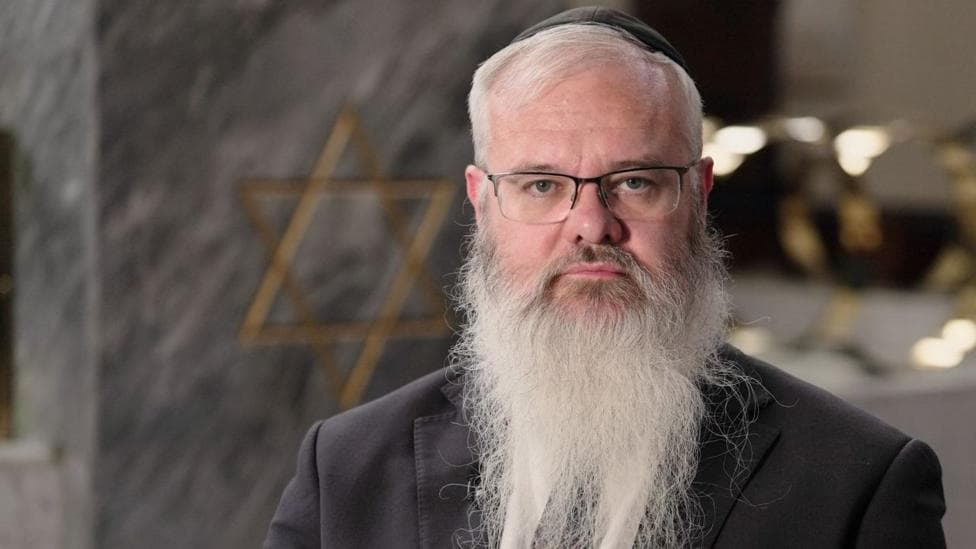
Dangerous offenders may still gain release under the prime minister's early prisoner release scheme, according to shadow justice secretary Nick Timothy, who raised concerns with the BBC about the scope of exclusions.
In order to prevent one group of dangerous criminals being released early, he's looking at releasing a different group of dangerous prisoners, Timothy stated, highlighting what he views as a fundamental flaw in the approach.
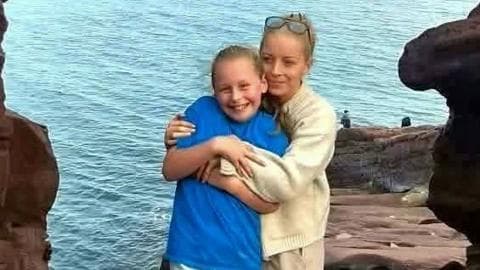
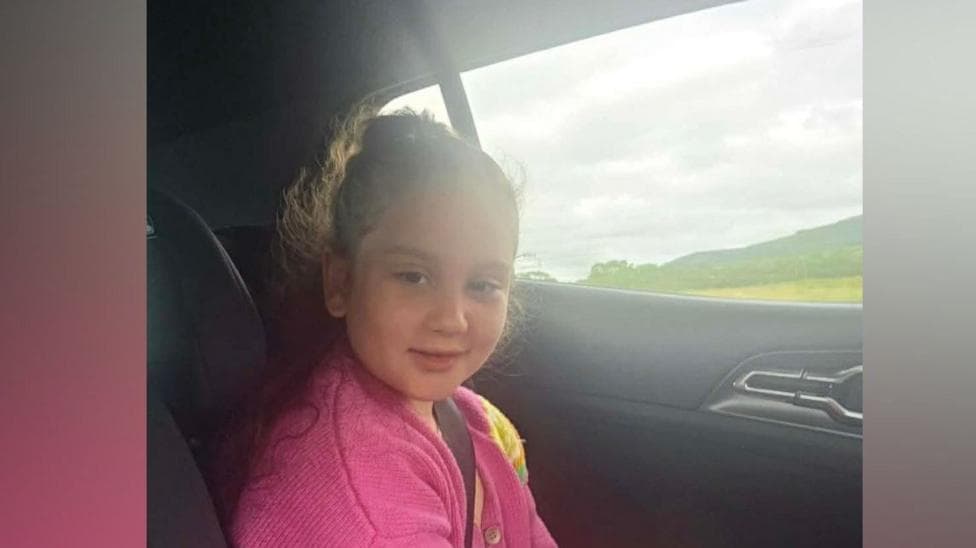
Timothy's remarks came after Prime Minister Andy Burnham announced that the early release scheme would be further restricted to exclude anyone convicted of manslaughter. This decision followed sustained campaigning by the family of PC Andrew Harper, who was killed in 2019, to prevent the release of two men convicted of his manslaughter.
To create additional prison capacity, Burnham indicated that some inmates serving Imprisonment for Public Protection (IPP) sentences—indefinite terms imposed on offenders deemed to pose significant risk—would be considered for release. However, on 30 August, the government announced that offenders convicted of killing an emergency worker, all forms of manslaughter, death by dangerous driving, and historic grooming offences would be barred from the early-release changes.
What are IPP sentences and why are they controversial?
Imprisonment for Public Protection sentences were imposed between 2005 and 2012 on offenders assessed as posing a significant risk of causing serious harm to the public. Once a minimum term has been served, release depends on the Parole Board determining that the prisoner no longer poses a danger—a threshold many have never met.
According to Ministry of Justice data from June 2026, 2,271 people were serving these sentences. Of those, 856 have never been released because independent expert assessors concluded they remained unsafe to release and would pose a danger to the public. Timothy emphasised this point to the BBC:
By definition, the people who are still in prison on those sentences are dangerous, because they've all been considered by independent expert assessors who have concluded that they are not safe to release and they would be a danger to the public.
Ending indefinite sentences will require new legislation, meaning that additional prison space from this source could take years to materialise.
Why is the government pursuing early release?
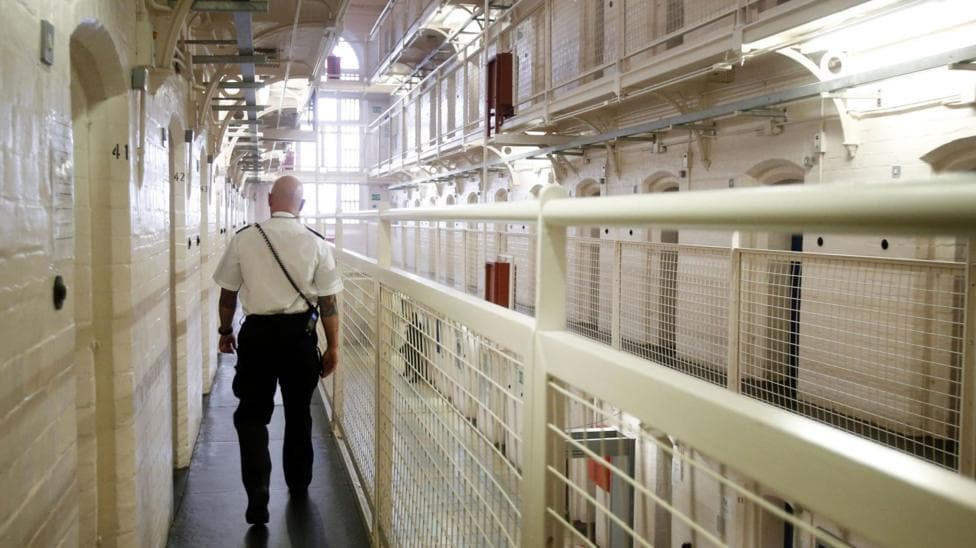
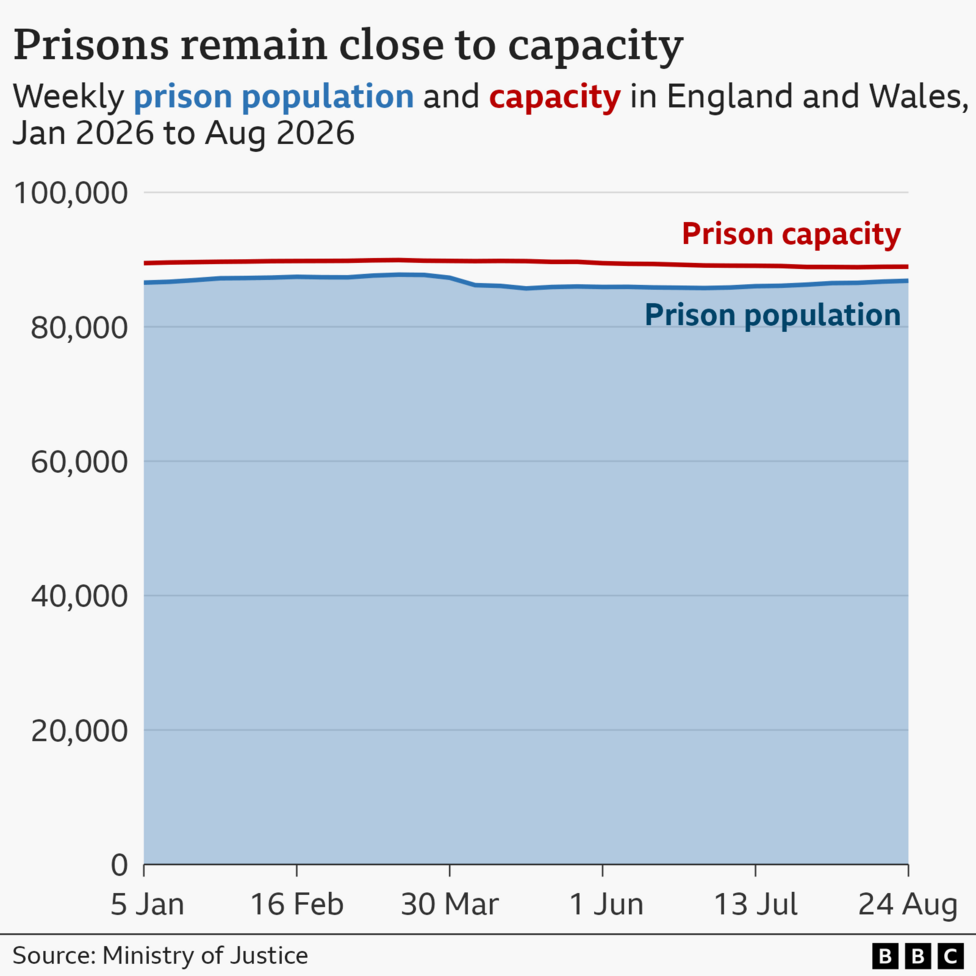
England and Wales prisons are operating at crisis capacity. On 3 August, the prison population stood at 86,495, representing approximately 97% of useable capacity. The early release scheme was introduced under the Sentencing Act 2026 specifically to address this overcrowding emergency by releasing large numbers of inmates earlier than previously scheduled.

Alex Davies-Jones, Minister for Victims, Violence Against Women and Girls & International Justice, told the BBC's Today programme that
the government's number one priority is to keep the public safe and in order to do that we need a functioning criminal justice system. She explained that the scheme aims to ensure
there is always a prison space available for someone who needs it.
Timothy acknowledged the scale of the problem, conceding that
one of the failures of the last Conservative government was that not enough prison places were built.
What offences are now excluded from early release?
The exclusion list has expanded significantly. Those sentenced for rape, serious child sex offences, grooming offences, manslaughter, death by dangerous driving, and killing an emergency worker are now ineligible for early release. The BBC reported that the scheme will also exclude rape, serious child sex offences and grooming offences.
Speaking on BBC Breakfast, Burnham acknowledged that narrowing the scheme's scope and keeping PC Harper's killers in prison would mean that
hundredsmore people would remain behind bars, requiring additional space to be found elsewhere. He defended his decision by saying he had applied
common senseon the treatment of IPP sentences, which he had
long-standing concernsabout.
I was faced with a situation where people on those sentences who have more than served their time, not being released when others who've committed very serious crimes being released early, Burnham explained.
What legal complications arose from the changes?
A legal analysis indicated that excluding only one or two offenders from the scheme was not legally possible if manslaughter of an emergency worker was not established as a stand-alone offence, which prompted the broader exclusion framework now in place.
What happens next?
Justice Secretary Alex Norris is expected to update Parliament with further details on the changes to the early release scheme, including the number of people affected. The scheme is scheduled to begin on 1 October. Parliamentary briefing material indicates that the reforms will apply immediately to offenders sentenced after 2 September 2026, with phased application for those already in prison.
Those released early will operate under strict conditions. Davies-Jones stated that
release doesn't mean freedomand indicated there would be a presumption that those released would be monitored via GPS tag.
Key Facts:
- 2,271 people are currently serving IPP sentences, with 856 never having been released because the Parole Board deemed them unsafe
- England and Wales prisons were at 97% capacity on 3 August 2026, prompting the early release scheme
- Offences now excluded from early release include manslaughter, rape, serious child sex offences, grooming, death by dangerous driving, and killing an emergency worker
- The scheme is scheduled to begin on 1 October 2026
- New legislation will be required to end indefinite IPP sentences, potentially delaying additional prison space creation