The Conservative Party has unveiled proposals to prevent long-term unemployed benefit claimants from spending their welfare payments on alcohol, cigarettes and gambling, marking a significant shift in how the party plans to reshape the UK's welfare system if it returns to power.
Under the scheme, claimants who have been out of work for more than six months and have not paid sufficient contributions into the system—despite being capable of employment—would face a 30% reduction in their Universal Credit payments. This reduced amount would be distributed via a restricted "Back to Work" card that would block cash withdrawals and prevent spending on the specified items.
The Conservative Party has set a £23 billion savings target for its wider welfare plan, with draft legislation already prepared for introduction should the party win the next election. Party leadership has framed the proposals as essential to encourage people back into employment and address the rising welfare bill, though Labour has dismissed the initiative as impractical.
How would the new system work?
Under the Conservative proposals, anyone deemed fit to work would receive six months of full Universal Credit benefits to secure employment. For each two years a claimant has previously worked, they would gain an additional year at the full benefit rate. Those who have not contributed sufficiently would transition to a new "Subsistence Allowance" worth 70% of the standard rate.
The party estimates these changes would move approximately 350,000 claimants onto the lower payment tier, generating annual savings of around £538 million. The restricted card system would ensure that the reduced payments support claimants with essential items such as food, according to Conservative messaging.
Certain groups would be protected under the scheme. Claimants who are sick, disabled, already employed, or have a strong employment history would remain exempt. For example, a 58-year-old who has worked continuously since leaving school but has been made redundant would retain full benefits until reaching state pension age.
What is the Conservative Party's broader welfare agenda?
The restricted card proposal forms part of a comprehensive welfare overhaul. The Conservatives have already committed to scrapping Personal Independence Payment—the primary disability benefit in England, Wales and Northern Ireland—for what they describe as "low-level" mental health conditions. The party also intends to tighten access to sickness benefits, requiring more people to actively seek work.
Additionally, recent Conservative messaging has tied welfare reform to funding a higher defence commitment, including reimposing the two-child benefit cap and implementing other reductions. The party's welfare plan document indicates that British citizenship would become a condition for access to almost every form of benefit, with tightened fraud and error enforcement.
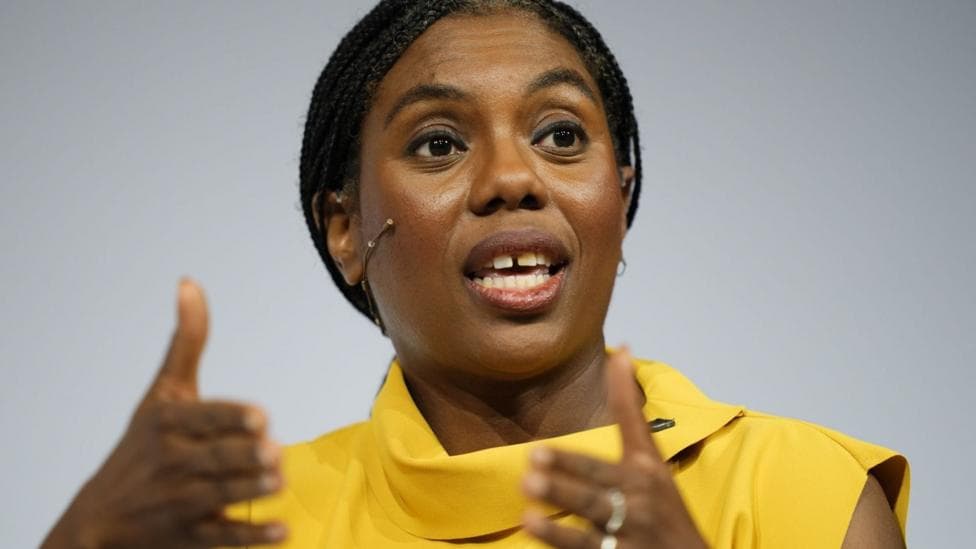
Conservative leader Kemi Badenoch has argued that the current system is fundamentally unfair.
"The best welfare is a well-paid job. So, we will be tough on those who exploit the system because the current system is unfair to workers, taxpayers and those who truly need support,"she said, adding that
"welfare must be a safety net for those who genuinely need it, not a lifestyle choice for those who can't be bothered."

Badenoch has specifically criticised scenarios
"where someone who can work chooses not to, and earns more benefits than someone in a job"as inherently unjust.

What are the criticisms of the plan?
Labour has been swift to condemn the proposals as unworkable. A Labour Party spokesperson stated:
"The Conservatives had 14 years to fix our welfare system but they completely failed to make meaningful reforms. Now they are proposing an unworkable new card scheme, which does nothing to tackle the numbers of people their system left signed off and written off."
Helen Barnard, director of policy and research at the anti-poverty charity Trussell, has described the proposals as
"deeply misguided."She highlighted that
"Universal Credit already falls well short of what people need to afford the essentials like food and heating, forcing people across the UK to the doors of food banks. We see people's health being damaged and their ability to find and maintain work undermined by the severe hardship so many are facing."
Reform UK's economy spokesman, Robert Jenrick, has argued that the Conservative proposals do not go far enough, claiming the party has presided over record numbers on long-term benefits and that these measures
"won't even put a dent"in the welfare bill.
What is the current state of UK welfare spending?
Expenditure on benefits has grown substantially in recent years and is projected to reach £408.6 billion in 2030/31, according to figures from the Department for Work and Pensions. This trajectory has prompted calls from across the political spectrum for reform, though disagreement persists over the appropriate approach.
Prime Minister Andy Burnham has committed to reducing the welfare bill but has rejected what he terms
"crude cuts."Instead, he has indicated a focus on addressing the number of young people not in education, employment or training as a means of tackling welfare expenditure.
What happens next?
The Conservatives have stated that legislation for their welfare reforms is ready to be introduced
"the moment a Conservative government is elected,"indicating that implementation would follow an election victory. The party's welfare proposals form part of its broader "Our Plan to get Britain back on Track" agenda, which was presented as an alternative to the government's King's Speech.
The restricted card system itself has historical precedent in Conservative thinking. The proposal to use prepaid or restricted cards to block spending on gambling and other non-essential items has been part of Conservative welfare discussions for over a decade, with earlier iterations exploring how such mechanisms could be integrated into the benefits system.
Key Facts
- Long-term unemployed claimants would see a 30% Universal Credit reduction if they lack sufficient contribution history, paid via a restricted card blocking cash withdrawals and spending on alcohol, cigarettes and gambling
- The Conservative Party estimates the changes would affect approximately 350,000 claimants and save around £538 million annually
- The party has set a £23 billion savings target for its complete welfare reform plan, with draft legislation prepared for immediate introduction after an election victory
- Claimants with strong employment records, disabilities, sickness, or existing employment would be protected from the reduced rate
- The proposals form part of a wider welfare overhaul including changes to disability benefits, sickness benefit access, and citizenship requirements for benefit eligibility