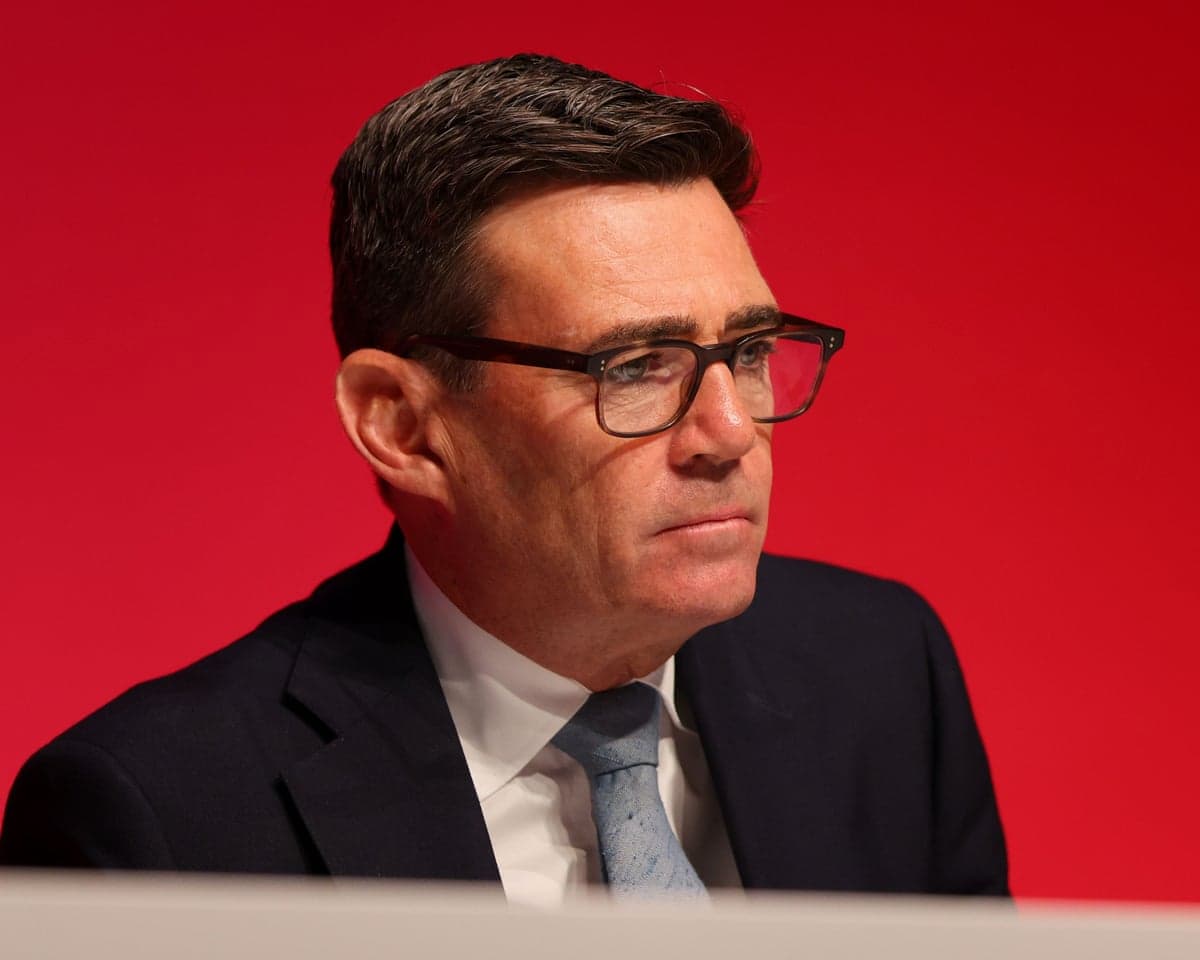
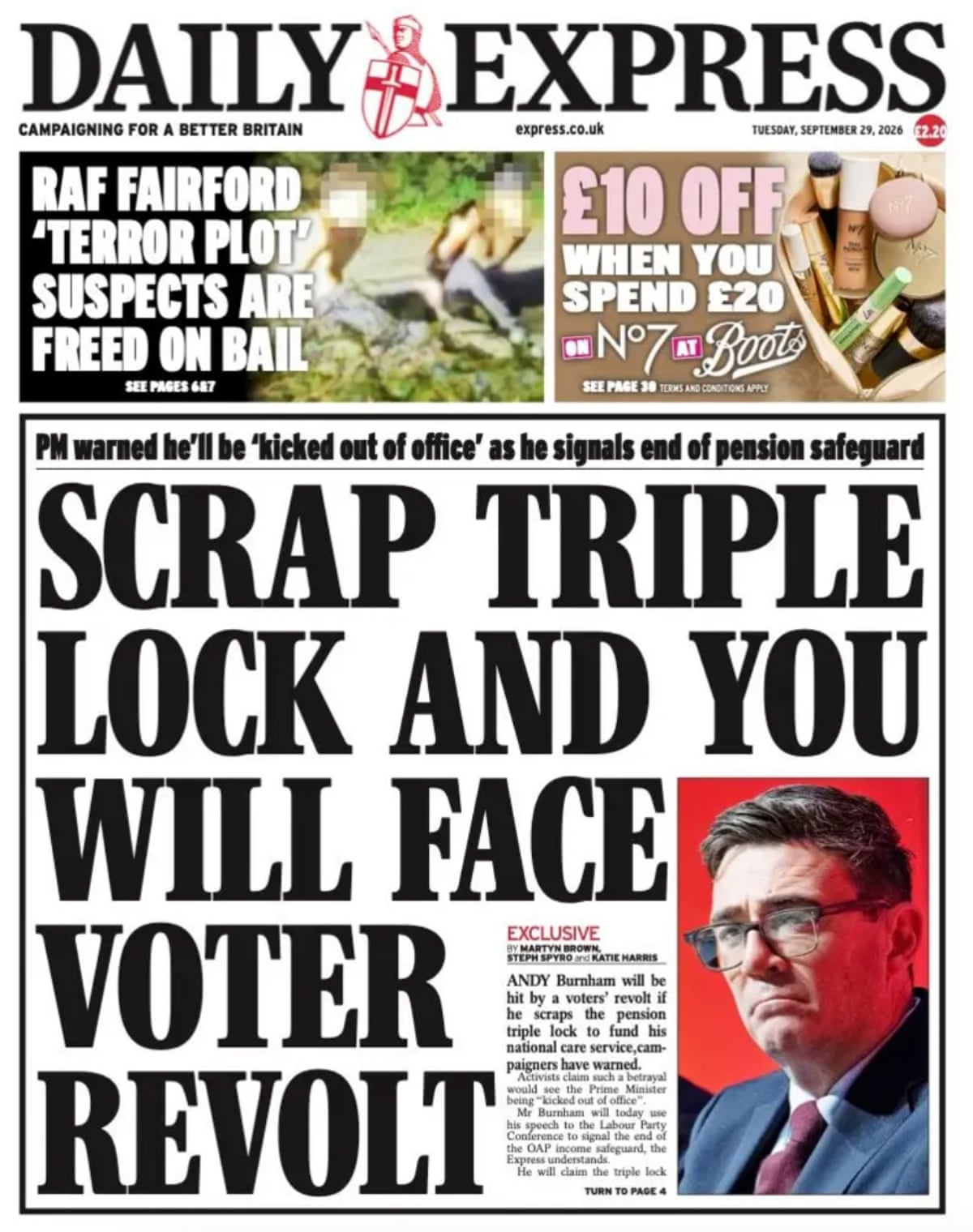
Andy Burnham is preparing to deliver his first major address as Labour leader at the party conference, where he is expected to outline an ambitious agenda for Britain that challenges conventional political thinking. The speech comes as debate intensifies over whether scrapping the state pension triple lock—a policy that automatically raises pensions in line with inflation, earnings, or 2.5%, whichever is highest—could become part of Labour's election platform.
Burnham's conference address on Tuesday 29 September at 2pm will frame his vision as a departure from "politics-as-usual", according to Labour's overnight briefing. He plans to describe his prospectus as "a more serious offer for Britain than people have been offered in a generation", focusing on issues Westminster has long avoided: social care reform, youth unemployment, and greater public ownership of energy, water and housing infrastructure.
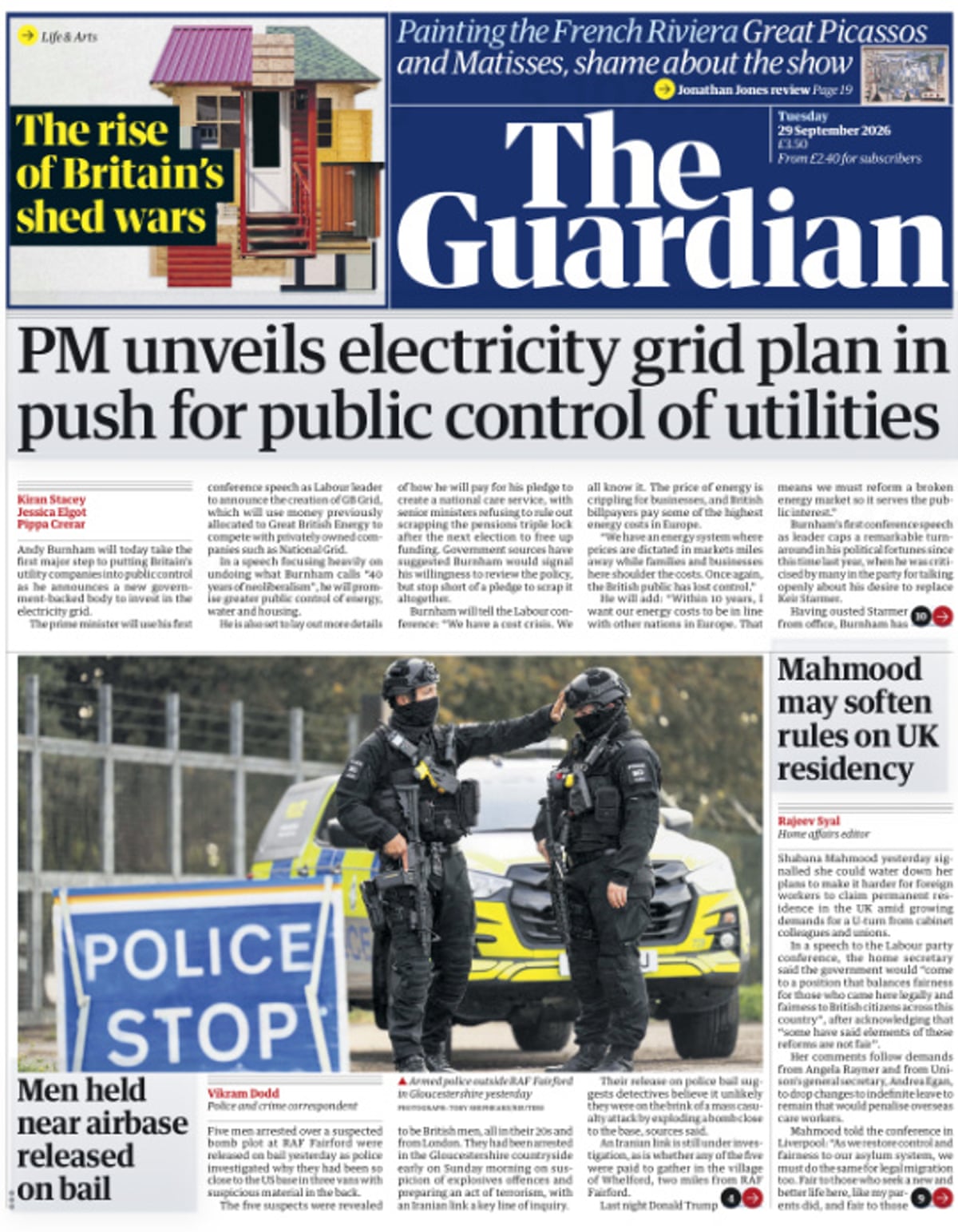
The centrepiece of Burnham's "Go Big" approach is his proposal for an NHS-style adult social care service, free at the point of delivery to all users in England. This represents a transformative approach to a sector that has faced chronic underfunding and fragmentation. However, the funding mechanism remains unspecified, and Burnham has said the proposals will be included in Labour's next general-election manifesto, allowing voters to endorse them directly.
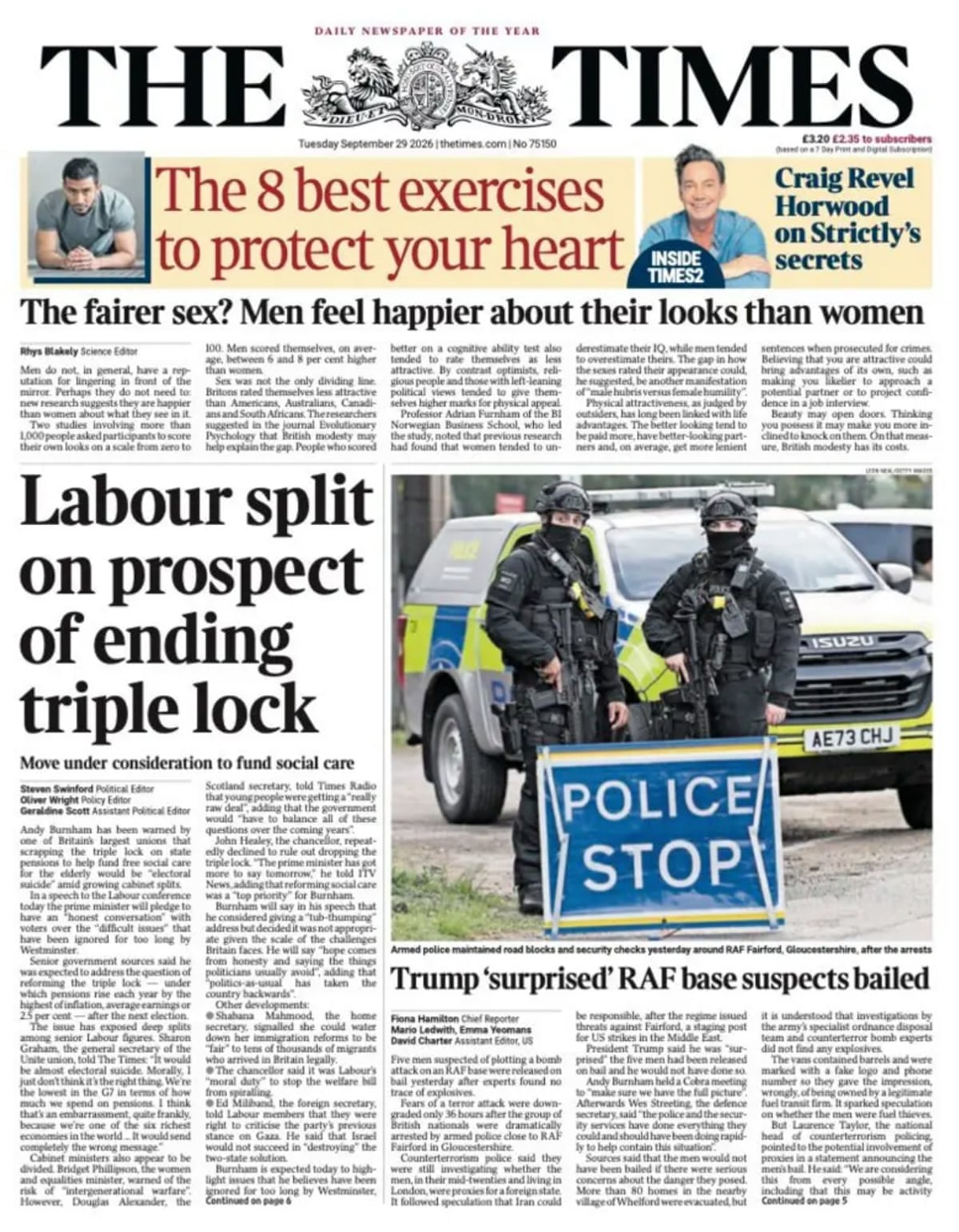
The question of how to pay for this ambition has dominated political discussion. Downing Street has not discouraged speculation that pension reform could form part of the funding strategy, despite the triple lock's status as one of Britain's most politically sensitive policies. Lucy Powell, Labour's deputy leader, said the party would keep the triple lock until the next general election, while declining to rule out a change afterwards.
Why is the triple lock controversial?
The triple lock has become a flashpoint in the debate over intergenerational fairness and fiscal sustainability. While most mainstream economists argue that the policy's long-term costs are unsustainable, it remains deeply embedded in public expectation and political tradition. Britain currently spends less on pensions than most other G7 nations, a fact that complicates the case for reform.
According to former work and pensions secretary Lord Blunkett, axing the triple lock sooner could raise up to £22bn by 2030, a substantial sum that could be redirected toward social care or other priorities. Yet this potential saving comes at significant political cost.
What are union leaders saying?
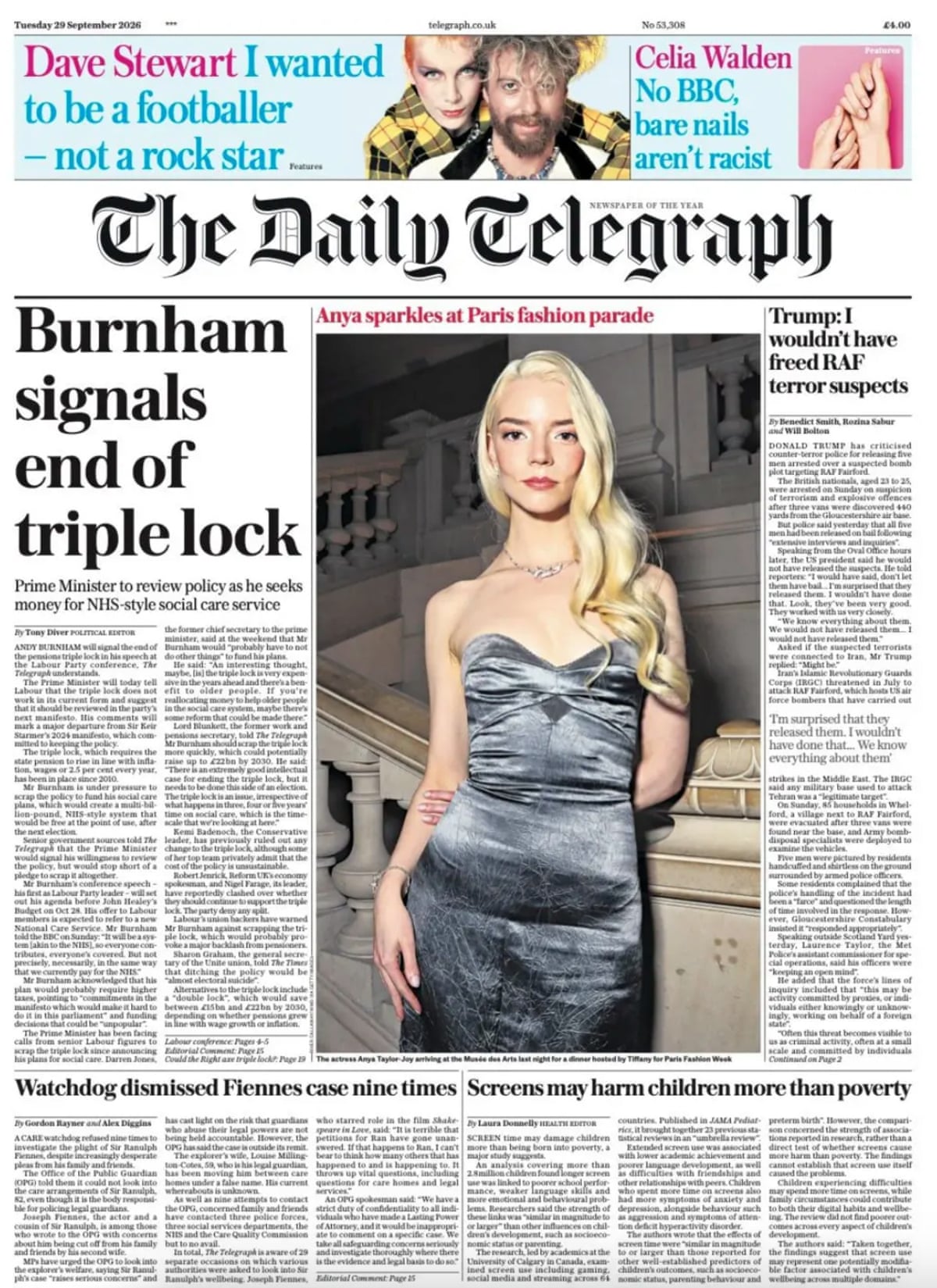
Opposition to pension reform has emerged from within Labour's own coalition. Sharon Graham, general secretary of Unite—one of the most powerful unions affiliated to the Labour party—has warned against scrapping the triple lock.
I think it would be almost electoral suicide. Morally, I just don't think it's the right thing.She continued:
We're the lowest in the G7 in terms of how much we spend on pensions. I think that's an embarrassment, quite frankly, because we're one of the six richest economies in the world. I think it would be an absolute disaster, it would send completely the wrong message. I cannot understand why we keep going back to pensioners.

Graham's intervention reflects broader concern within the labour movement that targeting pensioners—many of whom are among the most economically vulnerable—sends the wrong political signal, particularly when other options for raising revenue remain available.
What is Burnham's broader agenda?
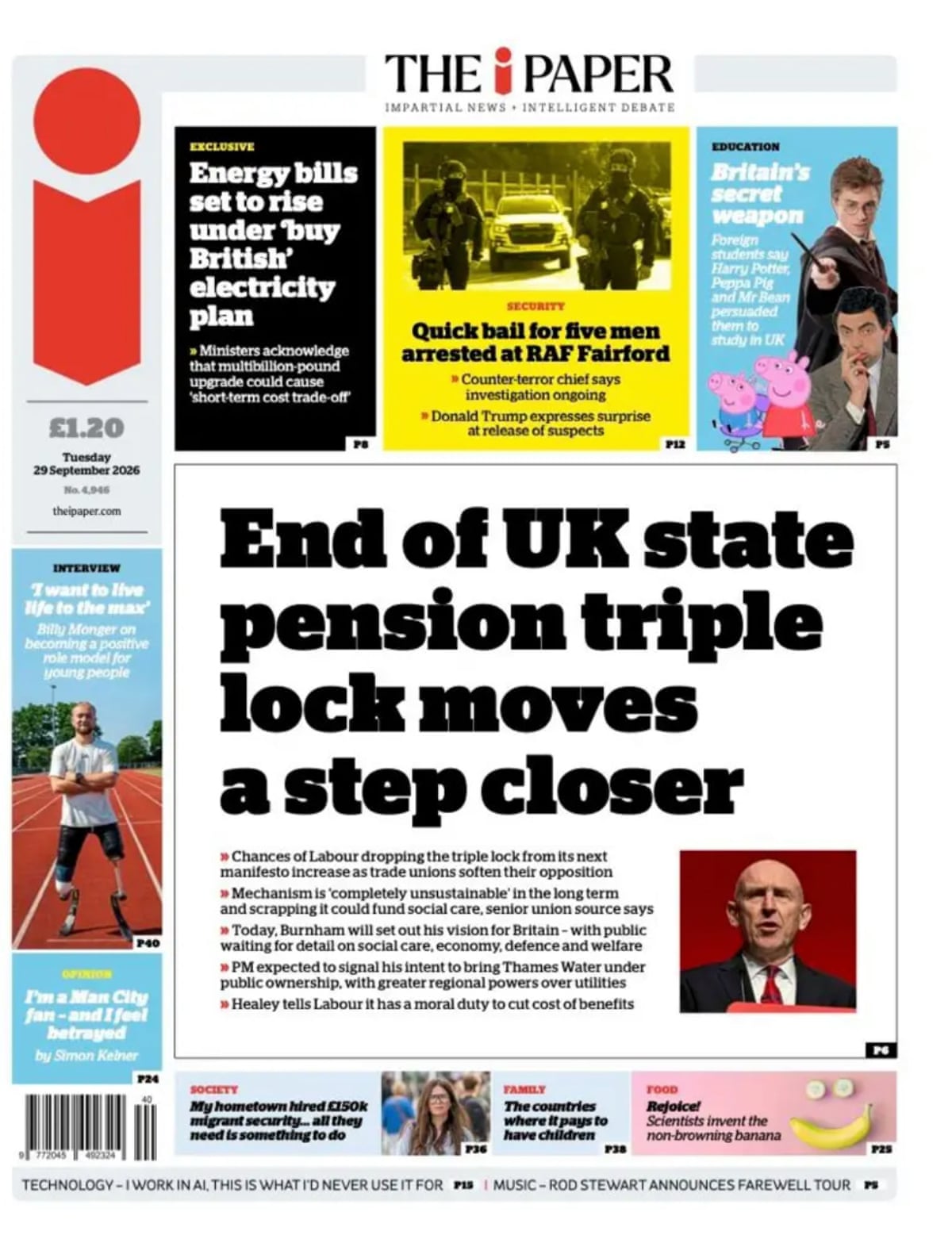
Beyond social care, Burnham is signalling a willingness to challenge established orthodoxies on public ownership. He will announce a new government-backed body to invest in the electricity grid, marking a first step toward greater public control of Britain's utility infrastructure. This reflects a broader Labour commitment to expanding state involvement in sectors traditionally dominated by private enterprise.
Burnham's framing of his agenda draws on lessons from the 2016 US presidential election. Ed Miliband, then a former Labour leader, observed at that time that Donald Trump's campaign had succeeded by offering "big solutions" to voters frustrated with incremental change. Burnham appears to be adopting a similar strategy, presenting voters with transformative proposals rather than marginal adjustments to existing policy.
What happens at conference today?
The Labour conference schedule reflects the significance of the day's proceedings. At 10am, Chris Bryant, the Northern Ireland secretary, will open a debate on devolved power to communities, joined by Claire Ward, the mayor of the East Midlands. Lucy Powell will speak at a fringe event on what Labour can learn from its membership, alongside energy secretary Miatta Fahnbulleh and AI minister Kanishka Narayan.
Around 11.40am, Angela Rayner, the housing secretary, will address the main conference. At 5pm, Bridget Phillipson, the Labour chair, and Alan Milburn, former cabinet minister and author of a review on young people not in education, employment or training (NEETs), will speak at a Tony Blair Institute fringe event.
What comes next?
Burnham's speech at 2pm on Tuesday 29 September will be the focal point of the day's political attention. The address is expected to clarify Labour's position on the triple lock and outline the party's approach to funding social care reform. Lucy Powell has indicated that the state pension could rise by around £2,000 a year over the current Parliament under the triple lock, underscoring the financial stakes involved in any future reform decision.
The debate Burnham is attempting to launch—whether Britain can afford to maintain the triple lock while funding transformative social care reform—will likely dominate political discussion in the months ahead. His willingness to signal openness to reviewing the policy, while stopping short of an outright commitment to scrap it, suggests Labour is attempting to build public consensus for difficult choices before the next general election.
Key Facts
- Burnham's proposed care service would be free at the point of use for all users in England, modelled on NHS principles
- The triple lock currently guarantees pensions rise by the highest of inflation, earnings growth, or 2.5% annually
- Potential savings from scrapping the triple lock could reach £22bn by 2030, according to former pensions secretary Lord Blunkett
- Labour committed to maintaining the triple lock during the current Parliament in its 2024 election manifesto
- Union leaders have warned that pension reform could damage Labour's electoral prospects and send the wrong message about intergenerational fairness