Drivers will gain the right to challenge penalties issued by private car park operators and receive additional grace periods under new rules unveiled by Prime Minister Andy Burnham. The changes follow repeated complaints from motorists that private parking companies impose excessive fines and unfairly penalise drivers for minor infractions.
According to BBC News, the government announced the reforms after high-profile cases highlighted the severity of some charges. In one instance, a woman faced a £1,906 court claim after taking longer than five minutes to pay at a Derby car park—a charge that was ultimately withdrawn.
The motoring organisation the RAC welcomed the government's intervention, stating that the new framework would shield drivers from what it described as the "poor practices of some private parking companies". The existing industry code of practice, introduced in 2024 by the British Parking Association and the International Parking Community, had failed to prevent widespread complaints.
Burnham commented on the rationale behind the changes:
"Being a few minutes late back to your car or typing one digit of your numberplate wrong shouldn't end with a hefty fine landing on your doormat. These charges leave people feeling ripped off and out of pocket, so I'm putting a stop to them."
What protections will drivers receive?
The new rules establish several safeguards for motorists. Drivers will be guaranteed a five-minute period to decide whether to proceed with parking, and a ten-minute window to leave without incurring a penalty. Charges will be cancelled for circumstances beyond a driver's control, such as vehicle breakdowns occurring within car parks.
Honest mistakes will also be forgiven under the new framework. These include stopping briefly to check directions, medical emergencies, and malfunctioning ticket machines. For slip-ups such as forgetting a parking permit, entering an incorrect vehicle registration, or failing to confirm the registration when parking, the maximum appeal charge is set at £20.
The overall maximum parking charge remains frozen at £100, matching the current limit under the existing private parking Code of Practice. Operators who fail to comply with the new rules face losing access to DVLA data, which would significantly hamper their ability to pursue vehicle owners even if they do issue a charge.
How widespread is the problem?
Private car parks operate separately from council-owned facilities and public streets. Analysis of government data by the RAC revealed that a record 17 million private parking tickets were issued during 2025/2026—a 17 per cent increase compared to the previous year. With each charge potentially reaching £100, data analysed by the Press Association and the RAC Foundation suggests drivers could collectively face private parking charges exceeding £4.6 million daily.
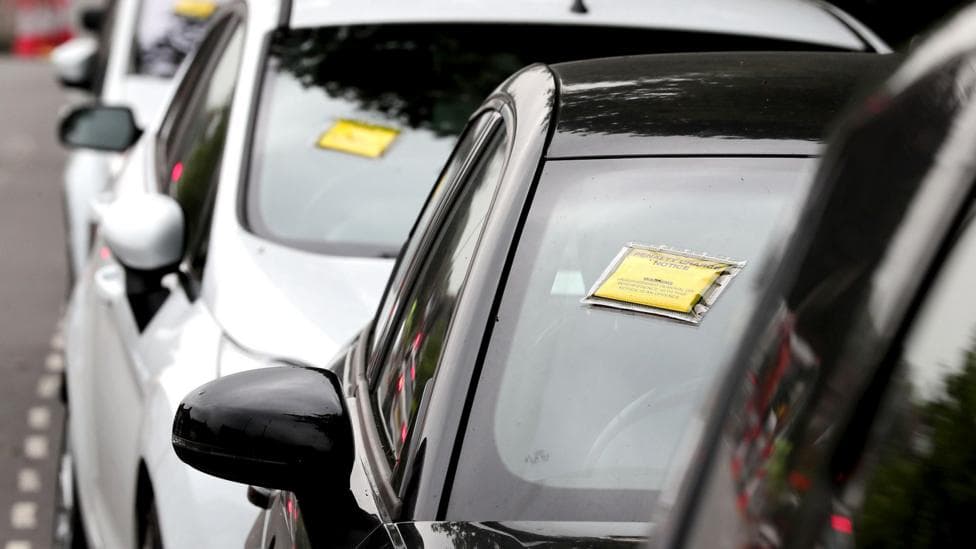
The yellow and black envelope of a Penalty Charge Notice, or PCN, has become a source of dread for many motorists returning to their vehicles. The AA has documented cases where drivers pay charges even when they believe they have done nothing wrong, simply to avoid the burden of disputing the fine. Many drivers expressed concern that they would not receive a fair hearing if they appealed, with some fearing legal action as a consequence.
What do industry bodies say?
The British Parking Association told the BBC it welcomed the government's intervention but noted that "many of the principles within the new framework are already reflected in the existing voluntary Code of Practice". This statement suggests the industry believes it has already been moving in the direction the government is now mandating.
Jack Cousens, head of roads policy at the AA, stated that drivers "finally have something which could offer them better protections against the worst private parking operators". He highlighted that in the past, some operators have "aggressively attacked drivers to the point where many simply pay up".
However, the RAC's head of policy Simon Williams expressed disappointment with the scope of the reforms. He called for the banning of debt recovery fees being added on top of PCNs and advocated for replacing the current industry-run appeals bodies with a single independent appeals authority. According to Wales Online, a government minister stated that the new code would address protections when payment systems are unavailable or malfunctioning.
What is the legal background?
The government's move to formalise a code reflects broader concerns about the culture of harsh penalisation that has developed in the private parking industry. The new Code will apply across England, Scotland and Wales following requests from motorists for independent oversight of private parking operators.
According to Wales Online, the Parking (Code of Practice) Act 2019 requires the government to prepare guidance on private parking operations and appeals, with the code proposal first unveiled under the previous government. The government's new framework represents a formalisation of what was previously a voluntary industry standard.
This action aligns with the government's broader consumer protection agenda. Earlier in 2026, Burnham fast-tracked rules to end subscription traps and ban fake discount pricing, with new protections due by January 2027. The parking reforms represent another step in what appears to be a comprehensive effort to shield consumers from unfair commercial practices.

What happens next?
According to Wales Online, the government's stated plan is to lay the Private Parking Code of Practice in Parliament during autumn 2026, though no specific date has been announced. The government has also indicated it will be consulting on the issue of debt recovery fees, as well as other recommendations from the Competition and Markets Authority.
Key Facts
- A record 17 million private parking tickets were issued in 2025/2026, representing a 17 per cent year-on-year increase
- Drivers will receive a guaranteed five-minute decision period and a ten-minute grace period before penalties apply
- Maximum parking charges remain capped at £100, with appeal charges for honest mistakes limited to £20
- Non-compliant operators will lose access to DVLA data, significantly restricting their ability to pursue charges
- The new Code will apply across England, Scotland and Wales following calls for independent oversight