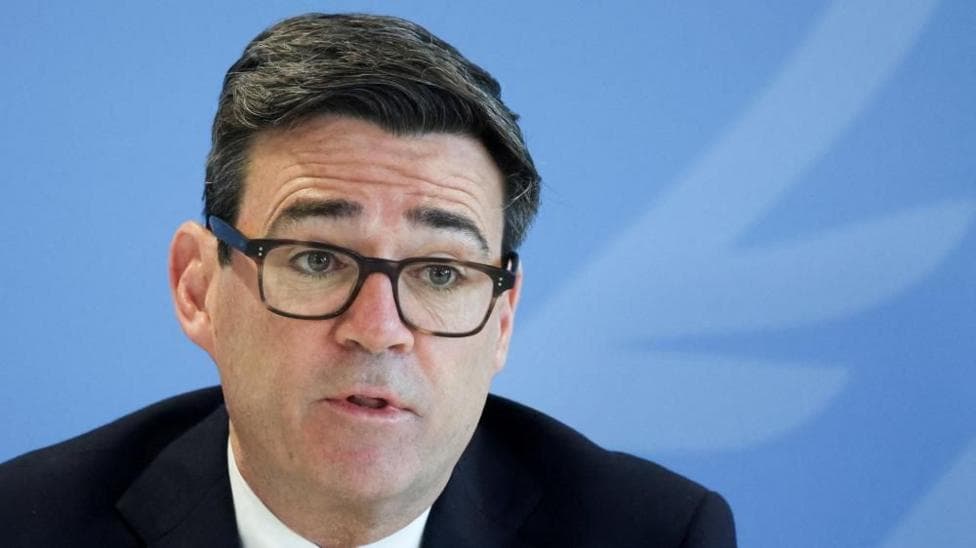
Prime Minister Andy Burnham has stated his determination to reduce the welfare bill "as soon as we possibly can", though he declined to commit to achieving this before the next general election, which must take place by August 2029. According to BBC News, the government's welfare spending forecasts have sparked criticism from opposition parties over the lack of concrete reform details presented in Wednesday's Budget.
Welfare expenditure is projected to climb from £353bn in the current year to £431bn in 2031/32, driven largely by health-related and pensioner benefit spending. When pressed on whether reductions would materialise before polling day, Burnham told reporters:
We want to get the welfare bill down as quickly as possible, and we're working flat out to that end.He emphasised the need to avoid
crude cutsand instead focus on moving people into
sustainable employment.
The government's position has become muddied following conflicting statements from senior figures. Chancellor John Healey suggested to the Today Programme on Radio 4 that a reduction would occur, stating:
There will be, there will be a reduction in the benefits bill, we'll do that in a Labour way.However, Treasury sources subsequently disputed that this represented a pre-election commitment, and Downing Street clarified it was
not setting an arbitrary target or timetable. The prime minister's official spokesman has not clarified whether the government's goal means reducing welfare spending below current levels or simply slowing the rate of future increases.
What do the welfare spending figures reveal?
The Office for Budget Responsibility's projections show the scale of the challenge facing the government. Of the £431bn forecast for 2031/32, £209.8bn is allocated to pensioner benefits including the state pension and winter fuel payments, £110.7bn to universal credit and legacy equivalents, and £69.6bn to disability benefits such as personal independence payments. According to the Telegraph, sickness and disability benefit spending alone is forecast to reach £120.2bn by 2030/31, up from an estimated £92.4bn this year, with the forecast sensitive to future caseload growth.
The scale of disability benefit dependency has grown significantly since the pandemic. The Telegraph reports that 6.9 million people received disability benefits last year, compared with 4.7 million before the pandemic. The OBR's alternative scenarios suggest that if disability and incapacity caseloads continue growing at their post-pandemic pace, welfare spending in 2031/32 could be about £25bn above the central forecast, or about £13bn below it if growth returns to pre-pandemic rates.
Why is the government's approach controversial?
The Conservative Party has seized on the government's apparent lack of specificity. Party leader Kemi Badenoch responded to the Budget by describing the country as
overspent, overborrowed, overtaxed, and drowning in an out-of-control welfare system, and accused the government of suffering from
foot in mouth syndromefollowing the conflicting statements about welfare reduction timelines. The Conservatives have also characterised Labour as
addicted to welfare.
The government's caution reflects the political damage it sustained in June 2025, when former Prime Minister Sir Keir Starmer's attempt to make significant changes to the welfare system, including restricting eligibility for some health-related benefits, triggered a mass revolt of Labour MPs and forced an embarrassing climbdown. This history explains why Burnham is emphasising support for people into work rather than benefit restrictions.
Former Bank of England chief economist Andy Haldane, who has previously advised Burnham, suggested that a credible plan to show
greater restraintof the benefits bill would
play spectacularly wellwith financial markets and come with
a huge bonus. Speaking on the BBC's Political Thinking with Nick Robinson podcast, Haldane indicated that such a move could strengthen the government's economic credibility.
What is the government's strategy for welfare reform?
Rather than announcing immediate changes, the government is deferring detailed proposals until after two major reports are published in November. A review of disability benefits co-chaired by Labour minister Sir Stephen Timms and a separate report on young people not in education, employment or training (Neet) led by former minister Alan Milburn will form the basis of future policy. During a visit to Derby, Burnham identified the Milburn report as
the big next priority in front of us, saying:
We just want to get stuck into supporting people to help people off benefits and into work. There's no delay there. We want that to happen as quickly as possible.
According to BBC News, the government expects to respond to the Timms and Milburn reviews by the end of 2026, publish a policy document, and bring forward legislation next year. The government says it will address underlying spending drivers by helping more people into work and matching support with opportunities and responsibilities to engage with its offer.
When pressed repeatedly for a timeline, Burnham reiterated:
We're working hard to cut the welfare bill as soon as we possibly can. But we're doing it in a way that supports people into work. If we just went and made crude cuts, in the end, that leaves people in crisis, and you spend more public money somewhere else, so it's about getting people into sustainable employment.
What changes to the welfare system are planned?
The government has already pledged to reform the existing state pension triple lock from 2030, and additional proposals and changes to the welfare system are expected to emerge in the coming months as the two major reviews progress. The government's approach reflects a commitment to addressing welfare spending growth through employment support rather than benefit restrictions, a strategy shaped by the political fallout from the previous attempt at welfare reform.