Conservative leader Kemi Badenoch has criticised the government for delaying a decision on the Rosebank and Jackdaw oilfields, claiming ministers lack genuine commitment to the projects. Speaking during a farm visit in East Lothian on Friday, Badenoch argued that swift approval would unlock energy security and tax revenue, while the government's hesitation reflects deeper failures on economic policy.
Consultations on both North Sea developments closed in recent weeks. Jackdaw's consultation ended on 10 August 2026, with Rosebank's closing on 17 August 2026, leaving ministers to make a final decision on projects that have become a significant environmental and economic flashpoint for the Burnham government.

Why is the timing of this decision so critical?
Badenoch argued that earlier approval would have delivered tangible benefits by now.
If this decision had been made earlier in the summer, we could have had gas from Jackdaw in people's homes by this winter, by Christmas.The Conservative leader framed the delay as symptomatic of broader government dysfunction, suggesting that ministers are uncertain how to balance energy production with climate concerns.
The two fields represent competing priorities. Jackdaw, located approximately 150 miles east of Aberdeen, is a gas development, while Rosebank, situated north-west of Shetland, is an oil project backed by Shell and Equinor through their partnership Adura. The Rosebank scheme carries a capital cost of £8.7 billion.
Both projects could generate substantial employment. The developments would create 3,500 construction jobs and 880 permanent positions across the operational lifetime of the fields. However, environmental campaigners have raised serious objections about the climate implications of approving new fossil fuel extraction.
What is Badenoch's argument for approval?
The Conservative leader presented a case centred on energy independence and fiscal benefit.
All of the gas that's drilled in the North Sea is used in this country and Labour has been kicking this decision into the long grass because their heart's not really in it. They don't know how to actually make energy cheaper, they don't know how to get genuine tax revenue, and all they're doing is increasing taxes, destroying businesses.
Badenoch also invoked environmental arguments in favour of domestic extraction.
A commonsense approach is to make sure that we drill our own oil and gas in the North Sea, get the tax revenue from that instead of importing oil and gas from countries that drill it in a very dirty way, which is actually increasing carbon emissions.This framing positions North Sea production as preferable to reliance on imports from jurisdictions with less stringent environmental standards.
What happens next in the decision process?
The government's next step involves formal assessment of consultation responses. Energy Secretary Miatta Fahnbulleh is expected to make the final decision after the Office of Petroleum Regulator and Environmental Protection (OPRED) considers the consultation submissions. No formal deadline for the decision has been publicly announced.
Both projects have a complex recent history. A court ruling earlier required the government to obtain fresh consent for Rosebank and Jackdaw after the original approvals were found unlawful because greenhouse gas emissions had not been properly assessed. The court permitted work to continue during the new consultation process, but extraction cannot commence without renewed ministerial approval.
According to reports, Labour insiders were said to be leaning towards approving Jackdaw while Rosebank faced a higher risk of rejection, though no formal announcement has been made. The decision carries significant political weight, representing a test of the government's environmental credentials and its approach to energy security.
Other major developments from UK politics
Palestine Action defendants will not face terrorism sentencing
A judge has ruled that five members of the Palestine Action group will not be sentenced under terrorism legislation for an attack on a Barclays Bank branch. The defendants, known as the "Barclays five", targeted the St James's Street branch in Burnley, Lancashire, on 5 August 2024 in a 2am raid designed to pressure the bank into withdrawing financial support for weapons manufacturer Elbit Systems, which has links to the Israeli military.
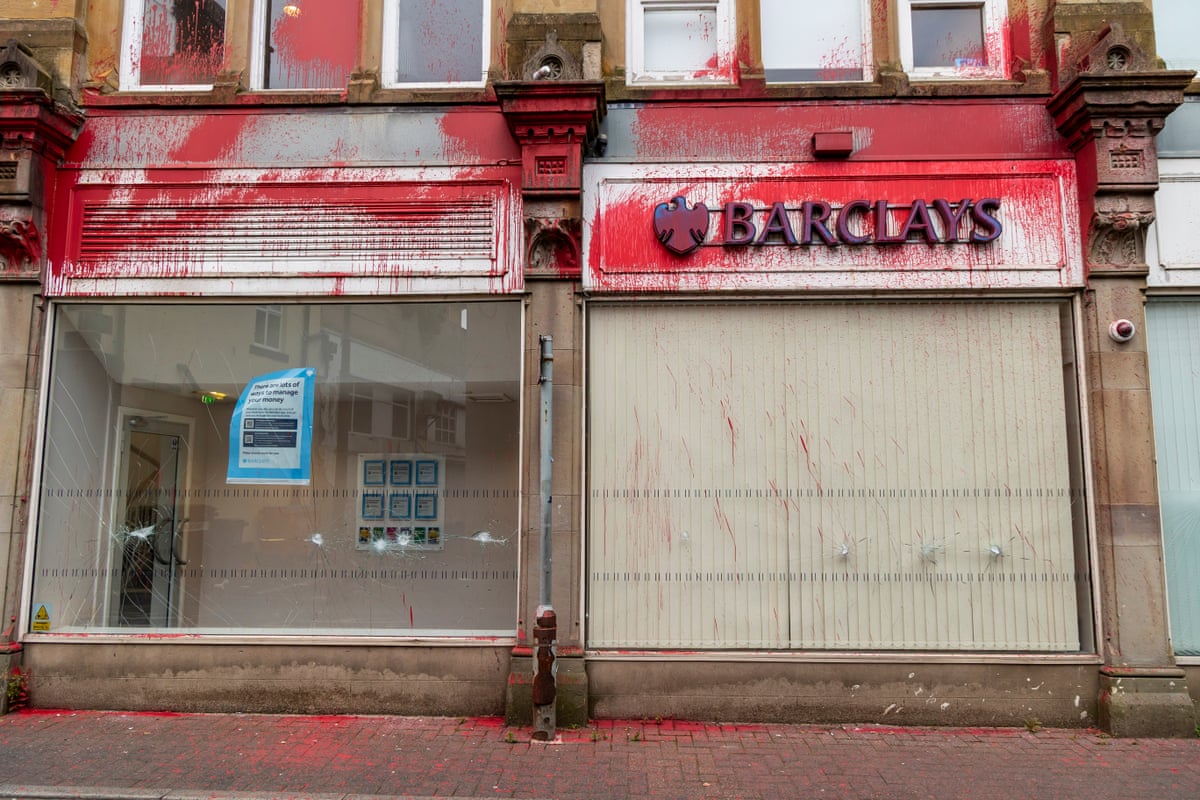
Judge Robert Altham, the Recorder of Preston, ruled that section 69 of the Sentencing Act, which establishes a terror link to criminal damage offences, did not apply to this case.
Whilst the damage is undoubtedly significant, I'm not satisfied it amounts to serious damage for the purposes of the Terrorism Act. Section 69 does not apply in this case.The judge noted that while the damage was substantial, it did not reach the threshold of other Palestine Action incidents or target sensitive properties such as arms manufacturers.
The defendants were unaware at the time of their trial that their case could be considered under terrorism legislation. Palestine Action was proscribed as a terrorist organisation in July 2025, after the Barclays attack took place. The jury that convicted them of criminal damage was similarly unaware of the potential terrorism dimension.
All five defendants will be sentenced next month at Preston Crown Court for criminal damage in connection with the attack, which caused £200,000 in losses. About 100 supporters, many carrying Palestinian flags, gathered outside the courthouse and cheered as the defendants departed.
Emily Thornberry calls for West Bank goods ban
The head of the foreign affairs select committee has urged the government to introduce a ban on goods from the occupied West Bank, citing rising settler violence and the erosion of prospects for a two-state solution. Emily Thornberry said that while she does not support a comprehensive ban on Israeli goods, a targeted restriction on West Bank products would serve as a deterrent to settlement expansion.
Thornberry emphasised that British financial resources should not support settler development in the territory.
The international community have agreed that the Palestinians are going nowhere, the Israelis are going nowhere. There need to be two territories, two countries, so that they can live side-by-side, and what's known as the West Bank is the part that the international community have pretty much unanimously agreed is the area that should be for the Palestinians.
We have a far-right government in Israel which is doing its best to try to extinguish the hope of a Palestinian state by building as many Israeli settlements on that area as possible. A year ago my committee said that we should stop allowing the sale of goods from the West Bank in Britain and the government is yet to do anything about that. We must acknowledge that this is occupied Palestinian land, and while the occupation continues, then goods that come from businesses that are benefiting from an illegal occupation of Palestinian land should not be bought in Britain. It's not too much to ask.
Her intervention follows foreign secretary Ed Miliband's rebuke of Israel on Thursday after the country published a tender for settlement construction in the occupied West Bank. Miliband described the move as an "unacceptable act" that would "destroy" the two-state solution.
Data from the Israeli human rights organisation Yesh Din shows that settler violence in areas designated for Palestinian governance has accelerated sharply. Almost two-thirds of incidents of settler violence recorded so far in 2026 have occurred in the so-called Areas A and B, which were placed under Palestinian Authority governance under the 1995 Oslo accords. The pattern represents a "rapid shift" in violence from Area C, which remains under Israeli control, into territories nominally under Palestinian administration.
Home Office faces court challenge over Albanian deportations
The Home Office could be blocked from deporting many young male trafficking victims to Albania following a major court ruling. Thousands of Albanian males have been identified as potential trafficking victims in the UK in recent years, yet many are returned to their country despite being potential or confirmed victims, as the Home Office maintains they will be safe there.
The ruling represents a significant setback for the government's efforts to increase the number of people removed from the country. Albanians have been the most common nationality subject to enforced removal from the UK over the past five years, with 2,247 deported in the 12 months to the end of March, accounting for a quarter of all enforced returns.
Burnham deploys Whitehall staff to mayors' offices
Prime minister Andy Burnham is deploying civil servants to mayoral authorities as part of his strategy to devolve power away from Westminster. The pilot scheme will see between five and 10 Whitehall officials seconded to each participating mayoral authority, with placements lasting six to nine months and beginning in the autumn. The 18 mayors involved in the initial programme will be able to request staff with specific expertise as needed.

Burnham framed the initiative as part of his "No 10 North" devolution agenda.
No 10 North is putting more power into every postcode across the country so communities can unleash and unlock their own potential. I'm bringing together mayors from different political parties to work on these challenges, because people deserve problem-solving rather than point-scoring.
First secretary of state Louise Haigh added:
The days of Westminster hoarding power are over. This government has kickstarted the biggest transition of power and resources in a generation, taking it from Whitehall and putting it back in the hands of local communities.
However, the Liberal Democrats have criticised the approach as perpetuating a two-tier system. Party local government spokesperson Zöe Franklin said:
Power and resources have clearly been centred in Whitehall for too long which has left millions of voters behind. Andy Burnham is again putting metro mayoral regions first with this staffing trial. Liberal Democrats support a rebalancing of decision-making, but this two-tier system will continue to leave countless communities underserved. Local authorities across the board should be given the same funding and staffing opportunities if he truly wants to grow every region in England.
London councils accuse government of shifting blame for tax rises
Three Conservative council leaders in London have written to the government, accusing ministers of "devolving blame" for council tax increases. The leaders of Westminster, Wandsworth and Kensington and Chelsea councils say they are being forced to choose between significantly raising council tax or cutting services to address a funding gap created by reductions in central government support.
The dispute stems from a "fair funding" review of council allocations that introduced a new formula redirecting resources to more deprived areas. Shadow local government secretary James Cleverly characterised the changes as a "Burnham penalty on their council tax" and called on local government secretary Angela Rayner to urgently review the funding formula.
A government spokesperson defended the reforms, stating:
We are fixing an outdated funding system whereby some of the wealthiest parts of the country benefited from exceptionally high levels of government support, while communities facing greater pressures lost out. The reforms make the system fairer for taxpayers across the country.
French police clash with migrants on beach
Footage has captured French police officers clashing with people on a beach in northern France as authorities attempted to intercept a dinghy bound for the UK. Men wearing lifejackets are seen throwing objects at officers to prevent them from approaching their boat. Police responded by deploying Pava spray and slashing the inflatable vessel with a knife.
The incident emerges as the French government reported preventing 185 "small boat crossing events" in the three months since a new £660 million UK-France deal was signed in April. A small boat event is defined as stopping launches, seizing equipment including boats, engines and lifejackets, and arresting smugglers.
Since the agreement, additional police units have been deployed to French beaches, including a 50-person riot squad. Police action has included interceptions both on beaches and at sea, according to the UK Home Office. Since March, 12 "taxi boats" have been prevented from moving further up the coast to load additional migrants, and more resources have been dedicated to seizing boats and engines before they can be used in the Channel.
UK public finances show larger-than-expected deficit
The UK government ran a deficit of £1.8 billion in July, significantly larger than the zero shortfall city economists had anticipated. July is typically a month when Treasury receipts are boosted by self-assessment income tax payments, making the deficit particularly notable.
Self-assessment tax receipts in July reached £17.1 billion, representing a £1.7 billion increase compared to the same month the previous year. However, the Office for National Statistics reported that spending growth outpaced receipts, resulting in the overall deficit. In the first four months of the current financial year, the cumulative deficit stood at £56.7 billion, lower than the equivalent period last year but still running £2.3 billion ahead of the Office for Budget Responsibility forecast.
The figures underscore the fiscal pressures facing chancellor John Healey as he prepares his first budget, scheduled for announcement on 28 October. Public finances are expected to prove more challenging than forecasts made at Rachel Reeves's spring statement in March, when the Iran war had only recently begun.
Film production at Parliament this weekend
Members of the public may encounter actors dressed as armed police and simulated emergency scenarios at the Houses of Parliament this weekend as a major film production takes place. Production company Bad Wolf, behind television series including Doctor Who, His Dark Materials and Industry, will be filming at locations around the parliamentary estate and on the River Thames on 22 and 23 August.
Specialist vehicles will be present as part of the production, and signs will be displayed to warn of filming activity. Bad Wolf is reportedly developing a Netflix series called The Lords' Day, adapted from Michael Dobbs's novel, which depicts a siege inside the famous building during the State Opening of Parliament.
A UK parliament spokesperson said:
A licensed film production is taking place on and around parts of the parliamentary estate over the weekend. Members of the public may see actors portraying armed police officers, specialist vehicles and simulated incidents as part of the filming. These activities are part of a controlled and authorised production, and there is no incident or emergency on the parliamentary estate.
Badenoch warns against proportional representation
Conservative leader Kemi Badenoch has cautioned against adopting proportional representation in the UK, citing the influence of "small extremist parties" in Israeli politics as a cautionary example. Speaking to the BBC, Badenoch referenced the upcoming Israeli elections and the role of minor parties in shaping policy.
Israel has a political issue with the elections coming up, and this is what happens in systems with proportional representation. You have small extremist parties dictating policy, the tail effectively wagging the dog, and that's why I'm very much against creating a proportional representation system in our country.
Survivors of terror attacks report continued neglect
Campaigners have described the treatment of survivors of terrorist attacks as a "national scandal", with many still being "mistreated and neglected" despite the UK marking its first dedicated memorial day for victims. Brendan Cox, husband of murdered MP Jo Cox, co-authored a report documenting systemic failures in survivor support.
The public expect survivors to be cared for, today's report shows that is a promise only being half kept.Cox said the findings "lay bare the scale of failure" on several issues affecting survivors.
Survivors Against Terror (SAT), founded in 2018, has proposed a "survivors charter" modelled on support systems in other countries. The charter is based on the principle that the state bears particular responsibility for terror attack survivors, since victims are typically "not targets themselves, but are proxies for the state".
Many other countries acknowledge that principle and the extra responsibility that that brings. It's time we saw that systemic shift here too.
Equalities minister warns of normalised racism and sexism
Equalities minister Bridget Phillipson has warned that racism and sexism have become normalised in British society, with young men increasingly drawn into violent misogyny through social media. Phillipson expressed growing concern about the prevalence of misogynistic and racist attitudes, fuelled by online interactions and political rhetoric she said would have been unacceptable years ago.
Phillipson also suggested that her sweeping reforms to special educational needs provision could be adapted to give parents greater protections if dissatisfied with services. The former education secretary told that ministers remain open to modifying the plans, which were announced earlier this year and have since undergone public consultation.