Female asylum seekers are disclosing incidents of rape and sexual assault perpetrated by British men, yet many remain reluctant to file criminal complaints due to fears that reporting could jeopardise their immigration status. Their accounts have largely remained absent from public discourse, emerging now as far-right groups amplify unsubstantiated claims about sexual violence committed by male asylum seekers.
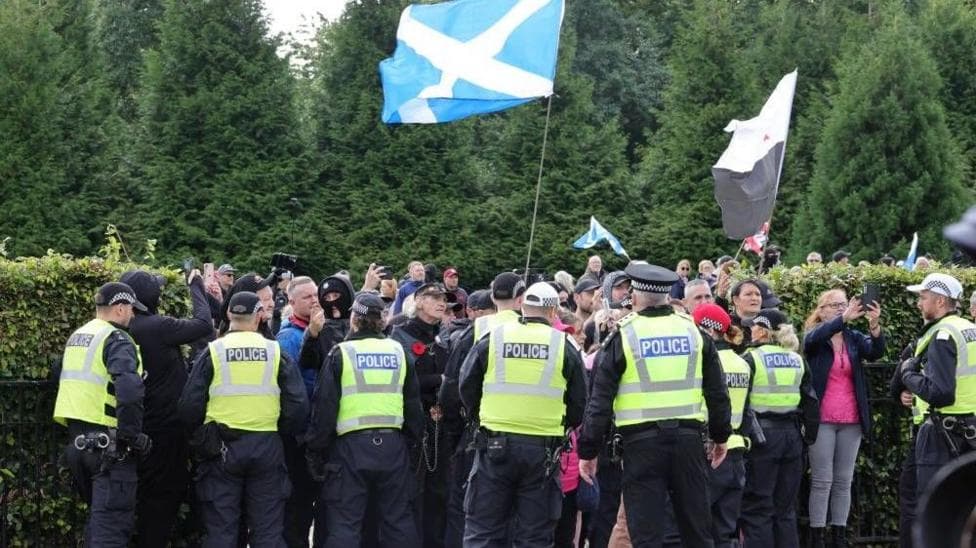
At a demonstration last weekend in Dover and Portsmouth, far-right activist Daniel Thomas, known as Danny Tommo, rallied supporters wearing black balaclavas by focusing almost exclusively on unverified allegations of widespread rape by asylum seekers. This framing stands in sharp contrast to documented cases involving asylum seekers themselves as perpetrators—cases that, while receiving significant media attention, represent only a handful of convictions for serious sexual offences. No comprehensive published data exists on crimes committed by asylum seekers in the UK.
The Home Office has responded to concerns about sexual violence in asylum accommodation by publishing a nine-page guidance booklet for new arrivals. According to the national broadcaster's report on the guidance, the booklet explicitly states that
if you have sex with someone who does not want to, this is called rape. Rape is a serious crime, and clarifies that
rape remains rape even within marriage or a relationship. This guidance reflects growing recognition of the vulnerability of asylum seekers to sexual exploitation.
What experiences have asylum seekers reported?
Three women's accounts illustrate the pattern of sexual harassment and assault within asylum accommodation. One woman, who spent two years in an asylum hotel after escaping religious persecution and domestic violence, experienced repeated verbal and physical harassment from a staff member. The harassment escalated to unwanted touching when she handed over documents, followed by the staff member visiting her room uninvited, requesting dates and drinks. He obtained her phone number from the hotel database and began sending repeated text messages soliciting sex. When she reported the behaviour to hotel management, she was transferred to a different facility.
It was awful,she recalled.
He told me he wanted to have sex with me.
A second woman, who had recently arrived from Iran and was placed in accommodation near Heathrow, disclosed that she was raped by a security guard employed at her hotel. Her response reveals the compounded vulnerability of asylum seekers navigating both trauma and uncertainty about the legal system.
It was very terrifying. I didn't know what to do. I reported the attack to the hotel staff and I was asked if I wanted to make a statement to the police. I did not know if the police here would be like the police in Iran, so I was too scared to do anything. I was also worried that if I reported the rape it would make it more likely that my asylum claim would be refused.
After reporting the assault, she was moved to another facility. She remains unaware of what action, if any, was taken against the perpetrator.
A third case involved a lesbian asylum seeker from Uganda whose claim rested on fear of imprisonment or death if her sexual orientation became known in her home country. Unable to secure legal aid representation, she engaged a private immigration lawyer. Facing financial hardship, she was coerced into sexual contact with the lawyer as an alternative to payment—a form of exploitation that exploited her precarious legal position.

I managed to find a private immigration lawyer but I had no money to pay him, so he forced me to have sex with him as a form of payment even though he knew what my asylum case was,she said.
I felt there was nothing I could do to prevent this.
All three women were subsequently granted refugee status. Experts believe that incidents of sexual assault and rape affecting asylum seekers are substantially underreported to Home Office accommodation contractors.
What safeguarding failures have been identified?
A home affairs select committee inquiry into asylum accommodation examined evidence of inadequate safeguarding measures. The British Red Cross, which provides refugee support services, told the inquiry that insufficient safeguarding had created
extraordinary strainon their frontline teams. They documented instances including a staff member attempting to use a key card to enter a woman's room late at night while she was bathing, and described a
pervasive culture of sexual harassmentat one hotel, encompassing multiple instances of sexual assault.
Women for Refugee Women, an organisation supporting women navigating the asylum system, emphasised that far-right weaponisation of violence against women obscures rather than addresses the problem. A spokesperson stated:
The weaponisation of violence against women and girls by far-right groups does nothing to make women safer. It distorts the reality of abuse, creates barriers to support and justice for survivors, and allows perpetrators to hide behind racist stereotypes instead of being held accountable. Using violence against women and girls to demonise people seeking safety here is a dangerous distraction. This violence is a systemic problem, not one confined to any nationality or immigration status, and it must urgently be treated as one.
Ciara Bergman, chief executive of Rape Crisis England & Wales, expressed serious concern about the protective measures in place.
We remain seriously concerned about a lack of appropriate safeguards in place to protect women seeking asylum in the UK from sexual violence, abuse and exploitation. This cohort of women and girls are particularly vulnerable to sexual abuse and exploitation. Many have limited or no information about their rights at all, let alone meaningful avenues through which to enforce them.
What criminal cases have resulted from asylum hotel incidents?
Several prosecutions have emerged from sexual offences in asylum accommodation settings. In Southampton, a failed asylum seeker was jailed for sexual offences against three women after living in a migrant hotel. Sohail Amiri received a 36-month sentence after pleading guilty to sexual assault and attempted sexual assault charges. In Falkirk, Muhammad Sheikhi was sentenced to four years imprisonment after being found guilty of sexually assaulting two women on the same night.
The Bell Hotel in Epping became a focal point for protests after an asylum seeker sexually assaulted a 14-year-old girl and a woman at the facility. That individual was subsequently deported to Ethiopia. Prosecutors and police have also pursued charges involving staff safety, including a case in Southampton concerning sexual assault on a hotel worker.
What is the government's position?
A Home Office spokesperson stated:
Our government has committed to halving violence against women and girls in a decade; it is vital that this includes those seeking asylum and living within the asylum complex.
Home Office sources indicated that published guidance exists regarding such incidents within asylum accommodation, known as the statement of requirements for asylum accommodation and support. The guidance specifies:
This would typically include assessing any immediate risk to the alleged victim and others, considering what support services may be required, and determining whether any protective measures are necessary.
What happens next?
Three defendants in a violent disorder case linked to the Epping hotel protests are scheduled for trial on 23 March 2026, with four additional defendants due in court on 1 June 2026. Separately, Melaku Gebresembet was due to appear at Southampton Magistrates' Court on 22 January 2026 after being charged with sexual assault at an asylum hotel, according to court records.