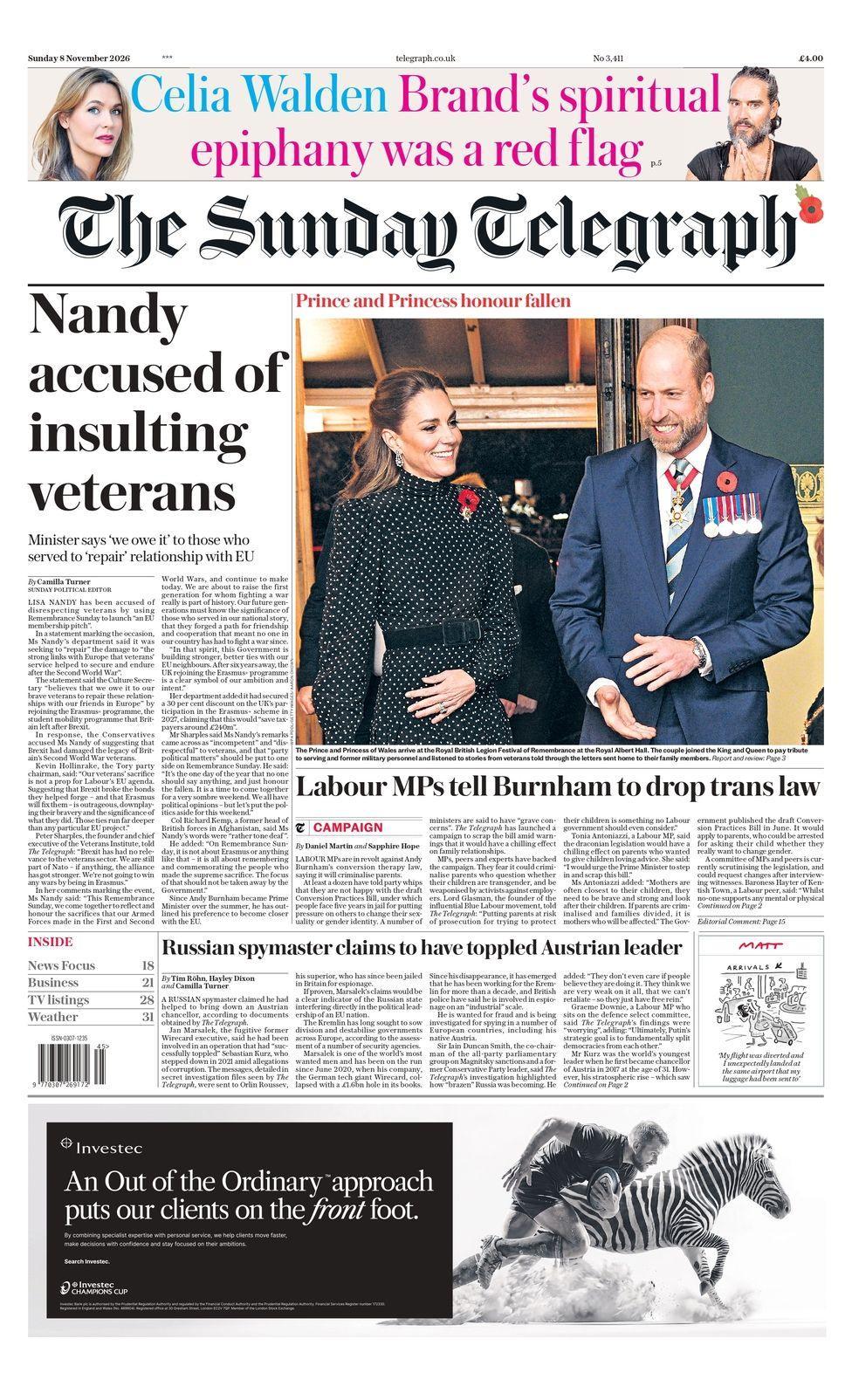
Sexual abuse within the media industry is probably continuing to take place, according to Culture Secretary Lisa Nandy, who has expressed concern that organisations are failing to implement sufficient safeguards for women. Her remarks came following Russell Brand's conviction on rape and sexual assault charges.
In an interview with the BBC's Sunday with Laura Kuenssberg programme, Nandy stated:
Hand on heart, I can't say to you as the culture secretary that this is not happening today. In fact, if I had to wager, I would say it is.According to BBC News, she noted that since taking office, numerous individuals from within the media sector had approached her with allegations of misconduct.
Brand was convicted following a four-week trial at Southwark Crown Court, with a jury of eight men and four women deliberating for approximately nine hours before reaching their verdicts. He was found guilty of one count of rape and three counts of sexual assault, based on allegations from six women spanning a period between 1999 and 2009. According to The Independent, Brand was acquitted of two additional rape charges and one charge of attempted indecent assault.
What institutional changes are needed?
Nandy emphasised that institutional responses to women coming forward with abuse allegations have remained largely unchanged.
I do not see that much has changed in the way that institutions in the media industry and across public life, including politics, deal with women who very bravely come forward to allege abuse,she said. She highlighted the absence of protective mechanisms and the substantial personal and professional consequences faced by those who speak out, citing power imbalances and the prevalence of precarious employment arrangements such as short-term contracts.
The culture secretary called for urgent action, stating:
Time is up, it really is time for the media industry to take this seriously.She acknowledged that the BBC had demonstrated leadership by becoming a signatory to the Creative Industries Independent Standards Authority, an industry body established to protect whistleblowers, and urged other media organisations to follow this example.
The BBC has previously apologised to staff members who felt unable to raise concerns about Brand's conduct during his employment at the corporation between 2006 and 2008, as he was perceived as wielding excessive influence. A BBC spokesperson stated:
There could be no place for the abuse of power, adding: Across the industry we must work together to ensure that anyone who suffers at someone else's hand feels able to report it, that their concerns are taken seriously and that they are listened to.
Channel 4, which broadcast Big Brother and related programmes during Brand's tenure as a presenter, acknowledged the gravity of the offences, stating it recognised the
profound impact of these crimes.
What was Brand's career trajectory?
Brand began his professional life as a stand-up comedian before becoming a prominent television and radio personality. He hosted programmes including Big Brother's Big Mouth and presented radio shows on BBC Radio 2 and 6 Music, establishing himself as a household name during the 2000s.
During the trial, the six women who gave evidence described how Brand exploited his celebrity status to coerce them into sexual activity. The allegations revealed a pattern of behaviour spanning a decade, with accusers detailing how his fame and industry position were weaponised to facilitate abuse.
What broader concerns have emerged?
Nandy's warnings align with wider concerns about workplace safety across the entertainment sector. A detective leading the Brand investigation previously stated that more victims are likely to come forward following his conviction, and according to The Independent, Metropolitan Police Commissioner Mark Rowley indicated he would not be surprised if additional accusers emerged. MPs have previously heard evidence that sexual harassment is widespread within the comedy industry, with women relying on informal warning systems and facing limited formal protections.
Police are currently investigating two further rape allegations against Brand, with prosecutors evaluating whether additional charges may be pursued, according to reporting from multiple sources covering the case.
What happens next?
Brand is scheduled to be sentenced at Southwark Crown Court on Monday, 9 November 2026. The presiding judge has cautioned that he faces a substantial custodial sentence. Beyond the immediate sentencing, the case has prompted broader discussions about trial procedures and victim protection, with political figures examining how rape trials are conducted to prevent complainants from experiencing secondary victimisation within the courtroom.