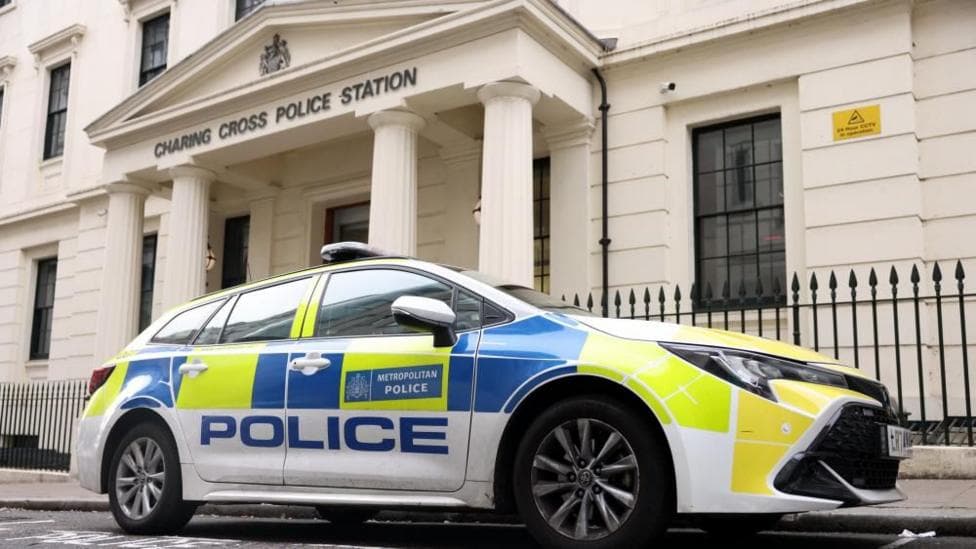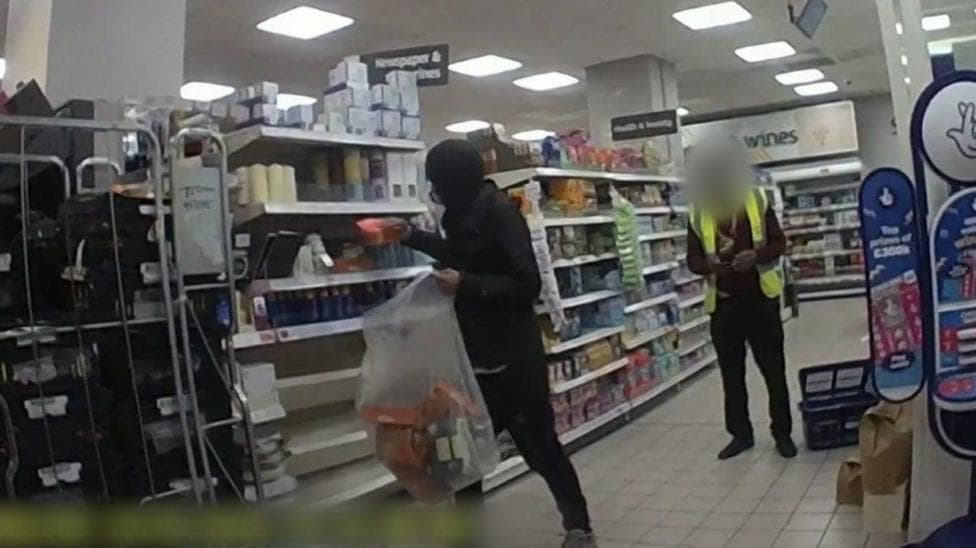
A small group of prolific shoplifters has been responsible for tens of thousands of recorded thefts across England, according to an investigation into police data. Between 2020-21 and 2025-26, just 270 suspects were linked to 28,415 shoplifting offences—an average of 105 crimes per person—prompting calls from government ministers for tougher enforcement and consequences.
Policing minister Sarah Jones said shoplifters needed to understand they would face punishment for their actions.
"They need to know that they are going to be punished for what they have done,"she stated, describing shoplifting as a
"pernicious crime that for too long has gone unpunished."
The scale of the problem extends far beyond these 270 individuals. Official figures show that across England and Wales, excluding the British Transport Police, 502,011 shoplifting offences were recorded in 2025-26 alone. However, more than half of those investigations were closed without any suspect being identified, highlighting the resource challenges facing law enforcement.
How widespread is prolific shoplifting?
The 270 suspects identified by police represent an extreme concentration of offending. One individual in Sussex had been linked to 247 shoplifting offences—the equivalent of a reported crime every 10 days. These figures capture only occasions where a theft was formally reported to police and officers identified a suspect, meaning the true scale of offending by these individuals is likely considerably higher.
Jeff Ashman, a reformed shoplifter from Hastings, described the scale of his own offending at its peak.
"It's mind-boggling,"he said, explaining that he would walk out of shops with goods worth £400 to £500 daily to fuel his addiction to heroin and crack cocaine.
"I know the misery and grief and despair that I have caused these people for a long period of time."Ashman has since moved away from shoplifting, but many others continue the pattern of offending across communities.

What drives prolific shoplifting?
Criminology experts identify two distinct drivers behind the shoplifting epidemic. Emmeline Taylor, professor of criminology at City St George's University in London, explained that organised crime networks operate alongside individual offenders.
"Post-pandemic, we have seen what's been described as a shoplifting epidemic on the streets of the UK,"she said.
"What we are seeing is organised criminals stealing very specific items, clearing entire shelves and selling that on to other markets, maybe online, maybe at car boot sales. But we also have prolific local offenders, these individuals maybe drug affected, they already know where they're going to sell the goods on."
Jim Taylor, a former detective chief superintendent who previously led the specialist police unit Opal, confirmed that organised crime gangs exploit gaps in coordination between retailers and police forces.
"There are individuals exploiting the lack of coordination between stores, between police forces and making vast sums of money,"he said. One case spanning 30 different police forces uncovered crime groups responsible for millions of pounds in theft.
What impact does shoplifting have on retail workers?
Shop staff face escalating violence and intimidation from shoplifters. John Bownas, who leads a team supporting shops in Hastings, described the toll on young workers earning minimum wage.
"There are threats of needles and threats of knives and that's not what a young shopworker should be faced with day in day out,"he said.
"It's a frustration that the system is letting so many people down."
Laurissa Woolgar, a shop manager in Canterbury, witnessed her staff being attacked by shoplifters.
"My colleagues have been wrestled with as they've tried to get items off [them]. We've been sworn at, there's a lot of verbal abuse,"she said, describing the experience as
"really upsetting."
In response to these incidents, the government introduced a specific criminal offence for assault on a retail worker through the Crime and Policing Act 2026. Those found guilty can be sent to prison for up to six months and face an unlimited fine. According to Full Fact's government tracker, the Act received Royal Assent on 29 April 2026 and removes the £200 threshold that previously treated low-value shoplifting differently.


Why are so few shoplifters being prosecuted?
Despite the scale of offending, prosecution rates remain low. Around one in five shoplifting offences in 2025-26 led to a charge or summons, leaving 285,667 reported crimes either remaining open or being closed without any action. This enforcement gap has forced some retailers to take matters into their own hands.
Dion Smith, who has run a jewellery workshop in Leeds for 16 years, experienced this firsthand when shoplifters made off with gold jewellery worth £1,000. After his wife photographed the suspects selling stolen merchandise in a second-hand goods store, police could not identify them until the business owners shared the images on social media.
"We had so many comments and people messaging us telling us they knew who they were and where they lived,"Smith said. Once identified through social media, police helped recover the stolen goods and made arrests.
Smith expressed frustration at the lack of deterrence.
"There has to be consequences; we've got to come up with something to deter them because at the moment they're being given a green light to do whatever they want; they are running amok."
What new powers are being introduced?
The government is implementing multiple measures to tackle prolific shoplifting beyond prison sentences and drug treatment. According to government guidance published in August 2026, the Crime and Policing Act 2026 will allow police to enter premises without a warrant to search for and seize stolen goods tracked by GPS, such as phones. A government retail-crime factsheet updated in August 2026 states that all shop theft will be treated as general theft, with a maximum sentence of seven years once the relevant provision comes into force.
The government is also introducing court orders preventing prolific shoplifters from visiting certain shops or areas. According to the retail-crime factsheet, a presumption on courts to impose a criminal behaviour order on first conviction is part of the new framework. A court order issued on 7 September 2026 banned a prolific shoplifter from a retail park for two years, demonstrating that such orders are already being used in some cases.
Beyond legislative changes, the government has invested in enforcement infrastructure. According to a trade-industry report from April 2026, the government deployed 3,000 extra neighbourhood police officers and invested £5 million in Opal to target organised shoplifting gangs.

How is technology being used to tackle the problem?
New information-sharing platforms are helping police and retailers coordinate responses to prolific offenders. Auror, a crime intelligence platform, allows retailers to report directly to police to tackle shoplifting. Hertfordshire Constabulary, one of three forces now using Auror, arrested two shoplifters at a retail park in Stevenage using the tool; the men were linked to dozens of thefts from Boots stores across the country.
Similar information-sharing underpins Partnerships Against Business Crime in Staffordshire, which provides updates on known offenders to registered retailers. Paul Greenhough, who manages the scheme, emphasised the importance of changing attitudes toward retail theft.
"I think unfortunately it has become partly accepted that stores are going to lose things. For us, it's about saying, 'No, that's not acceptable - we need to do something about it'."
The National Police Chiefs' Council emphasised that a strategy launched last year has brought
"real results"by uniting policing, retailers and the government. Assistant Chief Constable Alex Goss, NPCC lead for retail crime, stressed that
"tackling retail crime cannot be achieved by policing alone."The strategy aims to target organised retail crime, implement an offender management programme and establish preventative measures.
What do the latest figures show?
Policing minister Jones pointed to a slight year-on-year drop in recorded shoplifting crimes as evidence that the country had
"turned that corner."However, she acknowledged significant work remains.
"We all know there is a lot further that we need to go and a lot more we need to do,"she said.
The concentration of offending among a small number of individuals suggests that targeted enforcement against prolific shoplifters could yield significant results. However, the gap between reported crimes and prosecutions—with more than half of investigations closed without a suspect identified—indicates that resources and coordination remain critical challenges for law enforcement.
Key Facts
- 270 suspects were linked to 28,415 shoplifting offences between 2020-21 and 2025-26, averaging 105 crimes per person
- 502,011 shoplifting offences were recorded across England and Wales in 2025-26, with more than half closed without a suspect identified
- The Crime and Policing Act 2026 introduces a specific offence for assaulting retail workers, with sentences of up to six months imprisonment and unlimited fines
- The government has deployed 3,000 extra neighbourhood police officers and invested £5 million in Opal to target organised shoplifting gangs
- New information-sharing platforms like Auror allow retailers to report directly to police and help coordinate responses to prolific offenders