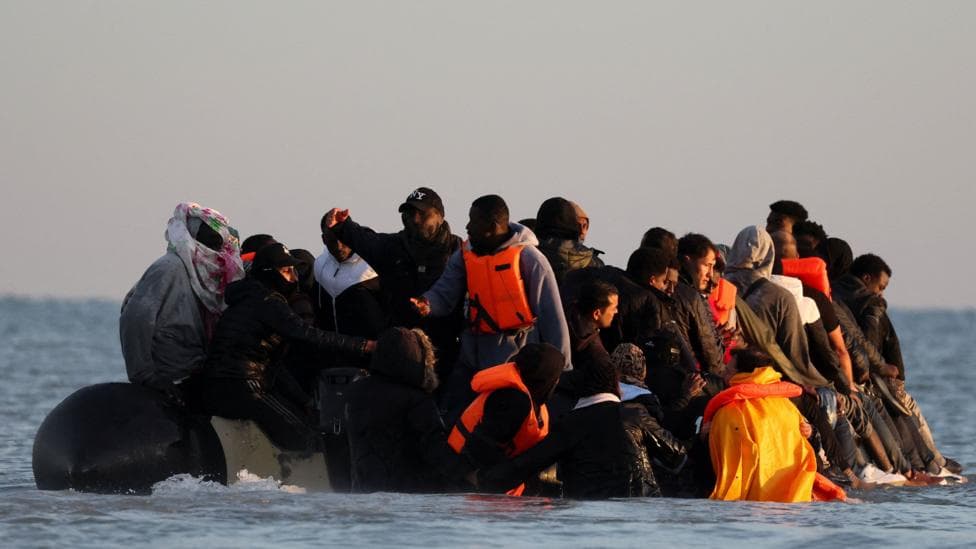
Approximately 140 people aboard an inflatable vessel have been rescued in the English Channel after the boat launched from the Normandy coast overnight and requested assistance in UK waters. Two RNLI lifeboats from Bembridge and Yarmouth responded to the call at lunchtime, and the rescued individuals were brought ashore in Portsmouth on Sunday. The rescue prompted hundreds of anti-migrant protesters to block roads in the city centre that evening, in scenes that exposed tensions between Border Force operational decisions and local activism.
The incident marks another significant crossing attempt as people smugglers increasingly resort to larger vessels to transport migrants. The dinghy, reportedly around 15 metres in length and spotted in the Jobourg region of Normandy, was shadowed for approximately 10 hours by French rescue boats before reaching UK waters. French authorities determined it was unsafe to attempt to halt the vessel while at sea. According to reporting on UK and French policy coordination, both nations were planning measures specifically aimed at countering the rise of "mega-dinghies" carrying hundreds of migrants.
Who organised the Portsmouth protests?
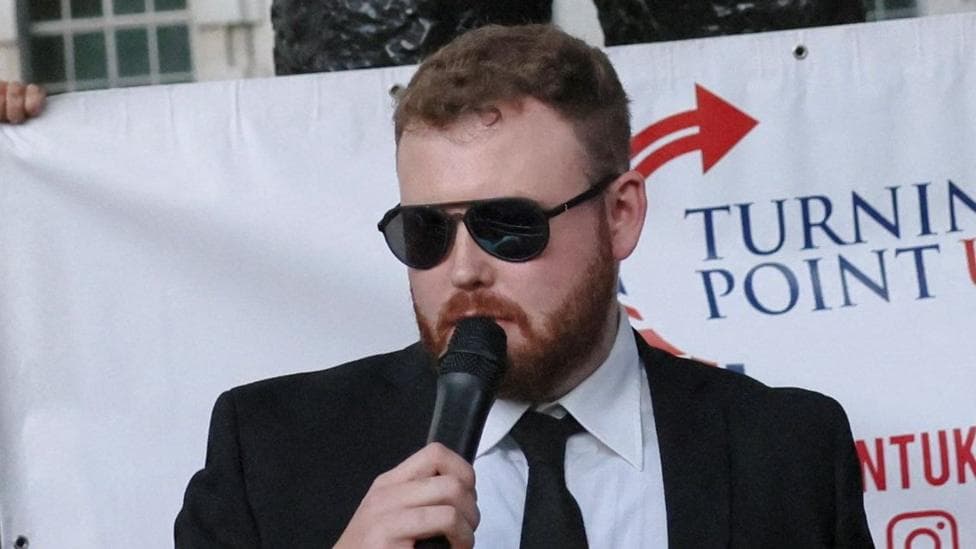
The anti-migrant demonstrations that followed the rescue were organised by Danny Thomas, known as Danny Tommo, a long-term campaigner against migration who comes from Hayling Island near Portsmouth. Thomas had spent weeks planning the action over the summer, and when Border Force decided to bring the rescued migrants ashore at the Eastney landing stage—the departure point for the passenger ferry to Hayling Island—it provided an opportunity for him to mobilise local support rapidly through social media on Sunday evening.
Thomas first came to public attention in 2016 when he was jailed for two years after pleading guilty to attempting to kidnap a man at knifepoint. After his release, he became closely associated with anti-migrant activism and has spent the past year filming himself on French beaches and sharing videos on social media. In July, he announced a new venture called Patriot Platform, describing it as a movement by "the sons and daughters of this island" designed to "take our country back." The group describes itself as united by "love of country, responsibility to our families and belief in Britain's future" rather than "hatred of others."
In a video posted on Wednesday, Thomas told supporters gathered in the north west of England that "something is about to go down and men from all round the country will be involved in it," adding that "once we pull this off it will snowball in the entire country." He emphasised the need for "discipline" and "boxing clever," stating that creating a violent movement would result in arrests. The Dover protest on Saturday, which saw hundreds of masked men block roads for several hours, was described by Kent Police as "spontaneous," though the force later faced questions about why it had not known about the action in advance.
Why are boats departing from new locations?
The departure point from Normandy represents an unusual shift in smuggling routes. French authorities noted that launching from the Bay of the Seine, approximately 170 miles from the traditional departure areas around Calais, significantly lengthens the crossing. This change in tactics appears to reflect efforts by people smugglers to evade increasingly robust policing operations in the Calais region. Local officials previously reported that departures from Normandy have increased in recent years.
What is the trend toward larger vessels?
Smuggling networks have begun loading substantially more people onto fewer, larger boats—a shift that experts attribute to heightened enforcement pressure. In August, a single dinghy successfully transported a record 230 people across the Channel, surpassing the previous record of 165 migrants. The latest rescue of 140 people continues this pattern of escalating vessel capacity and passenger numbers.
Data reveals the scale of this transformation. Boats that arrived in the UK from September 2025 to September 2026 carried an average of 68 people—more than double the figure from 2021. This overcrowding creates serious safety risks. Experts warn that cramped conditions on vessels increase the danger of crossings, and at least 84 people died attempting to cross the Channel in 2024, according to the United Nations.
How many people have crossed this year?
Between 1 January and 5 September 2026, a total of 16,513 people crossed the English Channel by small boat from France. This figure represents a 43% decrease compared with the same period in the previous year, indicating that while overall numbers have declined, individual crossing attempts continue to involve larger groups.
Small boat arrivals have become the predominant method of detected illegal entry to the UK since 2020. These crossings accounted for 40% of all asylum applications between July 2025 and June 2026. Nearly all those arriving by small boat claim asylum, which under international law permits them to remain in the country while their applications are processed.
When viewed against total immigration into the UK from January 2025 to December 2025, small boat arrivals represent approximately 5% of overall immigration figures. People from Eritrea made up 18% of all small boat arrivals from July 2025 to June 2026.
What safeguarding concerns exist?
The Home Office identified serious vulnerabilities among those arriving by small boat. In the latest figures covering January 2025 to December 2025, at least 2,335 people who arrived by small boat were found to be potential victims of human trafficking or other forms of modern slavery. Additionally, 4,712 people were detected entering the UK without permission via other methods including concealment in vehicles, travel on ferries, or passage through airports from July 2025 to June 2026—a 17% decrease on the same period the previous year.
What is the government's response?
A Home Office spokesperson stated on Sunday:
This Government is bearing down on dangerous small boat crossings and restoring control at our border. Joint efforts have seen over 48,000 crossing attempts prevented and 1,100 boats and engines seized since the election.
The government has pledged to
go further, which is why we have signed a payment-by-results deal with the French to put 40% more boots on the ground on French beaches.Downing Street announced that 45 additional police officers are being deployed to French beaches as part of a "surge team" specifically tasked with addressing larger dinghies carrying increased numbers of people.
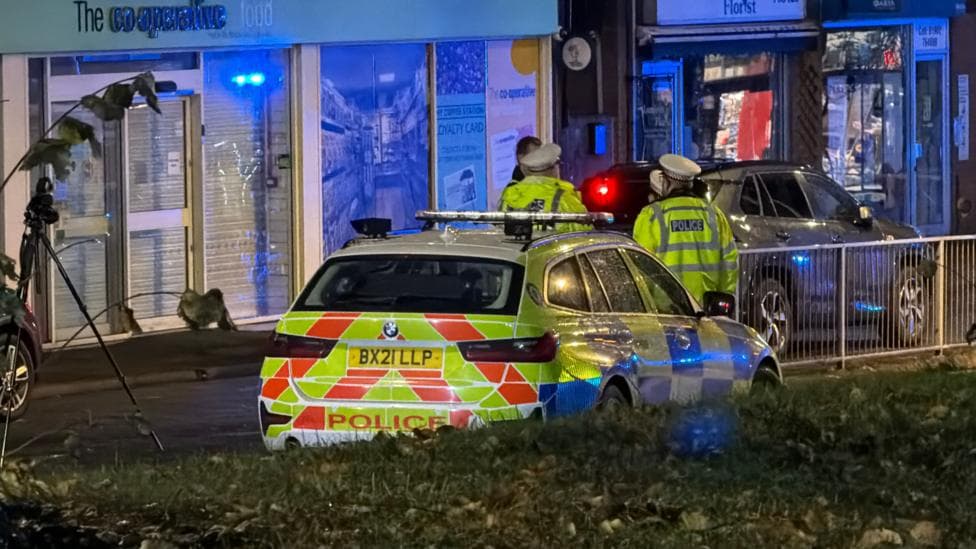
The government condemned the "intimidating and thuggish behaviour" of protesters in Portsmouth, though a spokesperson acknowledged that "the right to peaceful protest is fundamental to our democracy, but it must never cross a line into disorder."
According to reports on the rescue operation, the Maritime and Coastguard Agency deployed lifeboats, a helicopter, an aeroplane and coastguard rescue teams in response to the vessel heading toward the Hampshire coast.
What happened after the rescue?
The rescued individuals were transported to Portsmouth, where they were expected to be moved to Manston processing centre. The arrival prompted the anti-migrant protests described above, with hundreds of demonstrators blocking roads in the city centre on Sunday night. A local police commissioner described the Portsmouth protest as "a wake-up call for government."
What happens next?
The rescued migrants will proceed through the UK asylum processing system at Manston. Meanwhile, UK and French authorities are expected to continue implementing measures agreed during recent bilateral talks to reduce Channel crossings. The focus remains on disrupting smuggling networks and preventing the use of increasingly dangerous "mega-dinghies" that place migrants at heightened risk during their journeys across the Channel.
Key Facts:
- Approximately 140 migrants were rescued from a single dinghy in the English Channel after launching from Normandy overnight
- The vessel was shadowed by French rescue boats for around 10 hours before reaching UK waters at lunchtime
- Anti-migrant protests organised by Danny Thomas blocked roads in Portsmouth on Sunday evening following the rescue
- Between 1 January and 5 September 2026, 16,513 people crossed by small boat—a 43% decrease year-on-year, though individual boats now carry larger numbers
- Boats arriving from September 2025 to September 2026 carried an average of 68 people, more than double the 2021 figure
- At least 2,335 people arriving by small boat in 2025 were identified as potential victims of human trafficking or modern slavery