
Casualties from Israeli Air Strikes in Southern Lebanon
At least 13 individuals, including four women and a child, have been killed in Israeli air strikes targeting southern Lebanon, according to the Lebanese health ministry.
Among the fatalities, two women and a child were part of eight people killed in Haboush, located in the Nabatieh district, where the Israel Defense Forces (IDF) had issued an evacuation order.
In addition, four people, including two women, died in Zrarieh in the Sidon district, and one person was killed in Ain Baal in the Tyre district. A total of 32 people sustained injuries on Friday.
Ongoing Conflict Despite Ceasefire Extensions
Hostilities between Israel and Hezbollah have persisted despite a three-week extension of a ceasefire agreement.
On Saturday, Hezbollah, an Iran-backed group, announced it had targeted Israeli soldiers and military vehicles within Lebanon.
The Israeli military reported that one of its soldiers was killed during combat operations in southern Lebanon on Thursday, increasing the total number of Israeli troop fatalities since early March to 17.
Diplomatic Efforts and Ceasefire Agreements
An initial 10-day pause in hostilities was declared on 16 April following ambassador-level talks held in Washington between Israel and Lebanon.
These talks marked the first high-level engagement between the two countries since 1993, as Israel and Lebanon do not maintain formal diplomatic relations.
On 23 April, US President Donald Trump announced a three-week extension to the ceasefire, stating that the second meeting between Israel and Lebanon "went very well" and that the United States would assist Lebanon "to help it protect itself from Hezbollah."
Hezbollah was not a party to the ceasefire agreement but indicated it would comply with its terms if Israel also respected them.
Continued Fighting and Evacuation Orders
While the ceasefire largely halted attacks on Beirut and its southern suburbs, fighting has continued in other southern regions, including ongoing air raids and repeated evacuation orders.
US Embassy Comments and Lebanese Leadership Meetings
On 30 April, the US embassy in Beirut suggested that a meeting between Lebanon's President Joseph Aoun and Israeli Prime Minister Benjamin Netanyahu could provide Lebanon "the chance to secure concrete guarantees on full sovereignty, territorial integrity, secure borders, humanitarian and reconstruction support, and the complete restoration of Lebanese state authority over every inch of its territory."
The post on X added that this would be "guaranteed by the US."
President Aoun met with US Ambassador to Lebanon Michael Issa on Friday, during which Issa reaffirmed continued US support for Lebanon.
Background of the Conflict and Recent Developments
Israel and Hezbollah agreed to a ceasefire ending a previous conflict in November 2024. Following this, Israel conducted near-daily attacks on targets and individuals it identified as linked to Hezbollah.
After the US and Israel attacked Iran on 28 February and killed Iran's supreme leader, Hezbollah retaliated by launching rockets and drones into Israel on 2 March.
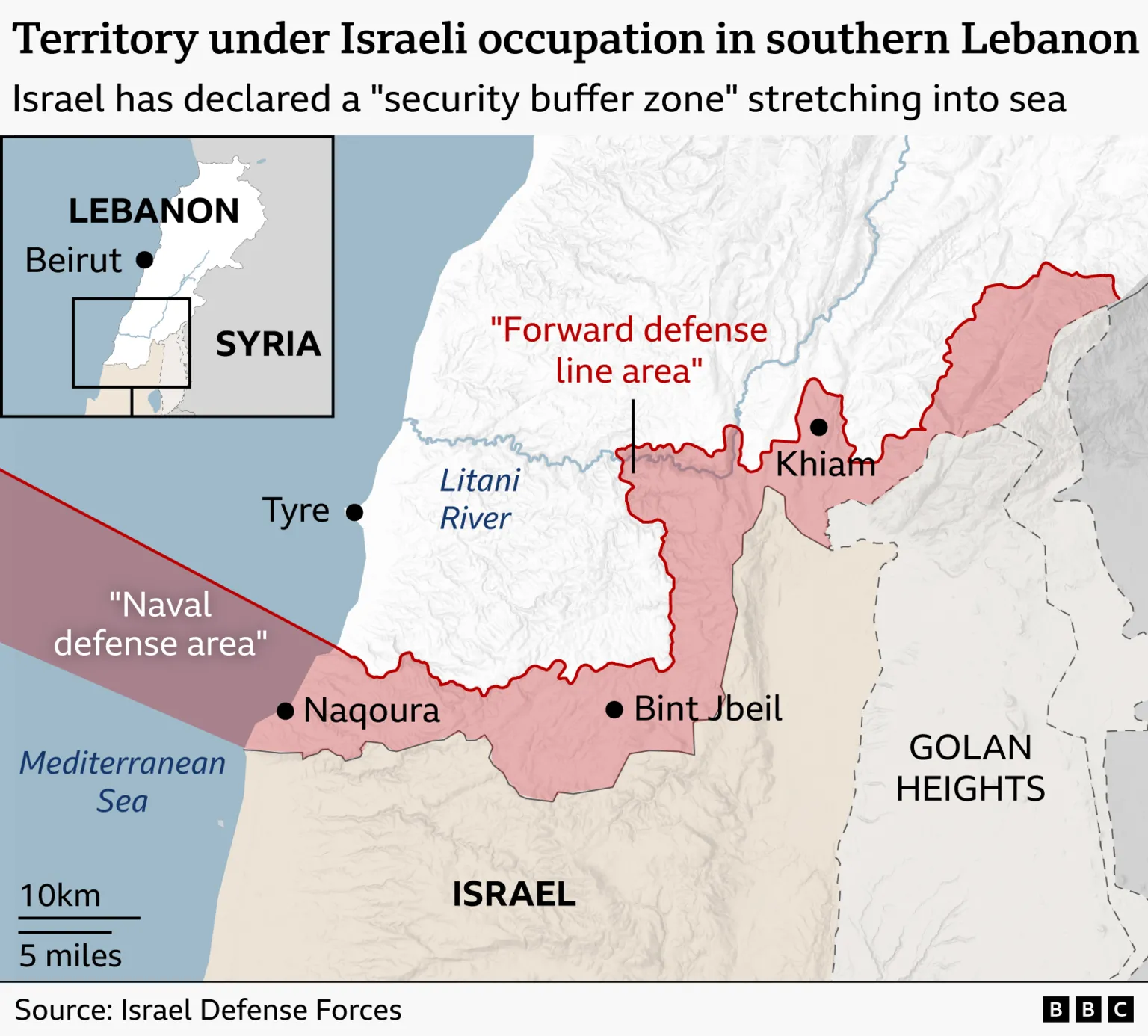
In response, Israel carried out air strikes across Lebanon. Israeli forces re-entered southern Lebanon in early March, destroying villages and occupying approximately 10 kilometers (6.2 miles) of Lebanese territory.
Since early March, 2,586 people have died in Lebanon, including 103 health care workers and emergency responders, according to the Lebanese health ministry. The ministry does not differentiate between combatants and civilians.
Alongside the 17 Israeli soldiers killed in Lebanon, two Israeli civilians have died as a result of Hezbollah attacks.
Recent Military Actions
On Saturday morning, the IDF reported conducting "around 50 strikes in the last day" on southern Lebanon.
The IDF stated that the targets included Hezbollah operational headquarters and buildings used for military purposes.
A previous update indicated that the IDF intercepted two "aerial targets" before they could enter Israeli territory.


