

Spain has warned Italy that it will face "proportionate measures" unless Rome lifts the border controls it imposed following a mass migrant crossing into the Spanish exclave of Ceuta last week. Roughly 78,000 people crossed from Morocco into Ceuta by sea over Thursday and Friday, prompting Italy to partially suspend its Schengen agreement with Spain. Madrid has given Italy until Sunday, 9 August, to reverse the decision or face retaliation.
The crossings, which occurred within a matter of hours, resulted in roughly 100 deaths according to the original reporting on the crisis. In response, Italy moved to suspend elements of the border-free Schengen arrangement it shares with Spain, closing maritime and air entry points between the two countries and tightening checks along land borders.
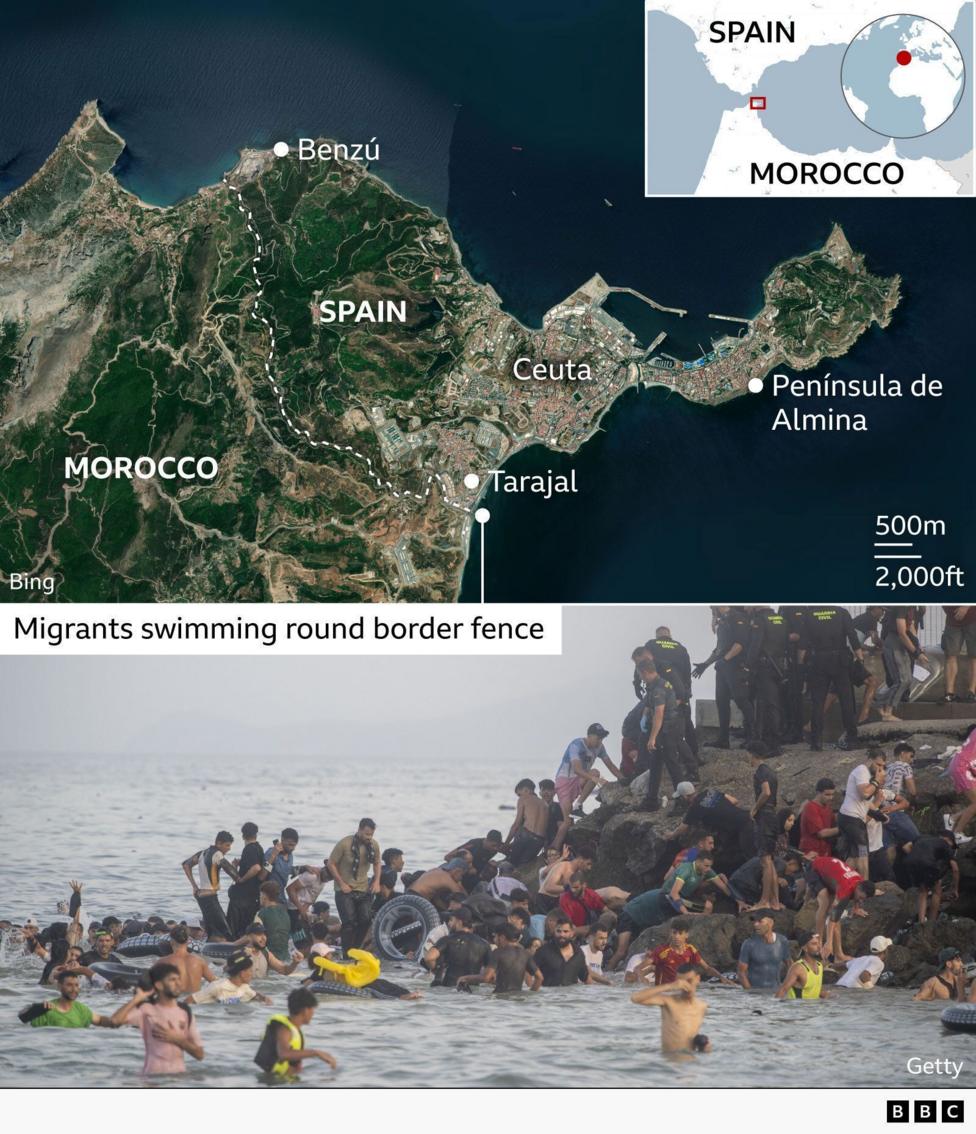 " alt="Composite graphic showing Ceuta's location and migrants near the border fence" />
 On Friday, Spanish authorities described Italy's move as "unjustified" and "discriminatory against the Spanish population," demanding it be withdrawn by the Sunday deadline. Spain said it would introduce countermeasures "to protect the interests and dignity of its citizens" should Italy fail to comply, though it did not specify what form these would take.
Why is Italy keeping its border checks in place?
Italy has rejected Spain's demand, saying it will not bow to "ultimatums or impositions" from Madrid. Italian officials said checks would remain in force until at least 15 August, a date they said coincides with Spain's own expectation of a fresh wave of crossings into Ceuta. Italy, which shares no land border with Spain, argued the suspension was necessary to stop any migrants who entered Ceuta from subsequently travelling onward into Italian territory.
According to , the suspension covers both plane and boat travel between the two countries, meaning passengers must now present a passport to cross. Italy has also said it will reinforce checks along its border with France to help prevent undocumented migrants moving further into Europe. Separately, according to Deutsche Welle, Italy's suspension is set to run for one month from the Saturday it was introduced, putting the next major review point in late August 2026.
Spain has dismissed Italy's justification as resting on "spurious arguments" with no factual basis, insisting that migrants who reached Ceuta had no route into the wider Schengen area. Madrid has also pointed out that the large majority of those who crossed have since returned to Morocco.
How many people died, and what caused the surge?
The exact toll from the crossings has varied across reports. The original account of the crisis put the number of deaths at around 100, while Spain's Interior Minister Fernando Grande-Marlaska said by Saturday the confirmed death toll stood at 67, a figure also cited by a national broadcaster's report and separately corroborated by and France 24.
Estimates of how many people actually crossed have also differed. initially reported that around 49,000 people crossed into Ceuta within a single day, while other outlets later put the figure closer to 60,000, and the account underlying this story cites approximately 78,000 crossings in total. The scale of the disparity underscores how difficult it has been for authorities to establish precise numbers amid the chaos.
The EU's Migration Commissioner, Magnus Brunner, has suggested that criminal networks spreading disinformation may have played a role in triggering the surge, an assessment Spain's government has echoed. The crossings followed a ruling by Spain's Supreme Court that migrants intercepted at sea while attempting to reach Ceuta or Melilla cannot be summarily returned to Morocco — a decision Spanish officials believe may have encouraged the rush.

Ceuta and Melilla, Spain's two North African exclaves, have long been contested by Morocco, which does not recognise Spanish sovereignty over the territories. The scale of the crossing has also raised questions about why Moroccan border guards did not intervene to prevent so many people entering the water at once.
What has Morocco said about the crisis?
Moroccan officials have placed responsibility for the crisis on Spain's judiciary. An unnamed government source was quoted in local outlets saying:
"the deterrent element of the system collapsed and the dam gave way, not under the weight of the criminals, but of a judge's decision"
Moroccan media have also reported fresh online calls urging coordination of another mass crossing attempt, similar in nature to the one seen last week, raising concern that further incidents could follow.
How has the wider EU responded?
The dispute has exposed divisions among Schengen-area countries. Finland and Denmark have backed Italy's decision to suspend free movement with Spain, while the Czech Republic has gone further, calling for Spain's Schengen membership to be temporarily suspended altogether.
This episode fits into a broader pattern of EU tension over the crisis. According to the site's earlier coverage, the European Commission previously urged stronger EU border security after the initial wave of crossings, while France moved to tighten its own checks along the Spanish border in the days following the surge. Separately, the bloc had initially praised Spain's handling of the emergency before the more recent friction with Italy emerged.
Spain has also taken physical steps to prevent further crossings. According to , authorities began installing a 500-metre floating barrier off the Tarajal breakwater in Ceuta after crossings ceased overnight. The same report noted that travellers leaving Ceuta by sea or air continue to undergo identity and document checks, raising questions over whether those measures alone can prevent onward movement amid the ongoing dispute with Italy.
What is being done for migrant children still in Ceuta?
Spain's Youth Minister, Sira Rego, said on Friday that nearly 1,400 minors remain in Ceuta following last week's crossings, including some described as "very young boys and girls." She said:
"There was a situation in which the system was overwhelmed, but it is now being brought under control. It is true that there are many boys and girls, and the procedure takes time."
"We wanted to make clear that we have prioritized the most vulnerable cases."
The crisis has also strained diplomatic relations at the highest level, marking a new low point between Spain's socialist Prime Minister Pedro Sánchez and Italy's conservative Prime Minister Giorgia Meloni, who has long pushed for stricter EU-wide migration policy.
What happens next?
Italy has indicated its Schengen suspension with Spain is intended to remain in effect for one month from the date it was introduced, placing the next significant decision point around mid-to-late August 2026, according to Deutsche Welle. Spain, meanwhile, has set its own deadline of Sunday, 9 August, for Italy to reverse the measures or face unspecified countermeasures. With Moroccan media reporting renewed calls online for another coordinated crossing attempt, authorities on both sides of the Mediterranean are watching closely for signs of a repeat incident before Italy's checks are due to be reviewed.
Key Facts
- Roughly 78,000 migrants crossed from Morocco into Ceuta by sea over Thursday and Friday, according to the original reporting; other estimates ranged from 49,000 to 60,000.
- Spain's Interior Minister put the confirmed death toll at 67, while the original account cited around 100 deaths.
- Italy suspended Schengen-free travel with Spain for air and sea routes and tightened checks along its border with France, with the suspension set to last one month.
- Spain has demanded Italy reverse the controls by Sunday, 9 August, or face "proportionate measures."
- Nearly 1,400 minors remain in Ceuta following the crossings, according to Spain's Youth Minister Sira Rego.


