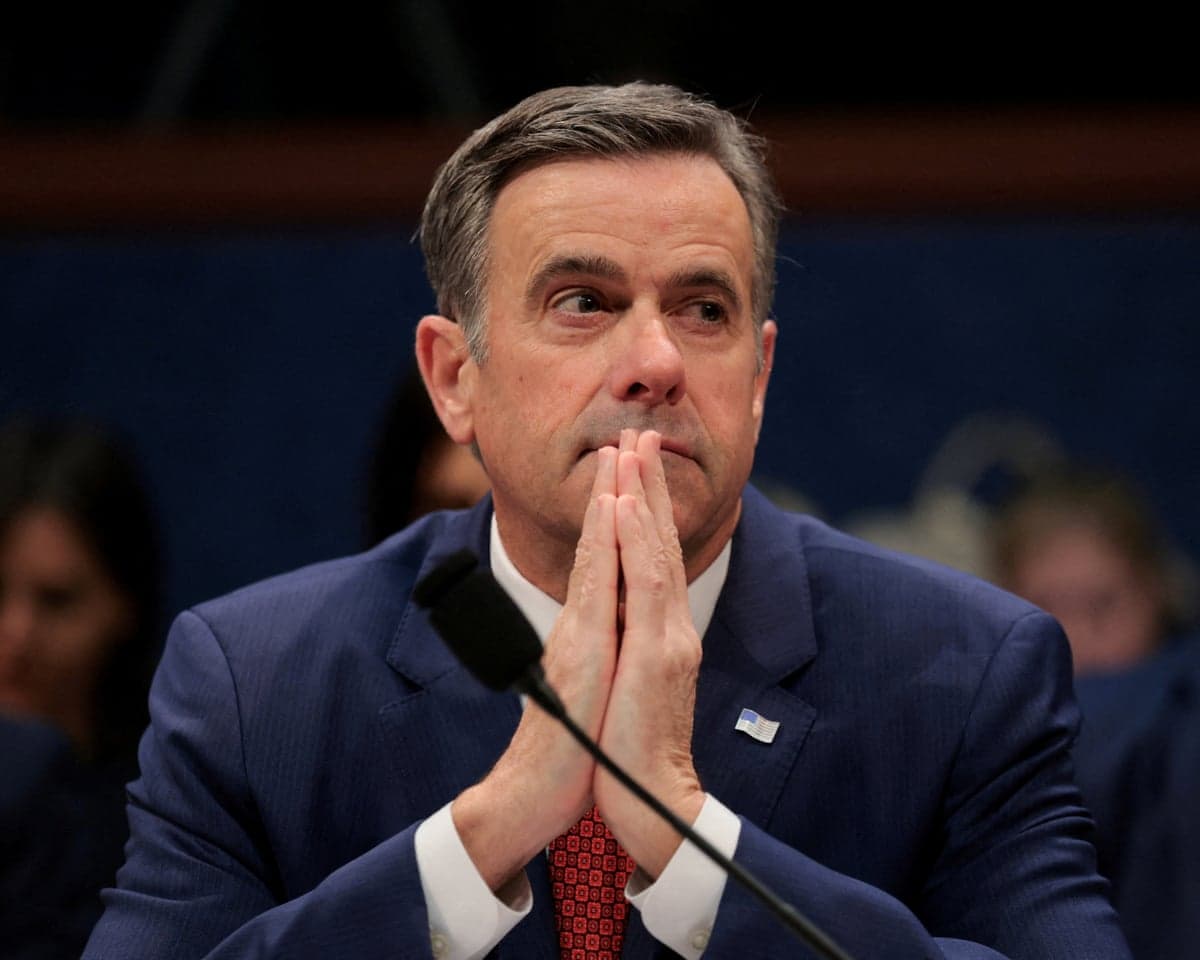
The head of the Central Intelligence Agency travelled to Moscow this week in what US media outlets reported was a mission to caution Russia against any military action targeting NATO member states, though President Donald Trump sought to minimize the significance of the visit.
According to reporting from major news organizations, CIA director John Ratcliffe aimed to discourage Moscow from launching attacks on NATO allies amid intelligence assessments suggesting Russia could attempt to test the alliance's resolve. reported that the visit marked the first known trip to Moscow by a US intelligence chief since William Burns met Vladimir Putin in November 2021. Ratcliffe departed from Joint Base Andrews in Maryland on Tuesday aboard a government transport aircraft.
When questioned about the visit, Trump characterized it as routine diplomatic activity rather than a response to specific security concerns. The president rejected suggestions that Ratcliffe had travelled due to fears Putin was preparing to challenge NATO's commitment or to secure Moscow's cooperation on intensified sanctions targeting Iran.
None of the above. He's there, you know, very sort of semi-routine. I hate to disappoint people. We would like to see the war with Ukraine end.Trump told reporters.
John Ratcliffe is a fantastic guy. He's the head of the CIA, and he is not in there for any of the things that you said. Now something may come out of it. We're working very hard to get that war ended, and frankly, they both want to see it ended at this point.
The visit carries particular weight given that Ratcliffe ranks among the highest-ranking US officials to visit Russia since the invasion of Ukraine commenced in 2022. Flight-tracking data reportedly showed a US Air Force C-17A Globemaster III travelling from Joint Base Andrews to Moscow, which helped expose the previously unannounced trip to public view.
What did Russian officials say about the meeting?
Sergei Naryshkin, head of Russia's SVR foreign intelligence service, confirmed that he held a
working-level meetingwith Ratcliffe in Moscow and stated they discussed unspecified and sensitive matters falling within the remit of their respective intelligence services. Naryshkin claimed the fact that they had met was nothing unusual, attempting to downplay the diplomatic significance of the encounter.
The Kremlin responded to US media coverage by dismissing reports as unfounded. Kremlin spokesperson Dmitry Peskov stated:
A lot of this kind of scare-story material is being published right now. Of course, it has nothing to do with reality and nothing to do with the intentions of the Russian Federation.According to reporting from the Washington Times, the Kremlin said Ratcliffe met Russian intelligence officials but not Vladimir Putin directly, though Peskov indicated that Putin was briefed on the conversations that took place.
What is the broader context for this visit?
The surprise trip emerged against a backdrop of heightened tensions between Washington and Moscow over Ukraine and NATO expansion concerns. US intelligence had reportedly assessed that Russia was preparing for possible military mobilization in Ukraine and planning to test NATO's resolve, providing the underlying rationale for the warning mission that Ratcliffe undertook.
This visit also occurs as the Trump administration pursues diplomatic channels on multiple fronts. China's foreign minister Wang Yi met with US ambassador to China David Perdue on Wednesday, calling on both sides to
focus on the positive agenda, properly manage differences, remove interference and overcome obstacles to high-level exchanges between the two countries, according to reporting from the Chinese state broadcaster. Wang acknowledged that China-US relations
still face various risks and challenges, signalling Beijing's willingness to engage ahead of an expected summit next month between Trump and Chinese president Xi Jinping.

The diplomatic activity reflects Trump's stated priority of ending the war in Ukraine, a goal he has emphasized repeatedly. However, the administration is simultaneously preparing economic measures that could complicate international relations further.
What tariff actions is the Trump administration considering?
The Trump administration is weighing a new round of sweeping tariffs on semiconductors and related technology products, according to reporting from Politico citing eight people familiar with internal discussions. Rather than targeting only microchips themselves, the proposed duties would extend to products that incorporate them, including laptops, gaming consoles and data center servers.
Commerce Secretary Howard Lutnick favors a structure that would tie foreign companies' relief from the tariffs to investment in US chip manufacturing, designed to boost domestic production capacity. Washington is also considering a phase-in period for the new tariffs, and the framework could undergo substantial revision in the coming weeks or months, Politico reported.
This tariff proposal builds on earlier Trump administration actions on trade. Trump previously signed an executive order imposing a 15% tariff on imported polysilicon products and minimum import prices, escalating tensions with China over semiconductor supply chains.
What other developments are unfolding in Washington?
Two dozen mainly Democratic-led states filed a fresh lawsuit to block Trump's executive order restricting mail voting in this year's midterm elections, continuing legal battles over voting access and election administration.
Lawyers representing Lisa Cook, a Federal Reserve governor, wrote to the White House on Wednesday rejecting a new attempt to force her resignation over allegations that she listed two properties as her primary residence on mortgage applications. The letter detailed numerous other individuals who have made the same mistake on mortgage forms, beginning with Trump himself.
The chief spokesperson for the US Secret Service and two other communications staffers are under investigation for
potential misconductand have been suspended, according to the agency and media reports.
A geography professor filed a lawsuit this week in federal court in Manhattan alleging he was terminated from his tenured position at the US Military Academy at West Point
because he taught that humans influenced climate change. The professor is challenging the dismissal as a violation of academic freedom.
The US Army announced it has awarded $2.2 billion to five contractors
to own, construct and operate nuclear microreactors on military installationsacross five states, representing a significant investment in advanced energy infrastructure for defence facilities.