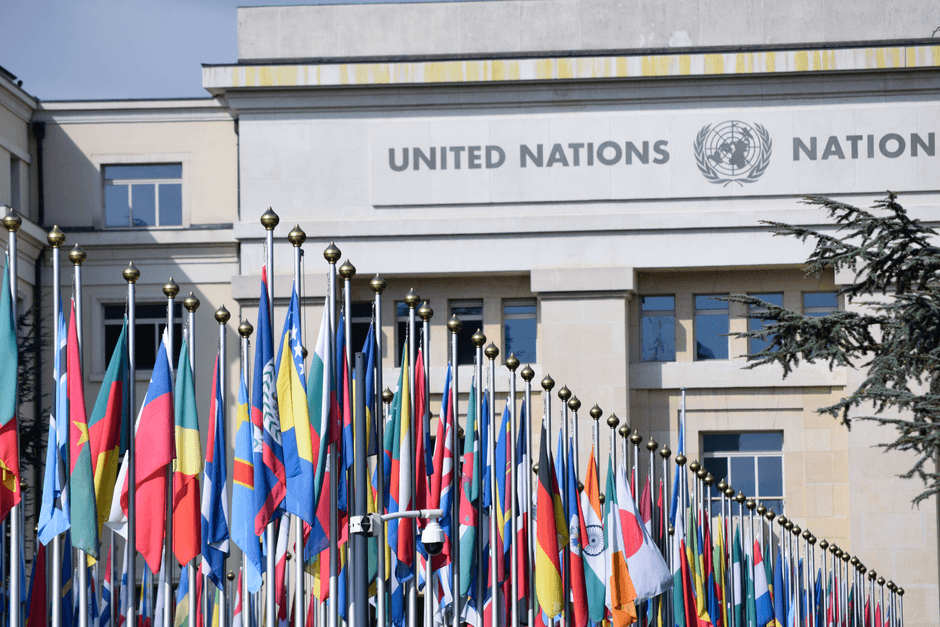
US President Donald Trump announced on Tuesday that he wants artificial intelligence to be renamed "super intelligence" during remarks to the United Nations General Assembly in New York, arguing that the current terminology makes the technology "sound fake."
"Welcome to the new world of super intelligence - SI," Trump said during his wide-ranging speech.
The president indicated his intention to reshape official terminology across government documents.
"From this point forward, all of United States' documents, and hopefully the world's, will be changed to use the more accurate term 'super' as opposed to 'artificial'. So its 'super intelligence',"he stated.
Trump had previously polled his followers on his Truth Social platform about alternative names for AI, including superior intelligence, extreme intelligence and supreme intelligence. After a series of votes, super intelligence emerged as the preferred option among his supporters.
Will the industry adopt the new terminology?
Experts in the field have expressed skepticism that the rebranding will gain traction within the technology sector. The term "super intelligence" already carries a specific and established meaning in academic and professional circles, which could create confusion if applied to current AI systems.
Simon Coghlan, a digital ethics lecturer at The University of Melbourne, characterised the rebranding as "misleading."
"I doubt 'SI' will stick, in part because it exaggerates the current capacities of AI,"he said.
"A superintelligent system, if it came about, would be regarded by experts as the most consequential technology ever made."
The term "super intelligence" is often linked to author and philosopher Nick Bostrom, who defined it more than a decade ago as an "intellect" superior to humans across all domains. This concept remains entirely theoretical and describes systems far more advanced than anything currently in existence.

Ben Leong, a computer science lecturer at National University of Singapore, offered a similar assessment.
"My guess is that professionals will want to save 'SI' for a higher level of AI, not so much to describe AI today. It doesn't feel like it's at that level yet."
How are Trump's allies responding?
Some officials within Trump's administration have already begun using the new terminology. Ethan Klein, the US Chief Technology Officer, posted on social media:
"The Super Intelligence (SI) President has spoken! The United States is and will remain the global leader in SI."
Michael Waltz, Trump's ambassador to the United Nations, also endorsed the change.
"If you didn't see the president's speech, it's now super intelligence. I think he's absolutely right,"he said.
However, the rebranding has drawn criticism from other quarters. When asked about the new terminology, Canada's minister of AI Evan Solomon expressed reservations.
"Canadians are not enthusiastic, at all, about renaming things,"he said, in an apparent reference to Trump's earlier decision to rename Lake Ontario on US maps and federal communications.
What is Trump's broader position on AI regulation?
The rebranding announcement comes amid ongoing debate about how governments should oversee artificial intelligence development. Top technology executives and researchers have recently urged the US government to implement regulatory frameworks, citing concerns that AI could pose risks to humanity. Trump has dismissed such concerns as "a hoax."
The president has argued against imposing regulations on the technology sector, contending that the United States cannot afford to disadvantage itself relative to China, its primary technology competitor.
"We're leading now over China by a lot, and everyone else, and we're going to keep it that way,"Trump said.
He characterised AI as a transformative force comparable to the industrial revolution and warned against policies that might slow its development.
"The US is not going to 'stifle the growth of something that will be bigger than the industrial revolution,'"he stated. Trump added that the government would
"rein things in" if needed and will lead the sector responsibly.
What happens next?
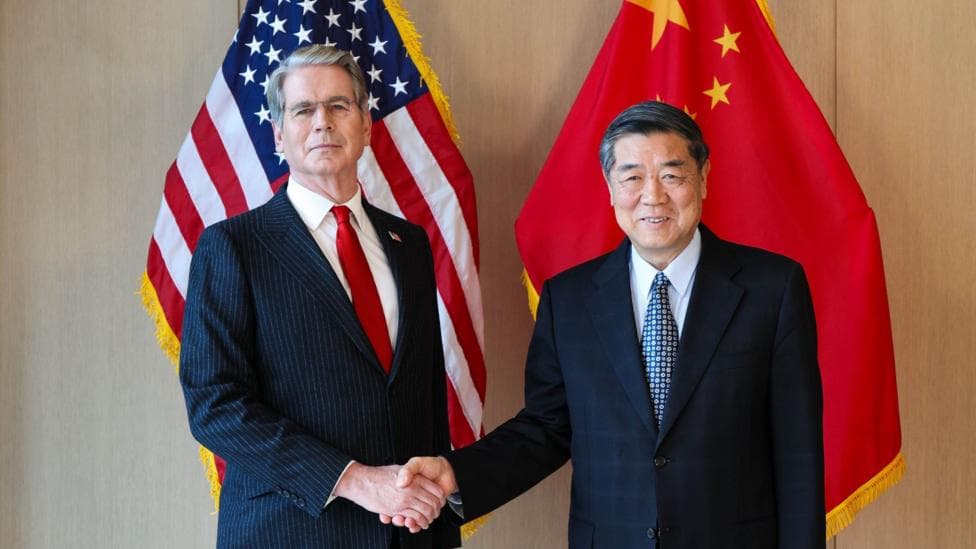
Trump is scheduled to meet with Chinese President Xi Jinping this week, with artificial intelligence expected to feature prominently in discussions between the leaders of the world's two largest economies. The meeting will likely provide an opportunity to assess how the two nations intend to approach AI development and competition in the coming months.