Data centre operators are increasingly turning to photonics—technology that transmits information using light instead of electricity—to reduce energy consumption and overcome the limitations of traditional copper wiring. Industry leaders believe this shift could significantly lower cooling costs and improve efficiency as artificial intelligence workloads push data centres to their limits.
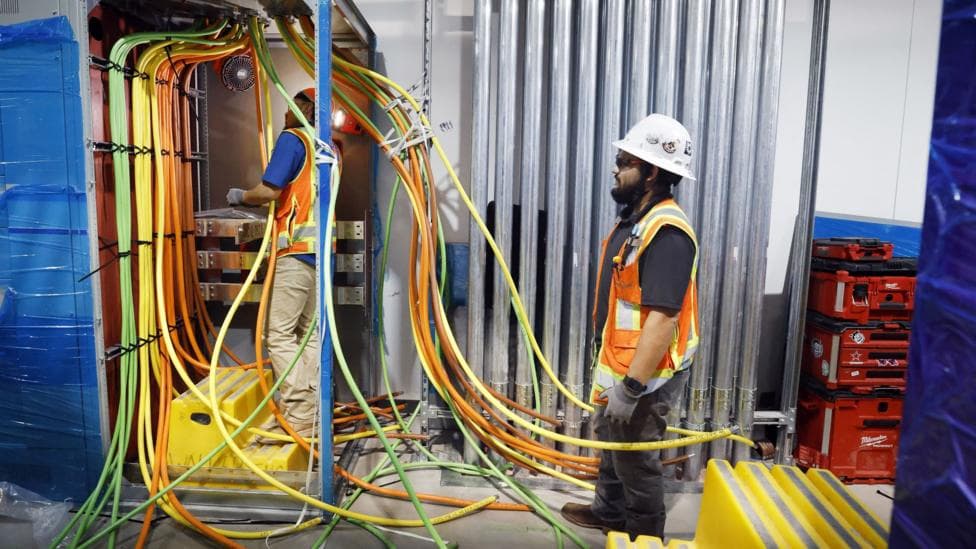
Chris Sharp, chief technology officer at data centre operator Digital Realty, argues that the era of copper dominance in data centres is ending. He does not mean supplies are depleting; rather, the industry is moving away from relying on the metal for internal data transmission. A typical 100-megawatt data centre currently consumes around 400 tonnes of copper. Of that total, approximately 70 tonnes goes into the computer servers that process data, while up to 20 tonnes is used for network wiring connecting those servers. The remainder supports electrical infrastructure and cooling systems.
The focus of replacement efforts centres on the network wiring that snakes through data centres.
The wires between these GPUs, CPUs, and all this compute are what's slowing us down,Sharp explains, pointing to a fundamental bottleneck in current architecture.
How does photonics work differently from copper wiring?
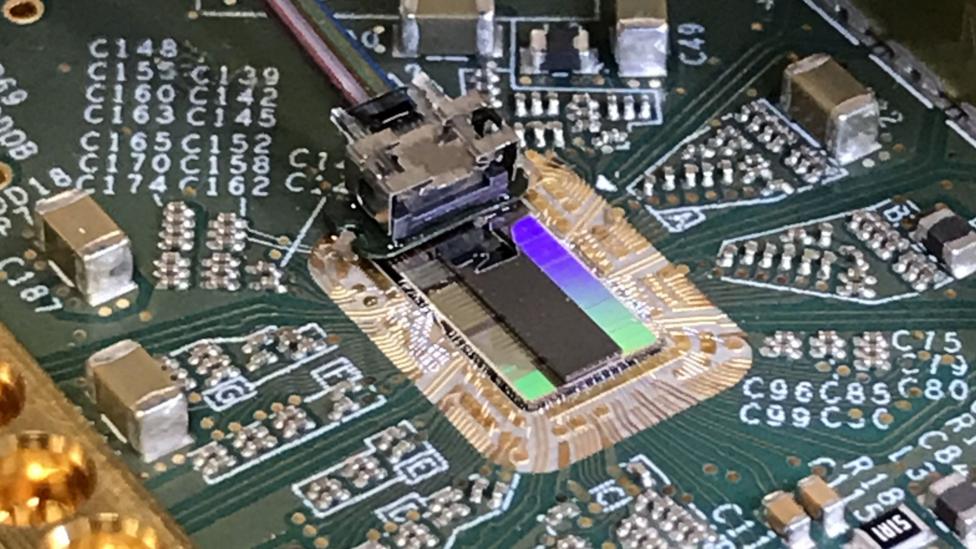
Data currently travels through data centres as electrons flowing through copper cables. Photonics transmits the same information as photons—particles of light—through optical fibres. While fibre optics have carried long-distance telecommunications for decades, researchers and companies are now extending this technology inside data centres themselves. The approach involves connecting optical components directly to electrical ones, sometimes integrating them onto computer chips.
The primary advantage is thermal. Light does not generate the heat that electricity does in copper conductors. Reduced heat means cooling systems require less energy to maintain safe operating temperatures.
You can save so much energy,says Callum Littlejohns, deputy director of silicon photonics foundry Cornerstone Labs. Additionally, multiple data streams can travel down the same optical channel, increasing capacity without adding physical infrastructure.
Is the technology ready for widespread deployment?
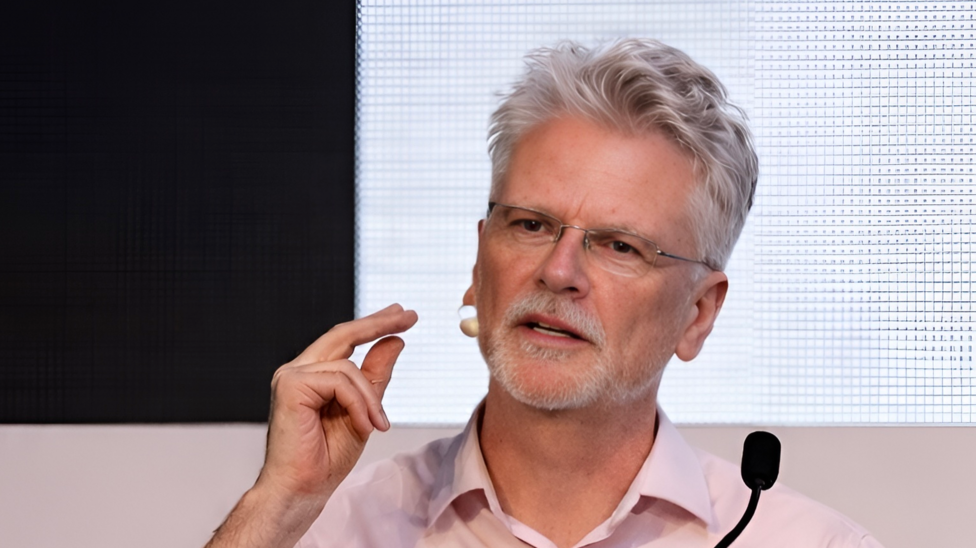
Peter O'Brien, head of research for photonics packaging and systems integration at Ireland's Tyndall Research Institute, states that academics and commercial companies have worked with photonics for years, but manufacturing challenges previously limited real-world application. Today, he argues, the technology has matured enough to transition from laboratory settings to mainstream use.
What's happening now with optics and photonics is there's kind of a reset,O'Brien observes.
Major technology companies are backing this transition. Nvidia, the dominant artificial intelligence chip manufacturer, has invested heavily in photonics development. According to industry coverage from June 2026, Nvidia has committed at least $6.5 billion to photonics companies since March 2026, underscoring how seriously major chipmakers view light-based interconnects as essential to overcoming data-centre bottlenecks.

Recent industry developments confirm this momentum. On 21 September 2026, Coherent presented PhotonLink at the ECOC conference, outlining a staged rollout beginning with co-packaged optics (CPO) scale-out in the fourth quarter of 2026 and extending to chip-to-chip photonic interconnects in 2029-2030, according to Coherent's presentation at ECOC 2026. Separately, Lightmatter announced on 11 March 2026 that it would showcase new photonic interconnect hardware at the Optical Fiber Communication Conference in Los Angeles from 15 to 19 March 2026, with its Passage L20 chips expected to begin sampling in late 2026.

What manufacturing challenges remain?
Transitioning to photonics is not a simple replacement of one material for another. The shift requires integrating different engineering traditions and supply chains that have developed separately. Andrew Wheeler, senior vice president at Hewlett Packard Labs, explains that while the electrical industry has spent decades optimizing design, manufacturing, testing, and deployment processes to reduce costs, the photonics sector is still learning how to achieve similar economies of scale.
Manufacturing complexity is distributed globally. Final assembly of optical components occurs in packaging houses concentrated in Taiwan, creating coordination challenges. Additionally, optical components are extremely sensitive to heat, which poses reliability concerns in data centre environments where other equipment generates significant thermal output. Data centre operators and equipment manufacturers must maintain strict thermal limits to ensure optical systems function reliably.
Installation and maintenance also require new skills. Unlike copper wiring, fibre optic cables cannot take tight turns and demand careful handling during deployment. Network designers, field support engineers, and installers all need training in optical system installation and servicing.
You can't take tight turns. There are little nuances on how to structure that,Sharp notes.
Despite these hurdles, Littlejohns points out that knowledge from electronics manufacturing can accelerate photonics cost reduction. Cornerstone Labs, for example, repurposes older silicon manufacturing equipment for photonics production. One of its manufacturing tools originated from an Intel production line that made Pentium 4 processors at the turn of the century. Because photonics components are generally larger than silicon chips, older equipment designed for earlier processor generations remains suitable.
We know we can make it at a huge scale, so that's why it's such an interesting technology, because it can underpin many applications,Littlejohns states.
What is the longer-term vision?
Ofer Shapiro, chief executive of optical company Resolight.ai, argues that maximum energy savings will only occur when light is used not just for data transmission but also for data processing. His company proposes replacing traditional electronic network switches—which control communications between servers—with entirely optical devices. This architecture would keep data in the optical domain throughout its journey, eliminating repeated conversions from photons to electrons and back again, thereby saving additional energy.
That vision remains future-focused. For now, companies are concentrating on scaling photonics manufacturing to meet growing demand. According to industry analysis from July 2026, artificial intelligence-driven computing requires efficient optical interconnects to overcome data-centre bottlenecks, making photonics development a priority across the sector. Lightmatter launched a 19-company initiative on 13 August 2026 to standardize silicon-photonics-ready infrastructure, signalling industry-wide commitment to establishing common standards.
What happens next?
The near-term timeline shows accelerating deployment. Lightmatter's Passage L20 chips are expected to begin sampling in late 2026, while Coherent's rollout plan indicates CPO scale-out should ramp beginning in the fourth quarter of 2026. These milestones suggest that photonics-based data centre infrastructure will move from prototype to production during the coming months, with broader adoption likely to follow as manufacturing scales and costs decline.
Key Facts
- A typical 100-megawatt data centre uses around 400 tonnes of copper, with up to 20 tonnes dedicated to network wiring connecting computer servers.
- Photonics transmits data as light through optical fibres, generating far less heat than copper wiring and reducing cooling energy requirements.
- Nvidia has invested at least $6.5 billion in photonics companies since March 2026, signalling major chipmaker backing for the technology.
- Coherent and Lightmatter have announced staged rollouts beginning in the fourth quarter of 2026, moving photonics from laboratory development toward commercial deployment.
- Manufacturing challenges remain, including thermal sensitivity of optical components and the need for new installation and maintenance skills across the industry.