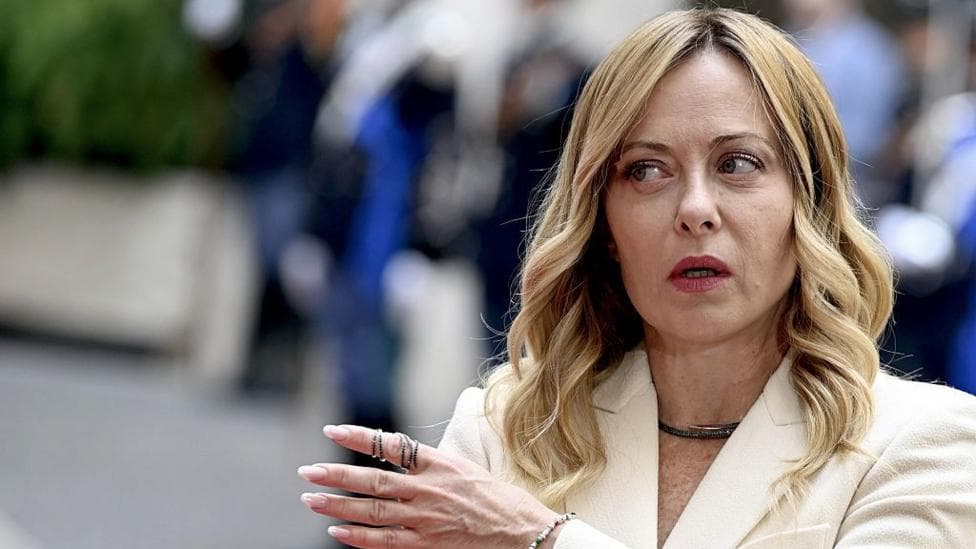
Italian Prime Minister Giorgia Meloni has filed an application to trademark her voice with the European Union Intellectual Property Office (EUIPO) in a protective measure against artificial intelligence-generated deepfakes. The filing, submitted on Monday, includes a four-second audio recording in which Meloni states "Io sono Giorgia" — "I am Giorgia Meloni" — twice in Italian.
According to , the EUIPO application remains under examination and has not yet been approved. The filing was processed through a Rome-based law firm and an intellectual-property company based in the Marche region.
Why is Meloni protecting her voice?
Meloni's decision reflects growing concerns about AI-generated deepfakes and unauthorised voice replication. The prime minister has previously faced harassment from synthetic media: in 2024, she sought €100,000 (£84,920) in damages after deepfake pornographic videos featuring her were uploaded online. More recently, in May this year, AI-generated images depicting her in lingerie circulated widely across the internet.
In response to that incident, Meloni posted on social media:
The point, however, goes beyond me. Deepfakes are a dangerous tool, because they can deceive, manipulate, and strike anyone. I can defend myself. Many others cannot.
What does the trademark application cover?
According to reporting on the filing details, the application covers three service categories: downloadable multimedia content, cultural activities and the organisation of political events. The filing is registered as a sound mark without accompanying text.
The phrase "Io sono Giorgia" carries significant political weight. It served as the title of Meloni's 2021 autobiography and has become closely associated with her political campaigns. The phrase also echoes a 2019 rally speech that subsequently became a viral disco remix, cementing its place in Italian popular culture.
Is Meloni alone in this approach?
No. Multiple high-profile figures have taken similar steps to protect their identities from AI misuse. In January, American actor Matthew McConaughey led the trend by trademarking his image and voice. Singer Taylor Swift followed in April, submitting three trademark applications in the United States — one featuring a photograph of herself performing during her Eras Tour, and two others consisting of audio clips of her introducing herself while promoting her most recent album.
In August, more than 80 performers issued a public call to British Prime Minister Andy Burnham urging the introduction of legislation that would grant every person in the United Kingdom a legal right to own their voice. Actors including Matt Lucas, Hugh Bonneville and Nicola Coughlan were among those advocating for stronger protections against unauthorised AI voice use.
Within Europe, Italian singer Giusy Ferreri became the first artist on the continent to register her voice as a sound mark with the EUIPO in May, establishing a precedent for voice protection through trademark registration.
How do voice clones work?
Voice clones are produced by training artificial intelligence systems on recordings of real people. Basic versions can be generated from just a few seconds of audio, though creating high-quality replicas typically requires many hours of training material. This accessibility has made voice cloning a significant concern for public figures and ordinary individuals alike.
What happens next?
The EUIPO must now examine Meloni's application. According to , no decision date has been reported for when the office will complete its review. The timing of the filing comes ahead of Italy's general elections scheduled for next year, a period when Meloni's public profile and media presence will likely intensify.