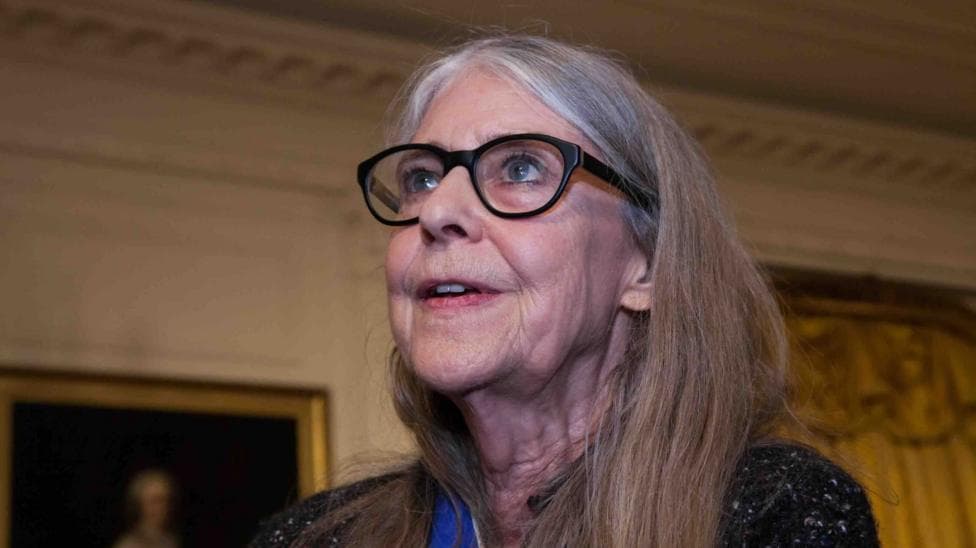
Margaret Hamilton, the computer scientist whose pioneering work developing software for Nasa's Apollo missions fundamentally shaped the space program and established the field of software engineering itself, has died at the age of 90. Her death occurred on 30 September, as confirmed by the Massachusetts Institute of Technology, where she spent much of her career.
Hamilton's contributions to space exploration extended far beyond a single mission. She led a team of approximately 100 engineers and oversaw software development for six lunar-landing missions conducted between 1969 and 1972, according to reporting on her career. Her work on the Apollo program not only enabled humans to reach the moon but also created the conceptual framework and terminology for an entirely new discipline.
"To say Hamilton was a pioneer - to say she was ahead of her time - would be a dramatic understatement," MIT stated in its announcement of her passing. The institute acknowledged that she had established herself as a software engineer during an era when the profession itself did not yet exist in any formal sense.
How did Hamilton's software save the Apollo 11 landing?
During the final moments before Apollo 11 touched down on the lunar surface in 1969, the spacecraft's onboard computer triggered an alarm indicating a system overload. The situation was critical: the landing appeared to be in jeopardy as the computer struggled to process competing demands on its processing capacity.
Hamilton and her team had anticipated precisely this kind of crisis. They had engineered what MIT described as "priority-driven software" designed to automatically shut down non-essential background processes and direct all computational resources toward the most vital function—the moon landing itself. This foresight proved decisive. According to Nasa's historical account, the software override a command that had been switching on the lunar module's radar based on an erroneous operations script, allowing the landing to proceed safely. Neil Armstrong and Buzz Aldrin reached the surface as planned.
What was Hamilton's career path before Apollo?
Born in Indiana in 1936, Hamilton pursued mathematics as her primary field of study. She enrolled at the University of Michigan in 1955 and later transferred to Earlham College, where she earned a bachelor's degree in mathematics in 1958. The following year, she relocated to Boston, Massachusetts, when her husband began his law degree studies.
Before her work on the Apollo program, Hamilton contributed to software development for the U.S. Air Force's SAGE air-defense system, according to historical records of her early career. This experience provided crucial grounding in systems engineering and real-time computing challenges.
What did Hamilton accomplish at MIT?
Hamilton joined MIT in 1959 and remained there until the mid-1970s, eventually managing the Software Engineering Division. It was within this division that she assembled and directed the team responsible for writing, testing, and validating all onboard in-flight software for the Apollo 11 mission and subsequent lunar landings.
In a 2019 interview, Hamilton reflected on her pioneering role: "I was attracted both by the sheer idea and the fact that it had never been done before. I was the first programmer to join and the first woman they hired." Her work extended beyond the moon landings themselves. Her software contributions also shaped the development of Skylab and influenced the early design phases of the space shuttle program.
How was Hamilton's legacy recognized?
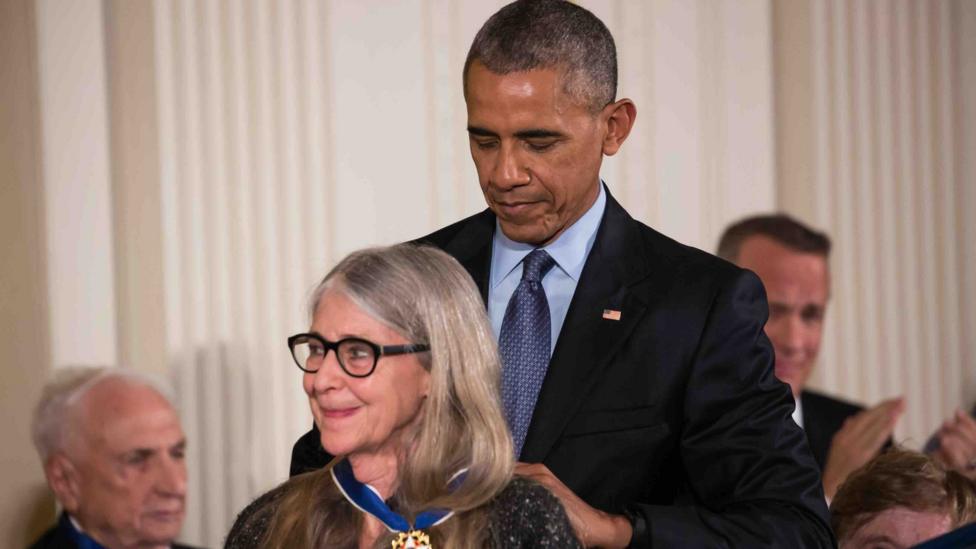
In 2016, President Barack Obama presented Hamilton with the Presidential Medal of Freedom, the nation's highest civilian honor, in recognition of her transformative contributions to science and space exploration. The award acknowledged not only her technical achievements but also her role in establishing software engineering as a recognized and essential discipline.
Earlham College, where Hamilton had earned her mathematics degree, issued a statement expressing sadness at her passing while celebrating her extraordinary life. "Her pioneering spirit and remarkable legacy will continue to inspire generations of Earlhamites," the college said.
What is known about Hamilton's family and surviving relatives?
According to MIT, Hamilton is survived by her daughter Lauren, a son-in-law, two grandsons, and four great-grandchildren. Her daughter confirmed her death to MIT News, though the cause was not disclosed.
What happens next?
MIT News has announced that a memorial service honoring Hamilton's life and achievements is being planned for spring in Cambridge, Massachusetts, though no specific date has been set.
Key Facts:
- Hamilton led approximately 100 software engineers across six lunar-landing missions between 1969 and 1972
- Her priority-driven software prevented an Apollo 11 landing failure by automatically shutting down non-essential processes during a critical computer overload moment
- She established the field of software engineering as a formal discipline and was the first woman hired as a programmer at MIT's Apollo division
- She received the Presidential Medal of Freedom from President Barack Obama in 2016 for her contributions to science and space travel
- Her software work extended to Skylab and early space shuttle design in addition to the Apollo program