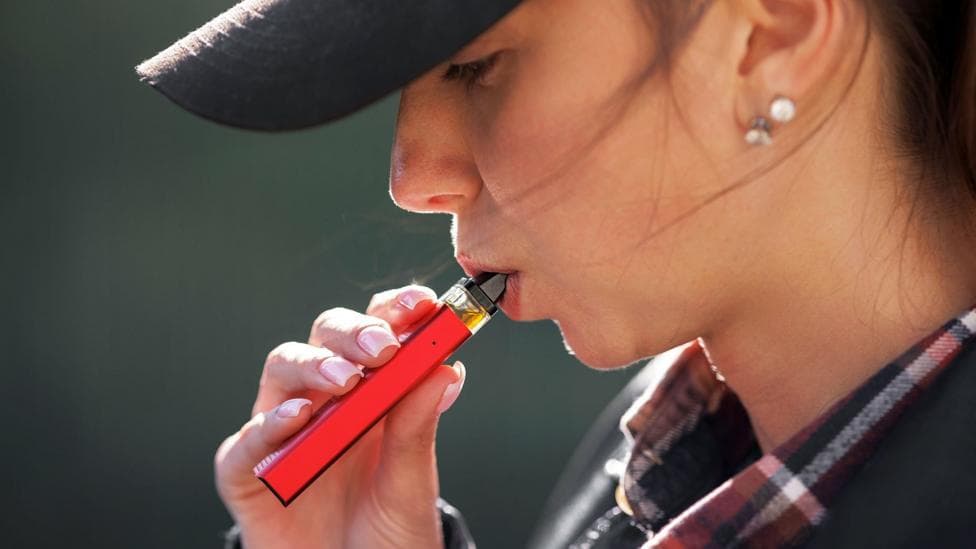
More than one million people in the United Kingdom who have never smoked a cigarette now regularly use vapes, according to recent data from the Office for National Statistics (ONS). This figure has grown year-on-year, raising concerns among health professionals and policymakers about a generation adopting nicotine addiction without ever having smoked. According to BBC News, the trend reflects a significant shift in how young adults and non-smokers are being exposed to nicotine dependence through vaping products.
The latest ONS figures reveal that daily or occasional vaping among people who had never smoked reached 2.9% (approximately 1.1 million individuals) in 2025, up from 2.7% (around 940,000) in 2024, according to Nursing in Practice. The government said it would "carefully consider" measures to address this rising trend among young people and non-smokers following the publication of these figures.
How did vaping become mainstream among non-smokers?
When vaping first emerged as a commercial product, it was positioned as a harm-reduction tool to help existing smokers transition away from cigarettes. However, the market has evolved significantly. Gracey Mungulu, now 21, initially found vaping repulsive when it first became popular at her school. "I literally used to tell people like, 'Er, why are you doing that?'" she recalls. Yet as the habit spread among her classmates, social pressure and normalisation led her to try it herself at age 16, despite coughing on her first attempt.
Gracey describes how repeated exposure transformed her perception.
"The more you see it, the more you start trying it a bit more," she says, "and then eventually I just got used to it and I was just doing it all the time."Now she purchases a refillable vape daily at a cost of £5, using it throughout her work as a hairdresser and in a school setting whenever her hands are free.

What role does the psychological appeal play?
Health professionals identify a powerful psychological component driving non-smoker adoption of vaping. Gracey attributes her continued use to managing social anxiety.
"It's the hand action," she explains, "just having something in your hand, just having something in your mouth."This habitual, almost unconscious behaviour mirrors the ritual aspects of smoking without the stigma.
Dr Helen Wall, a general practitioner, regularly encounters this pattern among her patients.
"It's that kind of psychological dependence on something else to almost regulate their emotions," she says.The physical repetition becomes intertwined with emotional regulation, creating a dependency that extends beyond nicotine's pharmacological effects.
Malin Andersson, a 33-year-old domestic abuse campaigner and former Love Island contestant, experienced a similar trajectory. She began vaping during a stressful relationship breakdown, seeking comfort through the physical action rather than nicotine itself.
"It's a dopamine hit," Malin says. "It's literally an adult's version of a dummy."She describes how the habit became so ingrained that she would find herself vaping while scrolling social media, a pattern she shares with Gracey and others who use vaping as a companion to doomscrolling.
The 25–34 age group shows the highest vaping prevalence, with rates rising from 8.6% in 2020 to 16.4% in 2025, according to Nursing in Practice. This demographic represents the largest proportion of non-smokers who have adopted vaping.

How addictive is nicotine in vapes?
Nicotine is a highly addictive substance that triggers withdrawal symptoms including irritability and anxiety when absent from the system. The NHS acknowledges that vaping nicotine is less harmful than cigarettes, but the long-term health effects remain unclear. For non-smokers who have never built tolerance to nicotine, the addiction can develop rapidly and intensely.
Malin became so frustrated with her dependence that she quit her banana ice-flavoured vape in May of this year.
"It was annoying me so much that it was always in my hand that I'd end up throwing it across the room," she says.She reports that her mental and physical health have improved since discontinuing use.
Alex, a 26-year-old from Manchester who requested anonymity, describes how her vaping habit became so embedded in daily life that she would work
"lying in my bed with my laptop in front of me and then my vape on my chest"."What began as occasional vaping on nights out gradually transformed into constant use, demonstrating how the habit can escalate without deliberate intention.
Are vapes diverting people from smoking or creating new addiction?
The question of whether vaping represents harm reduction or net harm for non-smokers remains contested among researchers. Prof Sarah Jackson from the University College London Alcohol and Tobacco Research Group notes that the rising ONS figures warrant caution, but context matters significantly.
"In which case, vaping has diverted them away from a more harmful behaviour, which is good news," she says. "On the other hand, there will be people that are being exposed to more risk than they would have otherwise."
A 2024 study from UCL researchers found that nicotine use had risen among young adults in England while cigarette smoking declined.
"We can infer from that that some of the people who are vaping wouldn't have smoked otherwise," Jackson says.This suggests that for a significant portion of the 1.1 million non-smokers now vaping, the products have created new addiction rather than substituting for cigarettes.
The broader vaping landscape shows 5.4 million people aged 16 and over in Great Britain vaping in 2025, while the number of smokers continues to decline steadily, with approximately 4.9 million adults currently smoking. The trajectory indicates a generational shift in nicotine consumption patterns rather than a simple replacement of one habit with another.
What role does marketing play in non-smoker adoption?
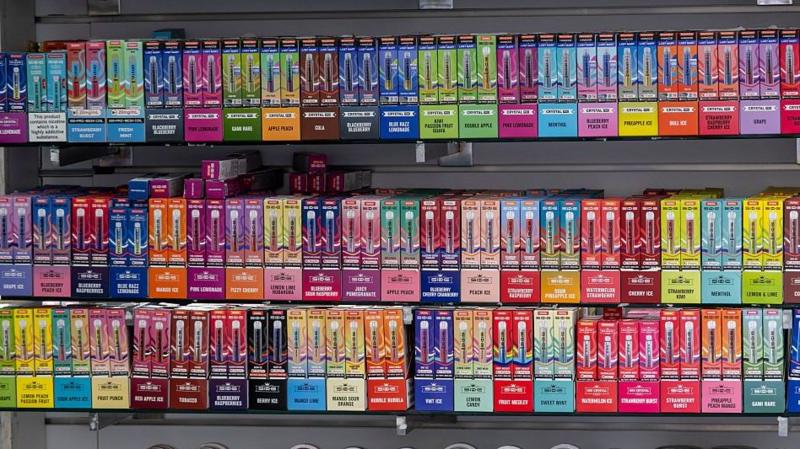
The visual and sensory appeal of vaping products has been deliberately cultivated through marketing strategies that differ sharply from cigarette promotion. Bright colours, sweet flavours like banana ice, and sleek designs create an aesthetic that attracts non-smokers, particularly younger demographics. Hazel Cheeseman from Action on Smoking and Health notes that within the 1.1 million non-smokers now vaping,
"there probably is a group who would not be vaping [without] the marketing of vaping which is very prominent"."
Dr Wall identifies a dangerous misconception perpetuated by marketing.
The heavy promotion of vapes in recent years has helped to fuel a "misconception" that they are "safe and not addictive"."This messaging gap represents a critical public health failure, as vaping was originally intended by the NHS solely as a replacement tool for existing smokers, not as a standalone product for the general population.
Gracey advocates for standardised plain packaging similar to cigarettes, believing the current presentation actively encourages use.
"With vapes, they have all these flavours, all these pretty colours - it's just making us more attracted to it"."She notes that while vaping carries far greater social acceptability among her generation than smoking, the financial and health costs concern her, with her habit costing £35 weekly.
What support exists for people wanting to quit?
Quitting vaping presents challenges comparable to smoking cessation, yet support infrastructure remains underdeveloped. A recent survey found that fewer than half (45%) of healthcare providers in England offered vaping cessation support, with a mixed picture across the rest of the United Kingdom. The NHS recommends gradually reducing nicotine strength, increasing intervals between vaping sessions, or switching to approved nicotine replacement therapy products.
However, the absence of comprehensive professional support creates obstacles for those attempting to quit. Alex's experience illustrates an unintended consequence: after successfully quitting vaping while travelling for several months with no access to products, she began smoking cigarettes for the first time. Cigarettes are not considered a healthy or helpful alternative by experts, and smoking remains the leading cause of preventable illness and premature death in the United Kingdom.
What government action is underway?
The UK government has implemented several measures to address rising vaping rates. The ban on selling disposable vapes took effect on 1 June 2025, targeting a key driver of youth vaping adoption. More significantly, the Tobacco and Vapes Act received Royal Assent on 29 April 2026, providing for a tobacco sales ban for people born on or after 1 January 2009 and introducing tighter controls intended to reduce the appeal of vapes to children, according to The Pharmacist.
The Vaping Products Duty and Vaping Duty Stamps Scheme took effect on 1 October 2026, adding taxation and duty-stamp requirements designed to reduce vaping's affordability and appeal. The generational tobacco sales ban is scheduled to take effect in 2027 for people born on or after 1 January 2009, representing a landmark shift in tobacco control policy.
The NHS continues to advise non-smokers and those aged 17 and under never to vape, while it remains illegal for anyone under 18 to purchase vaping products. The government consultation on new marketing measures is expected to yield responses in due course, potentially addressing the bright colours and sweet flavours that currently drive non-smoker adoption.